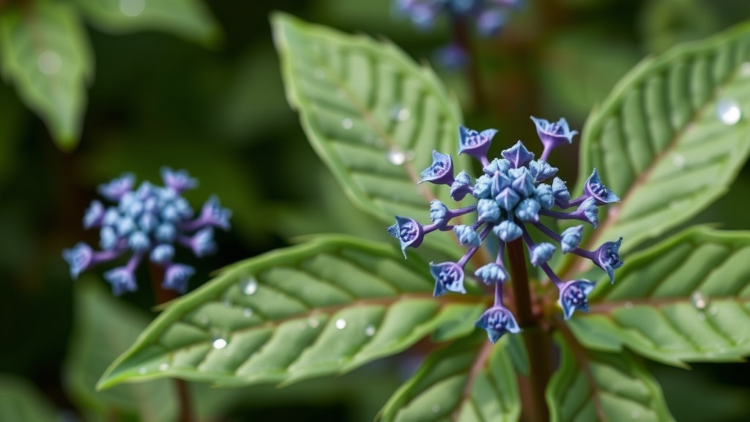
Scientists in Chennai, India, have transformed the leaves of a humble kitchen herb into a weapon against some of medicine’s most stubborn enemies. In a study published in Discover Biotechnology, researchers at Meenakshi Academy of Higher Education and Research report that silver nanoparticles synthesized using an aqueous extract of Plectranthus amboinicus, commonly known as Indian borage, display potent antimicrobial, antioxidant, and anti-inflammatory activity while remaining relatively benign at low concentrations. The work arrives at a moment when the World Health Organization has declared antimicrobial resistance a global health emergency, and it offers a plant-based, environmentally gentle route to nanomaterials that conventional chemical synthesis has struggled to match.
The appeal of green synthesis lies in its simplicity and its chemistry. Traditional nanoparticle production often relies on toxic reducing agents and generates hazardous byproducts, but plant extracts contain a natural arsenal of flavonoids, terpenoids, alkaloids, and phenolic compounds that can do the job instead. In this study, the team dissolved silver nitrate in deionized water and added a filtered, hot-water extract of dried P. amboinicus leaves dropwise, stirring the mixture in darkness for 48 hours to prevent photoreduction. The characteristic color transition from pale yellow to brownish-purple signaled that silver ions had been reduced to metallic silver nanoparticles, a visual change driven by the surface plasmon resonance phenomenon that occurs when conduction electrons on nanoparticle surfaces oscillate in response to light.
Optical monitoring by UV-Visible spectroscopy traced the birth and maturation of the particles over time. A surface plasmon resonance peak at 280 nanometers confirmed nanoparticle formation, and the spectra evolved across two, sixteen, and twenty-four hour intervals in ways that told a story of nucleation, growth, and eventual ripening. At two hours the peak was shallow and broad, indicating a polydisperse population of freshly nucleated particles. By sixteen hours the peak sharpened, reflecting improved stability and a more monodisperse size distribution. At twenty-four hours the peak broadened again, suggesting secondary growth and possible agglomeration through Ostwald ripening. The authors note that this time-dependent behavior underscores the dual role of the plant extract, whose bioactive constituents both reduce silver ions to metallic silver and cap the growing particles to keep them stable.
Electron microscopy revealed predominantly spherical particles. Scanning electron microscopy showed a fairly monodispersed distribution with most particles under 200 nanometers and an average size of 86 plus or minus 37.2 nanometers, with some aggregation attributable to reaction conditions and biomolecule interactions. Transmission electron microscopy offered a sharper picture, resolving individual spherical particles averaging roughly 35 nanometers, some lightly clustered but clearly distinguishable. Selected area electron diffraction patterns confirmed the polycrystalline nature of the material. X-ray diffraction using copper K-alpha radiation produced sharp Bragg reflections at 38.12, 44.28, 64.43, and 77.38 degrees, indexed to the face-centered cubic planes of metallic silver and matching the standard reference pattern JCPDS 04-0783. Applying the Debye-Scherrer equation to the most intense reflection yielded an average crystallite size of approximately 33 nanometers, corroborating the electron microscopy results.
Fourier-transform infrared spectroscopy identified the molecular machinery behind the synthesis. A broad band at 3215 inverse centimeters corresponded to O-H stretching of alcohols and phenols, pointing to polyphenols from the extract, while peaks at 1637 and 1587 inverse centimeters were assigned to aromatic C=C stretching and amide N-H bending. Additional bands linked to amine C-N stretching, alcohol C-O stretching, and silver-oxygen vibrations confirmed direct interaction between the metal and the plant’s phytochemicals. Taken together, the spectra suggest that polyphenols, proteins, and amines in the leaf extract are responsible for reducing silver ions and stabilizing the finished nanoparticles, a natural capping layer that influences surface charge, biocompatibility, and ultimately how the particles engage microbial membranes.
The biological results were striking. In agar well diffusion assays against five clinically relevant pathogens, the nanoparticles produced clear, dose-dependent zones of inhibition at concentrations of 25, 50, and 100 micrograms per milliliter. Streptococcus mutans proved most sensitive with a 22.2 millimeter zone at the highest dose, followed by Staphylococcus epidermidis at 20.3 millimeters, Candida albicans at 19.4 millimeters, Staphylococcus aureus at 18.6 millimeters, and Aggregatibacter actinomycetemcomitans at 17.1 millimeters. Notably, the inhibition zones at 100 micrograms per milliliter approached those of standard antibiotics, amoxicillin for bacteria and fluconazole for the fungus. The breadth of activity across Gram-positive bacteria, Gram-negative bacteria, and fungi points to a genuinely wide-spectrum effect, one attributed to the synergy between the bactericidal action of silver and the phytochemicals adsorbed on the particle surfaces.
Time-kill curve assays added a dynamic dimension to the picture. When microbial cultures were exposed to the nanoparticles at 25, 50, and 100 micrograms per milliliter and monitored by optical density over 24 hours, growth inhibition proved both dose- and time-dependent. At 100 micrograms per milliliter, viability of S. aureus, S. epidermidis, and S. mutans dropped sharply, with maximum reduction in absorbance occurring between three and five hours of treatment, a pattern consistent with membrane disruption and cell lysis. The fungal pathogen C. albicans and the periodontal pathogen A. actinomycetemcomitans also showed strong growth suppression. The researchers attribute this lethality to the particles’ nanoscale dimensions and enormous surface-to-volume ratio, which maximize contact with microbial membranes, induce oxidative stress, impair proteins, and interfere with DNA replication, mechanisms that are difficult for pathogens to circumvent compared with single-target antibiotics.
Beyond antimicrobial action, the nanoparticles showed respectable antioxidant and anti-inflammatory credentials. In the DPPH free radical scavenging assay, antioxidant activity rose in a dose-dependent manner, reaching 89.1 percent inhibition at 100 micrograms per milliliter, close to the 93.2 percent achieved by the reference compound ascorbic acid. Anti-inflammatory performance, measured through heat-induced protein denaturation assays using both egg albumin and bovine serum albumin, reached 93.87 percent and 91.46 percent inhibition respectively, approaching the activity of the standard drug diclofenac sodium. The authors link these effects to the phenolic and flavonoid compounds that cap the particles, which appear to stabilize proteins under inflammatory conditions and quench free radicals through electron donation.
Safety data offered a cautiously optimistic note. In the brine shrimp lethality assay, a widely used preliminary toxicity screen, mortality was low at concentrations of 5 to 10 micrograms per milliliter, with roughly 60 percent of larvae surviving, but survival fell progressively at 20 to 40 micrograms per milliliter and dropped to as little as 10 percent at 80 micrograms per milliliter. This concentration-dependent toxicity profile suggests a usable therapeutic window at low doses while cautioning that precise dosing will be essential in any biomedical application. The authors are candid about the study’s limitations: all experiments were conducted in vitro, only a limited panel of microbial strains was tested, cytotoxicity was assessed solely in brine shrimp rather than mammalian cells, and surface chemistry deserves deeper analysis. Follow-up work, they write, should explore mechanistic pathways and in vivo models to establish clinical relevance.
Even with those caveats, the study contributes to a growing body of evidence that medicinal plants and nanotechnology can be combined into accessible, sustainable platforms against drug-resistant infections. Plectranthus amboinicus has a long history in traditional medicine for treating respiratory, gastrointestinal, and skin ailments, and its major constituents, including thymol, carvacrol, and beta-caryophyllene, are now shown to double as sophisticated nanoscale engineers. As multidrug-resistant organisms such as carbapenem-resistant Acinetobacter baumannii continue to outpace the antibiotic pipeline, plant-mediated silver nanoparticles of this kind, cheap to produce, biocompatible, and active across bacterial and fungal species, may find roles in wound dressings, topical antimicrobials, and infection-control materials. The road to the clinic runs through animal studies and human cell testing, but this work demonstrates that the answer to a modern crisis may be growing in a garden.
Subject of Research: Green synthesis of Plectranthus amboinicus silver nanoparticles with broad-spectrum biological activities
Article Title: Green-synthesized Plectranthus amboinicus silver nanoparticles with broad-spectrum biological activities
Article References: Supriya, Y., Munusamy, T., & Sivamalar, S. (2025). Green-synthesized Plectranthus amboinicus silver nanoparticles with broad-spectrum biological activities. Discover Biotechnology, 2(1), Article 30. https://doi.org/10.1007/s44340-025-00041-y
Image Credits: AI Generated
DOI: 10.1007/s44340-025-00041-y
Keywords: silver nanoparticles, green synthesis, Plectranthus amboinicus, antimicrobial resistance, antioxidant, anti-inflammatory, nanobiotechnology, brine shrimp assay, phytochemicals, nanomedicine, Green-synthesized, Plectranthus
Cite Scienmag News
APA MLA Chicago
Drew Townsend. (September 23, 2026). Indian Borage Leaf Extract Yields Silver Nanoparticles That Fight Resistant Pathogens. Scienmag. https://scienmag.com/indian-borage-leaf-extract-yields-silver-nanoparticles-that-fight-resistant-pathogens/
Drew Townsend. “Indian Borage Leaf Extract Yields Silver Nanoparticles That Fight Resistant Pathogens.” Scienmag, 23 September 2026, https://scienmag.com/indian-borage-leaf-extract-yields-silver-nanoparticles-that-fight-resistant-pathogens/. Accessed 23 September 2026.
Drew Townsend. “Indian Borage Leaf Extract Yields Silver Nanoparticles That Fight Resistant Pathogens.” Scienmag. September 23, 2026. https://scienmag.com/indian-borage-leaf-extract-yields-silver-nanoparticles-that-fight-resistant-pathogens/
Copy citation Download RIS
Tags: anti-inflammatoryAntimicrobial Resistanceantioxidantantioxidant and anti-inflammatory properties of nanoparticlesapplications of silver nanoparticles in healthcarebrine shrimp assaycombating resistant pathogens with nanotechnologyenvironmentally friendly nanoparticle productiongreen synthesisgreen synthesis of nanomaterialsGreen-synthesizedmedicinal plant extracts in nanomedicinenanobiotechnologyNanomedicinenatural reduction methods for silver nanoparticlesphytochemicalsphytochemicals in nanoparticle synthesisplant-based antimicrobial agentsPlectranthusPlectranthus amboinicusSilver nanoparticle synthesis using Indian borage leaf extractsilver nanoparticlessustainable nanomaterial fabrication