• HOME
  • NEWS
  • EXPLORE
    • CAREER
      • Companies
      • Jobs
    • EVENTS
    • iGEM
      • News
      • Team
    • PHOTOS
    • VIDEO
    • WIKI
  • BLOG
  • COMMUNITY
    • FACEBOOK
    • INSTAGRAM
    • TWITTER
Saturday, May 16, 2026
BIOENGINEER.ORG
No Result
View All Result
  • Login
  • HOME
  • NEWS
  • EXPLORE
    • CAREER
      • Companies
      • Jobs
        • Lecturer
        • PhD Studentship
        • Postdoc
        • Research Assistant
    • EVENTS
    • iGEM
      • News
      • Team
    • PHOTOS
    • VIDEO
    • WIKI
  • BLOG
  • COMMUNITY
    • FACEBOOK
    • INSTAGRAM
    • TWITTER
  • HOME
  • NEWS
  • EXPLORE
    • CAREER
      • Companies
      • Jobs
        • Lecturer
        • PhD Studentship
        • Postdoc
        • Research Assistant
    • EVENTS
    • iGEM
      • News
      • Team
    • PHOTOS
    • VIDEO
    • WIKI
  • BLOG
  • COMMUNITY
    • FACEBOOK
    • INSTAGRAM
    • TWITTER
No Result
View All Result
Bioengineer.org
No Result
View All Result
Home NEWS Science News Biology

Increased risk of tularemia as the climate changes

Bioengineer by Bioengineer
October 15, 2019
in Biology
Reading Time: 3 mins read
0
IMAGE
Share on FacebookShare on TwitterShare on LinkedinShare on RedditShare on Telegram

IMAGE

Credit: Jolanta Dabrowska/Mostphotos


Researchers at Stockholm University have developed a method for statistically predicting impacts of climate change on outbreaks of tularemia in humans. The study has been published in the journal International Journal of Environmental Research and Public Health. The results show that tularemia may become increasingly common in the future in high-latitude regions.

As the average annual temperature rises in high-latitude regions, rain and snow magnitudes and the flow of water through the landscape also change. These changes affect living conditions, for example, for insects that may be carriers of various diseases. Researchers at the Department of Physical Geography at Stockholm University have studied the effect of such changes on tularemia, a disease that primarily affects small rodents but can also infect humans. The study shows that relatively small changes in climate and water conditions can sharply increase the incidence of tularemia in humans. The results are consistent with the increasing number of reported human cases of tularemia in Sweden.

“Tularemia is fatal to rodents and a serious disease in humans,” says Gia Destouni, researcher at Stockholm University. “We have used a tested statistical disease model that has, for example, been able to predict six out of seven years with a relatively large number of tularemia cases in humans in Dalarna County between 1981 and 2007. This type of tested statistical disease model is a valuable tool that enable us to predict outbreaks in the future under altered climactic and water conditions.”

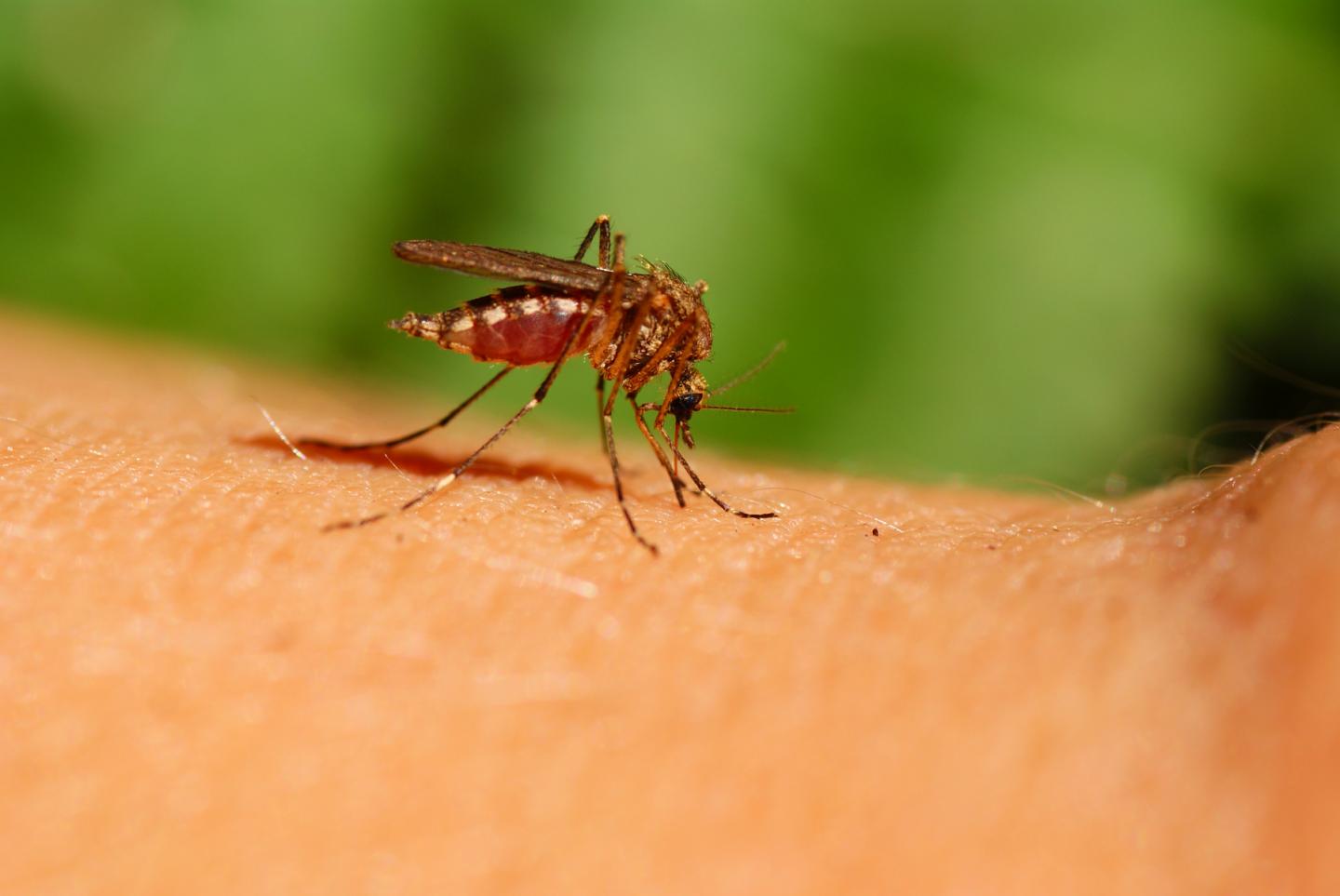
Tularemia spreads to people in various ways. In the vast forested areas of Sweden, Finland, Russia and Alaska, a bite from mosquitoes carrying the bacteria that cause the disease is one common path of infection.

“Northern communities and ecosystems are particularly vulnerable to climate change, which is greater here than the global average,” says Gia Destouni. “For this study, we chose to look at tularemia because it is a well-studied disease with tested statistics on the spread of the disease to humans at these latitudes. We were then able to use tularemia as a model disease for the development of a new methodology for predicting how changed temperatures and water flows can lead to new circumstances for the spread of the disease to humans in northern communities. In future research, similar methodology can be used for similar studies of the effects of climate change on different infectious diseases and in different parts of the world.”

###

The article Potential for Hydroclimatically Driven Shifts in Infectious Disease Outbreaks: The Case of Tularemia in High-Latitude Regions was published in International Journal of Environmental Research and Public Health on 2 October 2019.
You can read it here: https://www.mdpi.com/1660-4601/16/19/3717/htm

For more information, please contact:

Yan Ma, PhD student, Department of Physical Geography, [email protected]

Gia Destouni, Professor of Hydrology, Department of Physical Geography, [email protected], +46 70-453 23 66

Zahra Kalantari, researcher, Department of Physical Geography, [email protected]

Malin Stenberg de Serves, press officer, Department of Physical Geography, [email protected], +46 70-618 25 35

Media Contact
Malin Stenberg de Serves
[email protected]
46-706-182-535

Original Source

https://www.mdpi.com/1660-4601/16/19/3717/htm

Related Journal Article

http://dx.doi.org/10.3390/ijerph16193717

Tags: Climate ChangeEarth ScienceEcology/EnvironmentEnvironmental HealthHydrology/Water Resources
Share15Tweet9Share3ShareShareShare2

Related Posts

Uncovering C. elegans Immunity via Genetic Screens — Biology

Uncovering C. elegans Immunity via Genetic Screens

May 16, 2026
Single mother must adapt swiftly — the survival of her colony depends on it — Biology

Single mother must adapt swiftly — the survival of her colony depends on it

May 15, 2026

Why Are Nearly Everyone Right-Handed? It Might Be Linked to How We Learned to Walk

May 15, 2026

Excessive Neuronal Activity Initiates Severe Autoimmune Brain Disorder

May 15, 2026
Please login to join discussion

POPULAR NEWS

  • Research Indicates Potential Connection Between Prenatal Medication Exposure and Elevated Autism Risk

    844 shares
    Share 338 Tweet 211
  • New Study Reveals Plants Can Detect the Sound of Rain

    730 shares
    Share 291 Tweet 182
  • Salmonella Haem Blocks Macrophages, Boosts Infection

    62 shares
    Share 25 Tweet 16
  • Breastmilk Balances E. coli and Beneficial Bacteria in Infant Gut Microbiomes

    58 shares
    Share 23 Tweet 15

About

We bring you the latest biotechnology news from best research centers and universities around the world. Check our website.

Follow us

Recent News

Uncovering C. elegans Immunity via Genetic Screens

Congenital Heart Disease’s Lasting Impact on Brain Health

Metabolic Stress Worsens Parkinson’s via Mitochondrial Ferroptosis

Subscribe to Blog via Email

Enter your email address to subscribe to this blog and receive notifications of new posts by email.

Join 82 other subscribers
  • Contact Us

Bioengineer.org © Copyright 2023 All Rights Reserved.

Welcome Back!

Login to your account below

Forgotten Password?

Retrieve your password

Please enter your username or email address to reset your password.

Log In
No Result
View All Result
  • Homepages
    • Home Page 1
    • Home Page 2
  • News
  • National
  • Business
  • Health
  • Lifestyle
  • Science

Bioengineer.org © Copyright 2023 All Rights Reserved.