• HOME
  • NEWS
  • EXPLORE
    • CAREER
      • Companies
      • Jobs
    • EVENTS
    • iGEM
      • News
      • Team
    • PHOTOS
    • VIDEO
    • WIKI
  • BLOG
  • COMMUNITY
    • FACEBOOK
    • INSTAGRAM
    • TWITTER
Saturday, February 7, 2026
BIOENGINEER.ORG
No Result
View All Result
  • Login
  • HOME
  • NEWS
  • EXPLORE
    • CAREER
      • Companies
      • Jobs
        • Lecturer
        • PhD Studentship
        • Postdoc
        • Research Assistant
    • EVENTS
    • iGEM
      • News
      • Team
    • PHOTOS
    • VIDEO
    • WIKI
  • BLOG
  • COMMUNITY
    • FACEBOOK
    • INSTAGRAM
    • TWITTER
  • HOME
  • NEWS
  • EXPLORE
    • CAREER
      • Companies
      • Jobs
        • Lecturer
        • PhD Studentship
        • Postdoc
        • Research Assistant
    • EVENTS
    • iGEM
      • News
      • Team
    • PHOTOS
    • VIDEO
    • WIKI
  • BLOG
  • COMMUNITY
    • FACEBOOK
    • INSTAGRAM
    • TWITTER
No Result
View All Result
Bioengineer.org
No Result
View All Result
Home NEWS Science News Biology

In a mite-y bit of trouble

Bioengineer by Bioengineer
September 2, 2020
in Biology
Reading Time: 2 mins read
0
IMAGE
Share on FacebookShare on TwitterShare on LinkedinShare on RedditShare on Telegram

IMAGE

Credit: Fred and Jean Hort

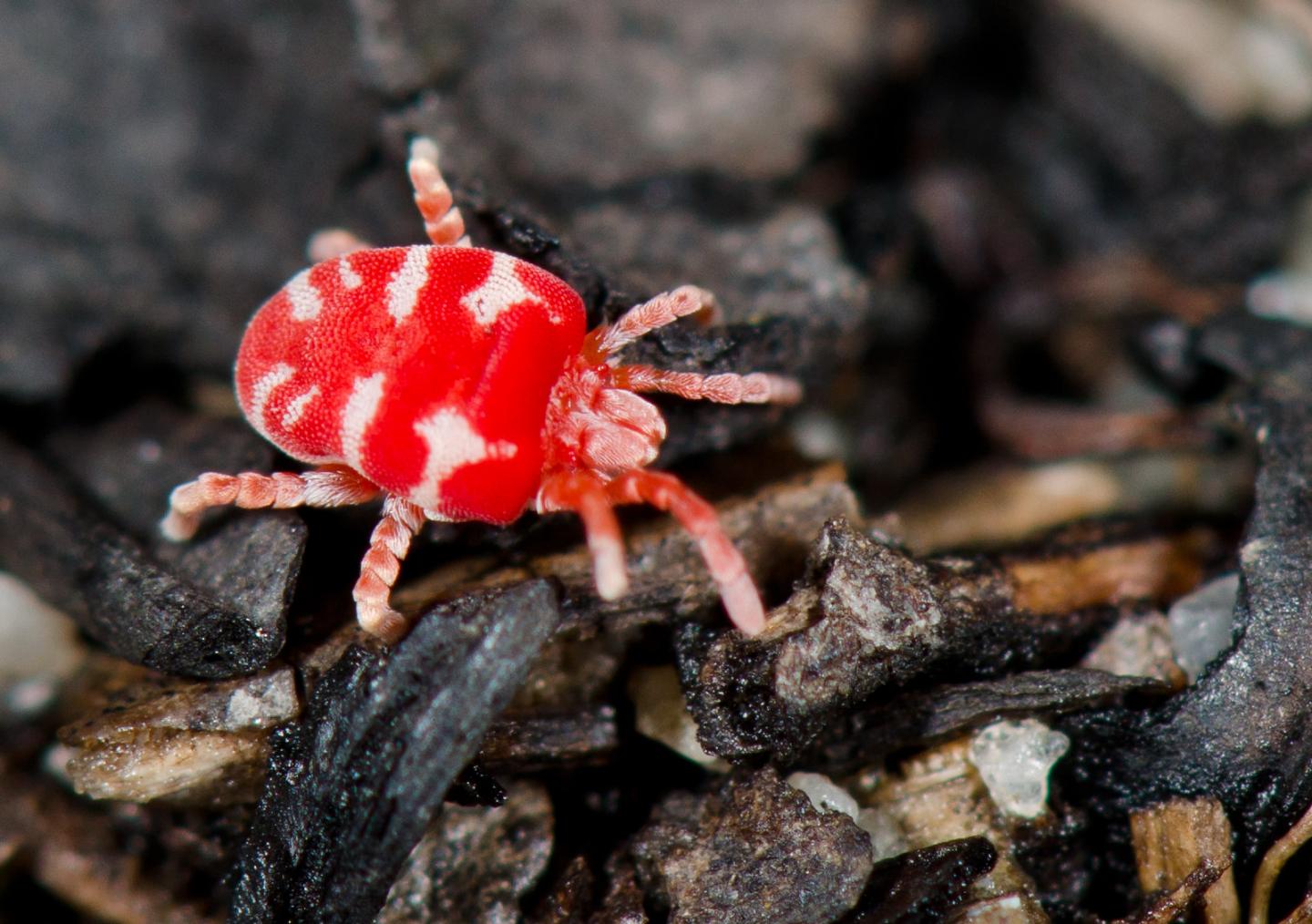
Mite extinctions are occurring at least 1,000 times the ‘natural’ rate – a finding a University of Queensland researcher says is another warning that global biodiversity is in deep trouble.

The 1.25 million mite species around the planet occupy an enormous variety of terrestrial and freshwater ecosystems, from the equator, to polar regions and high altitude areas.

In the first global study on mite biodiversity, UQ’s Dr Greg Sullivan and colleague Dr Sebahat K. Ozman-Sullivan compiled data that showed the ongoing extinction of an alarming number of species.

“Mites are critical to ecosystems all over the planet – some provide essential ecosystem services such as the incorporation of organic matter into the soil,” Dr Sullivan said.

“These services underpin the survival of innumerable species, and act as a proxy for environmental health.

“However, the humble mite is in trouble, as the majority of mite species are assumed to be in the tropical rainforests, where 50 per cent have been destroyed or severely degraded,” he said.

“And based on estimates of overall biodiversity loss, around 15 per cent of mite species were likely to have become extinct by 2000.

“Losses are currently expected to increase by between 0.6 per cent and six per cent by 2060.”

The researchers said humans are responsible for the erosion of mite diversity.

“Habitat destruction and degradation continue on an enormous scale, with increasing global population and resource consumption the overarching drivers of extinction,” Dr Sullivan said.

“The maintenance of mite biodiversity is highly dependent on the maintenance of plant diversity, habitat complexity and insect diversity.

“This means we urgently need to minimise the rate of destruction and degradation of habitat, especially in subtropical and tropical regions, and protect representative natural areas, especially the global biodiversity hotspots, like the Forests of East Australia biodiversity hotspot.”

In addition, he said climate change was likely worsening the effects of the other drivers at an increasing rate.

“We need a rapid global implementation of technologies that decrease greenhouse gas emissions and increase carbon sequestration, including the widespread regeneration of degraded forests with local species.

“This, coupled with an effectively executed international climate agreement, will play a critical role in determining the fate of a substantial proportion of the remaining global biodiversity – including the small, but mighty, mite.”

###

The review piece has been published in Austral Ecology (DOI: 10.1111/aec.12932).

Media Contact
Dr Greg Sullivan
[email protected]

Original Source

https://www.uq.edu.au/news/article/2020/09/mite-y-bit-of-trouble

Related Journal Article

http://dx.doi.org/10.1111/aec.12932

Tags: BiodiversityBiologyClimate ChangeEcology/EnvironmentEntomologyParasitologyPopulation BiologyZoology/Veterinary Science
Share12Tweet8Share2ShareShareShare2

Related Posts

New Study Uncovers Mechanism Behind Burn Pit Particulate Matter–Induced Lung Inflammation

New Study Uncovers Mechanism Behind Burn Pit Particulate Matter–Induced Lung Inflammation

February 6, 2026

DeepBlastoid: Advancing Automated and Efficient Evaluation of Human Blastoids with Deep Learning

February 6, 2026

Navigating the Gut: The Role of Formic Acid in the Microbiome

February 6, 2026

AI-Enhanced Optical Coherence Photoacoustic Microscopy Revolutionizes 3D Cancer Model Imaging

February 6, 2026
Please login to join discussion

POPULAR NEWS

  • Robotic Ureteral Reconstruction: A Novel Approach

    Robotic Ureteral Reconstruction: A Novel Approach

    82 shares
    Share 33 Tweet 21
  • Digital Privacy: Health Data Control in Incarceration

    63 shares
    Share 25 Tweet 16
  • Study Reveals Lipid Accumulation in ME/CFS Cells

    57 shares
    Share 23 Tweet 14
  • Breakthrough in RNA Research Accelerates Medical Innovations Timeline

    53 shares
    Share 21 Tweet 13

About

We bring you the latest biotechnology news from best research centers and universities around the world. Check our website.

Follow us

Recent News

Neg-Entropy: The Key Therapeutic Target for Chronic Diseases

Multidisciplinary Evidence-Based Guidelines for Therapeutic Drug Monitoring of Biologics in Inflammatory Bowel Disease

Early Tuberculosis Treatment Lowers Sepsis Mortality in People with HIV

Subscribe to Blog via Email

Enter your email address to subscribe to this blog and receive notifications of new posts by email.

Join 73 other subscribers
  • Contact Us

Bioengineer.org © Copyright 2023 All Rights Reserved.

Welcome Back!

Login to your account below

Forgotten Password?

Retrieve your password

Please enter your username or email address to reset your password.

Log In
No Result
View All Result
  • Homepages
    • Home Page 1
    • Home Page 2
  • News
  • National
  • Business
  • Health
  • Lifestyle
  • Science

Bioengineer.org © Copyright 2023 All Rights Reserved.