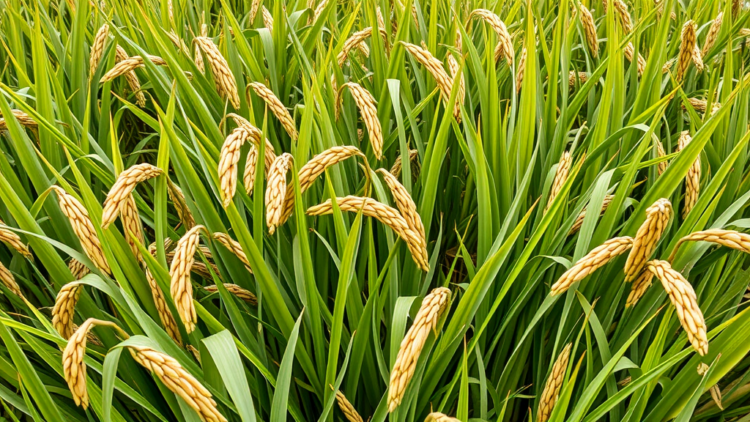
Rice feeds more than half the world’s population, and in Tanzania it has quietly become the second most important food and cash crop after maize. Yet a striking new analysis of nationally representative census data reveals that only a tiny fraction of Tanzanian rice farmers are planting the improved seed varieties that could transform their harvests. According to a study published in BMC Agriculture, just 7.3 percent of rice farmers nationwide use improved seeds, falling to a mere 4.8 percent on the mainland, while the vast majority continue to rely on traditional or recycled varieties that deliver yields far below what modern genetics and good management could achieve. The findings arrive at a critical moment, as Tanzania pursues ambitious national strategies to double crop productivity by 2030 and reduce a persistent dependence on rice imports that drain foreign exchange and expose the country to global price shocks.
The research, conducted by Ibrahim L. Kadigi of Mbeya University of Science and Technology, draws on microdata from the 2019/20 National Sample Census of Agriculture, a comprehensive survey covering more than 5,000 rice-growing households across Mainland Tanzania, with the earlier 2007/08 census used to normalize and stabilize yield comparisons. Rather than relying on simple averages or regression models, the study deployed a nonparametric stochastic simulation framework. Using Latin Hypercube Sampling and a Multivariate Empirical distribution, the analysis generated 500 simulated yield draws for each of 22 unique combinations of seed type and agroecological zone, producing 11,000 simulated yields in total. This Monte Carlo approach captures the full probability distribution of farm yields, including variance, skewness, and extreme outcomes, offering a far richer picture of production risk than conventional mean-based comparisons.
The methodological core of the study is the so-called stoplight analysis, which ranks the probability that farms exceed, fall between, or drop below defined productivity thresholds. Under Scenario A, the researchers set a lower cut-off of 1.5 tonnes per hectare and an upper benchmark of 3.0 tonnes per hectare, roughly the national target range. Under Scenario B, aligned with global standards, the thresholds rise to 2.0 and 4.5 tonnes per hectare. Because average rice yields in Tanzania hover around 2.4 tonnes per hectare, well below the global average of about 4.7 tonnes and far short of the 5 to 7 tonnes achievable with better management, these thresholds effectively frame the gap between ordinary and exceptional performance.
The results are unambiguous. At the national level, 29 percent of farms using improved seeds exceeded the 3.0 tonnes per hectare benchmark, compared with only 20 percent of local-seed farms, a 45 percent increase in the likelihood of high yields. Meanwhile, the share of farms falling below the 1.5 tonnes per hectare floor dropped from 38 percent among local-seed users to 30 percent among improved-seed users. On the mainland, the advantage widened further: 36 percent of improved-seed farms surpassed 3.0 tonnes per hectare versus just 21 percent of local-seed farms, a 71 percent relative improvement, and the proportion of very low-yielding farms fell from 36 percent to 23 percent. In Zanzibar, where overall productivity is lower, improved seeds still nearly doubled the probability of exceeding the benchmark, from 11 percent to 19 percent, and cut the low-yield share from 52 percent to 41 percent.
When the more demanding global thresholds were applied, the absolute probabilities of top-tier performance shrank, but the relative advantage of improved seeds grew even more pronounced. Nationally, the share of farms exceeding 4.5 tonnes per hectare doubled from 6 percent among local-seed users to 12 percent among improved-seed users, while the proportion of farms yielding less than 2.0 tonnes per hectare fell from 61 percent to 50 percent. On the mainland, 15 percent of improved-seed farms cleared the 4.5 tonnes per hectare bar, more than double the 6 percent of local-seed farms, and the low-yield share collapsed from 60 percent to 41 percent. In Zanzibar, improved-seed users were more than three times as likely as local-seed users to reach the global benchmark, and the share of extremely low-yielding farms declined from 79 percent to 64 percent. The pattern, the study emphasizes, is that improved seeds shift the entire yield distribution upward rather than simply nudging averages.
The agroecological breakdown adds crucial nuance. Tanzania’s rice landscapes span nine distinct zones, from the semi-arid Central Zone with erratic rainfall of 400 to 700 millimeters, to the fertile, well-watered Southern Highlands receiving 900 to 1,400 millimeters annually. In the Northern Highlands, improved seeds raised the probability of exceeding 3.0 tonnes per hectare from 50 to 55 percent and essentially eliminated the risk of yields below 1.5 tonnes per hectare, dropping it from 4 percent to zero. In the Southern Highlands, high-yield probabilities climbed from 34 to 52 percent while low-yield risk was nearly halved from 28 to 15 percent. Even in structurally disadvantaged zones, improved seeds delivered measurable gains: in the Southern Zone, the share of farms exceeding the benchmark rose from a dismal 2 percent to 20 percent, and in the Eastern Zone, high-yield probabilities increased from 14 to 27 percent while low-yield risk fell from 32 to 21 percent.
Yet the study is candid about limits. In the Southern and Western zones, more than half of farms remained in the low-productivity band even with improved seeds, and under the higher global thresholds, low-yield probabilities in some zones climbed to 68 to 79 percent despite adoption. The Western Zone even showed a slightly higher probability of very poor yields among improved-seed users under the strictest scenario, at 79 percent versus 73 percent for local seeds. These findings signal that seed quality alone cannot overcome deeper constraints such as soil acidity, poor drainage, limited irrigation, and inadequate extension coverage. The authors argue that seed subsidies and input programs should therefore not be applied uniformly nationwide but calibrated to zone-specific bottlenecks, pairing improved seeds with irrigation expansion, water harvesting, soil fertility restoration, lime subsidies, and drainage improvement where those constraints dominate.
The adoption picture itself reveals a stark institutional divide. While fewer than 5 percent of mainland farmers use improved rice seeds, adoption in Zanzibar reaches nearly 30 percent, a difference the study attributes partly to targeted seed subsidy schemes, strengthened last-mile distribution through shehia-level cooperatives, and public-sector seed multiplication programs on the islands. The low mainland uptake reflects weak seed systems, high transaction costs, market inefficiencies, limited extension services, and affordability barriers, compounded by the fact that many smallholders rely on informal, recycled seeds with declining genetic purity and germination performance. The census data also cannot distinguish certified improved seeds from quality-declared or farmer-saved improved varieties, a limitation the author notes may cause the estimated productivity differences to understate or overstate the true performance of certified material.
Validation of the simulation framework was rigorous. Observed and simulated yield distributions overlapped closely across all four major farmer groups, with means, standard deviations, coefficients of variation, and distribution shapes aligning almost perfectly. For instance, mainland improved-seed farms showed an observed and simulated mean of 2.77 tonnes per hectare with identical standard deviations of 1.39 and coefficients of variation of roughly 50 percent. No outliers were removed, since rare high-yield observations plausibly reflect practices such as the System of Rice Intensification, and the nonparametric framework deliberately retains tail outcomes to represent the full spectrum of production risk. The close correspondence reflects correct model specification rather than overfitting, the study explains, because simulated draws are generated directly from empirical distributions.
The policy implications extend well beyond Tanzania’s borders. Rice consumption in Sub-Saharan Africa has surged from roughly 13 kilograms per capita annually in the 1970s to more than 30 kilograms today, and Africa imported over 16 million metric tonnes of rice valued at more than USD 6 billion in 2022 alone. Tanzania, despite cultivating more than 1.1 million hectares, still imports between 70,000 and 120,000 metric tonnes annually. By quantifying where improved seeds most effectively lift yield distributions and where complementary investments are essential, the study offers actionable evidence for the Agricultural Sector Development Programme II, the National Rice Development Strategy II, and the Tanzania Seed Sector Development Strategy 2030, while supporting progress toward Sustainable Development Goals on poverty, hunger, and climate action. In high-potential zones, the priority is scaling, mechanization, and market integration; in marginal zones, seeds must ride alongside water, soil, and knowledge investments. Improved seeds, the evidence shows, are a necessary lever for Tanzania’s rice transformation, but never a sufficient one on their own.
Subject of Research: The effect of improved rice seed adoption on rice productivity and production risk across agroecological zones in Tanzania, using national census microdata and nonparametric stochastic simulation.
Article Title: Improved seeds and rice productivity in Tanzania: policy insights from national sample census data
Article References: Kadigi, I. L. (2026). Improved seeds and rice productivity in Tanzania: policy insights from national sample census data. BMC Agriculture, 2(1), Article 35. https://doi.org/10.1186/s44399-026-00042-0
Image Credits: AI Generated
DOI: 10.1186/s44399-026-00042-0
Keywords: improved seeds, rice productivity, Tanzania, agroecological zones, stochastic simulation, National Sample Census of Agriculture, food security, smallholder farmers, yield thresholds, seed systems, ASDP-II, NRDS-II
Cite Scienmag News
APA MLA Chicago
Alan Morgan. (September 22, 2026). Improved Rice Seeds Lift Yields and Cut Risk for Tanzanian Farmers, National Census Simulation Shows. Scienmag. https://scienmag.com/improved-rice-seeds-lift-yields-and-cut-risk-for-tanzanian-farmers-national-census-simulation-shows/
Alan Morgan. “Improved Rice Seeds Lift Yields and Cut Risk for Tanzanian Farmers, National Census Simulation Shows.” Scienmag, 22 September 2026, https://scienmag.com/improved-rice-seeds-lift-yields-and-cut-risk-for-tanzanian-farmers-national-census-simulation-shows/. Accessed 22 September 2026.
Alan Morgan. “Improved Rice Seeds Lift Yields and Cut Risk for Tanzanian Farmers, National Census Simulation Shows.” Scienmag. September 22, 2026. https://scienmag.com/improved-rice-seeds-lift-yields-and-cut-risk-for-tanzanian-farmers-national-census-simulation-shows/
Copy citation Download RIS
Tags: agricultural census dataagricultural modernization in Tanzaniaagroecological zonesASDP-IIcrop yield improvementFood securityimpact of modern genetics on rice yieldsimproved seed varietiesimproved seedsnational food security and import reductionNational Sample Census of AgricultureNRDS-IIrice crop productivity strategiesrice production in Tanzaniarice productivityrisks of relying on traditional rice seedsrole of improved seeds in climate resilienceseed systemssmallholder farmerssmallholder rice farming challengesstochastic simulationTanzaniaTanzanian rice farmersyield thresholds