Plant diseases are quietly winning a global war. Pathogens and pests strip an estimated 20 to 40 percent of the world’s crop yields every year, with rice blast alone capable of cutting grain production by up to 30 percent and wheat stripe rust causing millions of tons of shortfalls across North Africa and South Asia. As climate change accelerates the spread and virulence of these pathogens, farmers have leaned harder than ever on chemical pesticides—compounds that contaminate soil and water, breed resistant pathogen strains, harm non-target organisms, and accumulate in ecosystems. A new review published in the journal Crop Health argues that the way out of this spiral may come from an unexpected corner of materials science: controlled-release gel encapsulation, a technology that wraps beneficial microorganisms in soft polymer shells and releases them exactly where and when crops need them most.
The review, authored by Jingjing An, Xigang Wang, Gang Qiao, Chengjin Guo, Xiaojiao Li and Xianchao Sun, synthesizes the state of a field that sits at the intersection of microbiology, plant pathology and polymer chemistry. Its central premise is straightforward but consequential. Biological control—using beneficial bacteria and fungi or their metabolites to protect crops—works beautifully under controlled laboratory conditions but routinely fails in the field. Introduced microbes die under ultraviolet radiation, temperature swings, humidity extremes and hostile soil chemistry. They struggle to colonize plant roots, and their protective metabolites are produced in tiny quantities and move poorly through soil. Encapsulation, the authors argue, is the missing delivery infrastructure that could finally make biocontrol as reliable as synthetic chemistry.
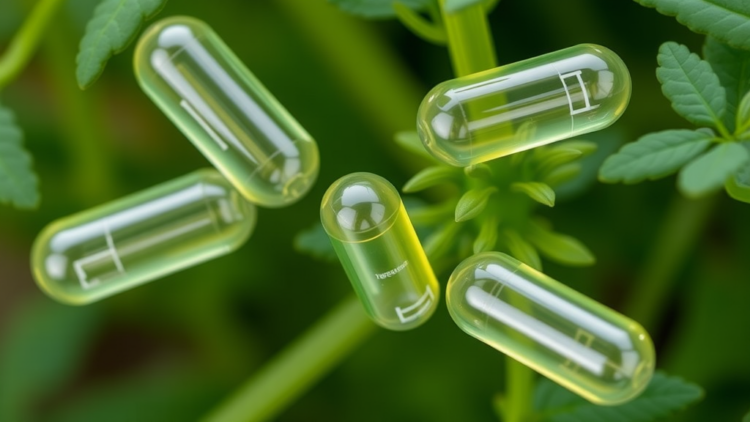
The technical logic behind gel encapsulation draws heavily from pharmaceutical science, where controlled-release dosage forms have sustained therapeutic effects for decades. In agriculture, the core idea is to entrap living cells of organisms such as Bacillus, Pseudomonas and Trichoderma inside a three-dimensional, water-swollen polymeric network—a hydrogel—built from natural biopolymers like alginate, chitosan and starch. Once applied to soil or plant surfaces, the gel gradually degrades or swells in response to environmental cues such as moisture, pH shifts or microbial enzymes, letting the encapsulated agents out at a controlled pace. The released microbes then colonize the rhizosphere or phyllosphere and attack pathogens through antagonism, competition for resources and the activation of the plant’s own immune system.
The protective function of these gels operates along two axes: space and time. Spatially, the capsule wall acts as a physical barrier against ultraviolet radiation, extreme temperatures, desiccation and pH changes. Electrostatic attraction between anionic polymers such as alginate and cationic polymers such as chitosan produces a denser, more robust capsule wall, reinforcing both structural integrity and microbial survival. The evidence is striking. Bacillus megaterium encapsulated in calcium alginate survived ultraviolet and high-temperature stress far better than free cells, and under greenhouse conditions the encapsulated formulation controlled rice blast as effectively as conventional chemical fungicides. Similarly, Bacillus thuringiensis and Bacillus subtilis VRU1 embedded in a starch–bentonite–alginate composite showed greater tolerance to biotic and abiotic stresses and stronger antagonism against potato late blight, caused by Phytophthora infestans.
Temporally, encapsulation extends the functional lifespan of biocontrol agents dramatically. Perez and colleagues showed that Azospirillum brasilense and Pseudomonas fluorescens held within a chitosan–starch matrix cross-linked with sodium tripolyphosphate retained viability for at least 12 months. In another study, Lactobacillus casei ATCC 393 encapsulated in a sodium alginate, chitosan and carboxymethyl chitosan matrix kept cell counts as high as 10^8 colony-forming units per gram after 28 days of refrigerated storage. Methylobacterium oryzae encapsulated with chitosan and alginate maintained 80 percent viability after three months and significantly boosted tomato seedling growth. Beyond protection, the carrier materials themselves can act as resistance elicitors: chitosan triggers plant innate immunity, promoting phytoalexin synthesis, callose deposition, lignification and protease inhibitor production, while also reshaping the rhizosphere to favor beneficial microbes over pathogens.
The choice of encapsulation material is itself a design problem with trade-offs. Starch is abundant, cheap, edible and fully biodegradable, with good film-forming and gelling properties, but its weak mechanical strength and poor water resistance limit field durability; cross-linking with poly(N-isopropylacrylamide) can raise the mechanical strength of starch hydrogels up to 200-fold. Chitosan, derived from chitin by alkaline deacetylation, is non-toxic, biodegradable, cationic under acidic to neutral conditions, and forms stable ionic hydrogels with anionic polymers. Alginate remains the most widely used carrier because it gels almost instantly under mild conditions through calcium ion cross-linking—the so-called egg-box structure—avoiding organic solvents and heat that would kill cells. But pure alginate gels are porous, mechanically fragile, unstable in alkaline soils, and vulnerable to calcium-sequestering agents such as citrates. Pectin, xanthan gum, milk proteins and poly-L-glutamic acid round out the palette, and composite matrices generally outperform any single component in protection and controlled release.
Manufacturing methods impose their own constraints. Ionic gelation and extrusion are the workhorses for living microbes: extrusion pushes a polymer solution containing cells through a nozzle into a calcium chloride bath, forming uniform hydrogel beads under ambient conditions that preserve viability, but the process has low throughput. Emulsification disperses cell-laden aqueous droplets in oil and solidifies them into microspheres—Pseudomonas fluorescens strains encapsulated in alginate–gelatin matrices stayed stable for six months at room temperature. Spray drying offers industrial scalability and low cost but inflicts thermal damage on cells. Freeze-drying preserves viability yet is slow and expensive, best reserved for high-value strains. No single technique wins on every criterion; selection depends on production scale and the heat sensitivity of the target organism.
The obstacles between laboratory promise and field reality remain substantial, and the review is candid about them. Pure alginate gels collapse under soil mechanical stress and lose stability in alkaline conditions. Prolonged encapsulation creates its own stresses: metabolic acids accumulate and acidify the microenvironment, oxygen diffusion through the gel network is restricted, and nutrient depletion gradually erodes viability. Most critically, release kinetics that are precise under greenhouse conditions become unpredictable in heterogeneous fields where temperature, humidity, soil pH and rainfall vary continuously. Water-soluble encapsulants can dissolve in rain, dumping their entire payload prematurely. The authors also flag unresolved ecological questions: whether degraded polymer by-products—including microplastics, oligomers or chemical monomers—affect soil fauna such as earthworms, arthropods and groundwater systems has not been comprehensively assessed.
The path forward, the authors contend, lies in intelligent, stimulus-responsive systems that release microbes on demand rather than continuously. Gels cross-linked with enzyme-labile moieties could degrade only upon contact with cellulases or pectinases secreted by pathogens, targeting release to infection sites. pH-responsive polymers could release payloads under the mildly acidic conditions associated with root pathogen activity, while co-encapsulated protectants such as trehalose or skim milk, or synergistic microbial consortia, could buffer the internal microenvironment during long storage. The authors call for multi-season, multi-location field trials across diverse soils and climates, combined with metagenomic and metabolomic monitoring, artificial intelligence-assisted modeling and full life-cycle assessment to quantify environmental footprints from raw material to final degradation.
If those hurdles can be cleared, the implications for sustainable agriculture are profound. Encapsulated formulations have occasionally matched or exceeded conventional chemical pesticides in greenhouse trials while prolonging shelf life and reducing application frequency. By transforming fragile living cells into durable, targeted, self-regulating delivery vehicles, controlled-release gel encapsulation could shift crop protection away from chemical dependency and toward a biologically grounded paradigm—one in which the tools of drug delivery help agriculture fight disease with living allies rather than synthetic poisons.
Subject of Research: Controlled-release gel encapsulation of beneficial microorganisms for sustainable plant disease management
Article Title: Controlled-release gel encapsulation: an emerging technology for delivering beneficial microorganisms in sustainable plant disease management
Article References: An, J., Wang, X., Qiao, G., Guo, C., Li, X., & Sun, X. (2026). Controlled-release gel encapsulation: an emerging technology for delivering beneficial microorganisms in sustainable plant disease management. Crop Health, 4(1), Article 26. https://doi.org/10.1007/s44297-026-00088-1
Image Credits: AI Generated
DOI: 10.1007/s44297-026-00088-1
Keywords: controlled-release gel, encapsulation technology, plant diseases, biological control, biopolymers, hydrogels, chitosan, alginate, sustainable agriculture, biopesticides, rhizosphere, plant pathology
Cite Scienmag News
APA MLA Chicago
Alan Morgan. (September 22, 2026). Gel Capsules Could Shield Friendly Microbes and Replace Chemical Pesticides. Scienmag. https://scienmag.com/gel-capsules-could-shield-friendly-microbes-and-replace-chemical-pesticides/
Alan Morgan. “Gel Capsules Could Shield Friendly Microbes and Replace Chemical Pesticides.” Scienmag, 22 September 2026, https://scienmag.com/gel-capsules-could-shield-friendly-microbes-and-replace-chemical-pesticides/. Accessed 22 September 2026.
Alan Morgan. “Gel Capsules Could Shield Friendly Microbes and Replace Chemical Pesticides.” Scienmag. September 22, 2026. https://scienmag.com/gel-capsules-could-shield-friendly-microbes-and-replace-chemical-pesticides/
Copy citation Download RIS
Tags: advances in materials science for agriculturealginatebeneficial microbes for crop protectionbiological controlbiological control of plant diseasesbiopesticidesbiopolymerschitosancontrolled-release gelcontrolled-release gel encapsulation in agriculturecrop disease management strategiesencapsulation technologyenvironmentally friendly agricultural innovationshydrogelsimpact of climate change on crop pathogensmicrobial delivery systems in farmingmicrobiology and plant pathology integrationplant diseasesplant pathologypolymer-based microbe encapsulationreducing chemical pesticide userhizospheresustainable agriculturesustainable pest management solutions