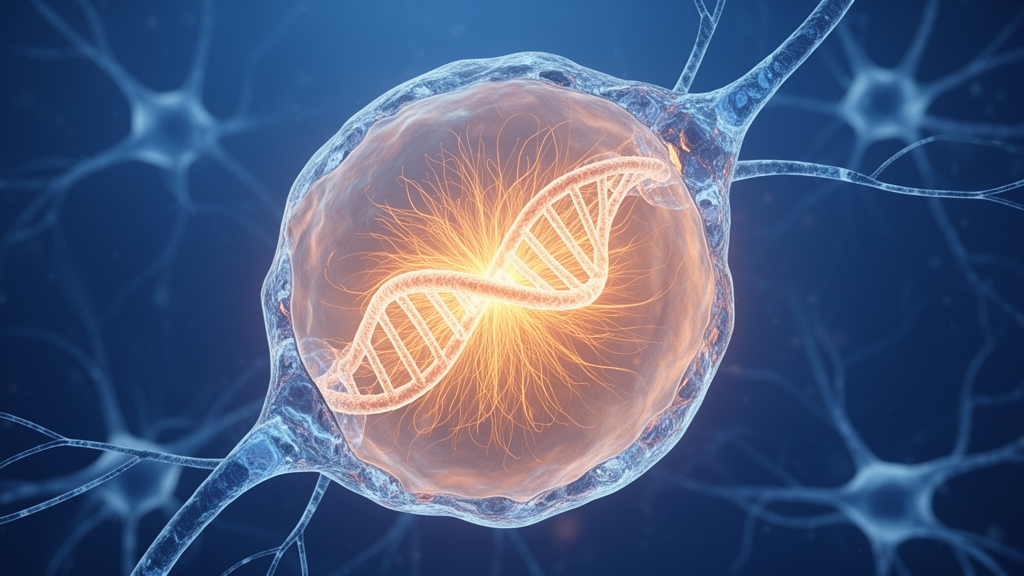
A review of genetic, epigenetic, and neurobiological evidence indicates that the DLK1-DIO3 genomic domain acts as a critical regulator of brain development and plays key roles across complex neurological, psychiatric, and neuroendocrine disorders. Researchers evaluated published findings linking altered gene dosage in this imprinted region to neurodevelopmental vulnerability and diverse clinical phenotypes.
The DLK1-DIO3 genomic domain consists of a cluster of imprinted genes regulated through epigenetic mechanisms that control expression dosage in a precise, timely, and tissue-specific manner. In the developing central nervous system, transcripts from this locus participate directly in the physiology of most neural cell types, ensuring balanced molecular cues during critical windows of neurodevelopment.
Transcripts originating from the domain govern fundamental cellular milestones, including neural precursor cell proliferation, lineage specification into neurons and glia, and subsequent functional maturation. Furthermore, activity within the locus contributes to the assembly and structural establishment of complex neural and neuroendocrine circuits.
Epigenetic disruption of the domain can arise through direct genetic alterations as well as early neurodevelopmental exposures to maternal disease and environmental stressors. These disturbances produce abnormal transcript expression that can destabilize wider fetal and neonatal brain gene expression programs, altering lifelong neurological and neuroendocrine trajectories.
The synthesized evidence documents associations between DLK1-DIO3 dysregulation and diverse neuropsychiatric conditions. Documented outcomes include autism spectrum disorder, schizophrenia, anxiety, depression, epilepsy, neurodegenerative conditions, psychomotor alterations, maladaptive brain inflammatory responses, and heightened susceptibility to drug abuse, alongside neuroendocrine disorders and related behavioral shifts.
Insights gathered from human molecular signatures, rodent models, and human induced pluripotent stem cell-derived neural cells provide mechanistic clarity regarding the neurodevelopmental steps disrupted by aberrant expression. The authors note that understanding these conserved pathways offers a framework to explore unresolved questions in psychiatric etiology, including rising prevalence rates, missing heritability, and phenotypic heterogeneity.
In assessing the structural scope of the literature, the authors framed their narrative review across distinct scientific disciplines, integrating genetic, epigenetic, environmental, neurobiological, and behavioral studies. This multi-tiered approach was designed to map how perturbations occurring across early developmental stages propagate into diverse neurological, psychiatric, and neuroendocrine outcomes. By synthesizing evidence across these separate methodological levels, the review delineates the pathways through which environmental factors and maternal health conditions interact with genetic backgrounds during fetal life, altering the epigenetic architecture that coordinates gene dosage within the imprinted cluster.
A central distinction emphasized in the synthesis centers on the types of evidence generated across different experimental platforms. In clinical populations, the review notes growing observational data associating distinct molecular signatures within the DLK1-DIO3 domain with complex clinical presentations. However, because human observational studies primarily identify molecular correlations rather than direct causality, complementary mechanistic insights were derived from laboratory systems. Specifically, research utilizing rodent models and human induced pluripotent stem cell-derived neural cells allowed researchers to directly interrogate cellular dynamics, demonstrating how altered expression of domain transcripts disrupts fundamental neural precursor cell proliferation and lineage commitment during sensitive developmental windows.
The review further highlights the broader utility of these convergent experimental findings in addressing long-standing conceptual challenges in psychiatric and neurological research. By linking early epigenetic dysregulation of imprinted transcripts to downstream cascades in brain gene expression, the authors argue that the DLK1-DIO3 domain provides an explanatory framework for several unresolved questions surrounding complex disorders. In particular, this regulatory locus offers potential biological explanations for the rising prevalence observed across certain neuropsychiatric conditions, the phenomenon of missing heritability where genetic variants alone fail to explain disease risk, and the extensive phenotypical heterogeneity documented across affected patient groups.
Subject of Research: Epigenetic regulation and neurodevelopmental roles of the DLK1-DIO3 imprinted domain
Article Title: Emerging roles of the DLK1-DIO3 imprinted domain in neurodevelopment and complex neurological and psychiatric disorders
Article References: Escamilla, S., Kuang, R. Y., Figueroa, C. A., Krishnan, N., Hernández, A., & Salas-Lucia, F. (2026). Emerging roles of the DLK1-DIO3 imprinted domain in neurodevelopment and complex neurological and psychiatric disorders. Translational Psychiatry. https://doi.org/10.1038/s41398-026-04527-z
Image Credits: AI Generated
DOI: 10.1038/s41398-026-04527-z
Keywords: DLK1-DIO3 domain, genomic imprinting, epigenetics, neurodevelopment, neural precursor cells, lineage specification, functional maturation, neuroendocrine circuits, autism spectrum disorder, schizophrenia, anxiety and depression, epilepsy, neurodegenerative disorders, drug abuse susceptibility, brain inflammation, psychomotor alterations, induced pluripotent stem cells, missing heritability
News Source: Cassandra Pierce. (November 12, 2026). Imprinted Gene Cluster DLK1-DIO3 Regulates Key Brain Development and Disorder Pathways. Scienmag.