• HOME
  • NEWS
  • EXPLORE
    • CAREER
      • Companies
      • Jobs
    • EVENTS
    • iGEM
      • News
      • Team
    • PHOTOS
    • VIDEO
    • WIKI
  • BLOG
  • COMMUNITY
    • FACEBOOK
    • INSTAGRAM
    • TWITTER
Wednesday, May 13, 2026
BIOENGINEER.ORG
No Result
View All Result
  • Login
  • HOME
  • NEWS
  • EXPLORE
    • CAREER
      • Companies
      • Jobs
        • Lecturer
        • PhD Studentship
        • Postdoc
        • Research Assistant
    • EVENTS
    • iGEM
      • News
      • Team
    • PHOTOS
    • VIDEO
    • WIKI
  • BLOG
  • COMMUNITY
    • FACEBOOK
    • INSTAGRAM
    • TWITTER
  • HOME
  • NEWS
  • EXPLORE
    • CAREER
      • Companies
      • Jobs
        • Lecturer
        • PhD Studentship
        • Postdoc
        • Research Assistant
    • EVENTS
    • iGEM
      • News
      • Team
    • PHOTOS
    • VIDEO
    • WIKI
  • BLOG
  • COMMUNITY
    • FACEBOOK
    • INSTAGRAM
    • TWITTER
No Result
View All Result
Bioengineer.org
No Result
View All Result
Home NEWS Science News Biology

Impact of arbuscular mycorrhizal species on heterodera glycines

Bioengineer by Bioengineer
October 26, 2020
in Biology
Reading Time: 2 mins read
0
IMAGE
Share on FacebookShare on TwitterShare on LinkedinShare on RedditShare on Telegram

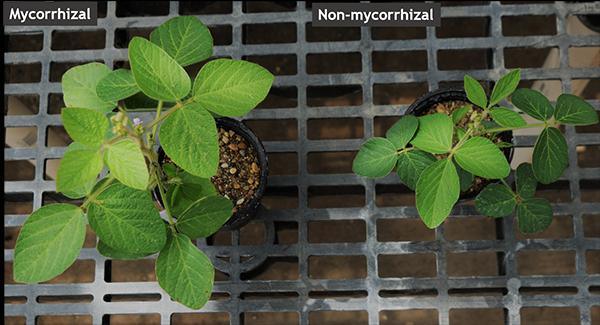
IMAGE

Credit: M. L. Pawlowski and G. L. Hartman

Introduced to the United States over 60 years ago, soybean cyst nematode (SCN) has spread broadly throughout the Midwest and eastern parts of the country. After penetrating the root tissue, SCN take nutrients away from the soybean plant and reduce plant growth and yield. These nematodes are the leading cause of soybean losses in the United States–in 2014, SCN resulted in the loss of 3.5 million tons of soybean.

While there are management strategies in place, many of them have become less effective in curtailing SCN populations. University of Illinois and USDA plant pathologists M.L. Pawlowski and G.L. Hartman, respectively, have been involved in an on-going effort to increase soybean productivity by reducing soybean diseases and pests. Their latest research found that arbuscular mycorrhizal fungi in a potential tool in SCN management.

Arbuscular mycorrhizal fungi (AMF) form symbiotic relationships with the roots of most plants, including soybean. Previous research has shown that these fungi can reduce the severity of plant disease caused by pathogens and pests including SCN. Pawlowski and Hartman set out to understand how AMF suppress SCN populations.

In one experiment they found that several different AMF species from different families reduced the number of cysts on soybean roots by 59 to 80 percent. They also found that one AMF species reduced counts of SCN by 60 percent and was able to suppress egg hatching by as much as 30 percent.

“We were surprised to find that AMF was so good at repressing SCN,” said Hartman. “This opens up new avenues of research, which is needed to determine the efficacy of using AMF in field conditions, with a goal of providing another management tool to reduce the impact of SCN on soybean production.”

Hartman also suggests that industries interested in biological control using arbuscular mycorrhizal fungi might consider commercializing the strain (F. mosseae) that was effective in reducing SCN. For more information, read “Impact of Arbuscular Mycorrhizal Species on Heterodera glycines” in the September issue of Plant Disease.

###

Media Contact
Ashley Bergman Carlin
[email protected]

Related Journal Article

http://dx.doi.org/10.1094/PDIS-01-20-0102-RE

Tags: Agricultural Production/EconomicsAgricultureBiologyFertilizers/Pest ManagementFood/Food ScienceMycologyParasitologyPlant Sciences
Share13Tweet8Share2ShareShareShare2

Related Posts

Cutting-Edge Genomic Techniques Reveal Unexpected Cellular Changes in the Aging Brain — Biology

Cutting-Edge Genomic Techniques Reveal Unexpected Cellular Changes in the Aging Brain

May 12, 2026
USC Researchers Initiate Study on the Most Advanced Lab-Grown Kidney Structures — Biology

USC Researchers Initiate Study on the Most Advanced Lab-Grown Kidney Structures

May 12, 2026

Childbirth in Humans Is Not Uniquely Challenging Among Mammals, New Research Shows

May 12, 2026

From Complexity to Clarity: Unraveling the “Topological Laws” Governing Cell Death

May 11, 2026
Please login to join discussion

POPULAR NEWS

  • Research Indicates Potential Connection Between Prenatal Medication Exposure and Elevated Autism Risk

    842 shares
    Share 337 Tweet 211
  • New Study Reveals Plants Can Detect the Sound of Rain

    728 shares
    Share 290 Tweet 182
  • Salmonella Haem Blocks Macrophages, Boosts Infection

    62 shares
    Share 25 Tweet 16
  • Breastmilk Balances E. coli and Beneficial Bacteria in Infant Gut Microbiomes

    57 shares
    Share 23 Tweet 14

About

We bring you the latest biotechnology news from best research centers and universities around the world. Check our website.

Follow us

Recent News

Study Suggests Possible Link Between Mother’s Occupation and Autism Spectrum Disorder in Children

Combined Exercise and HIIT Significantly Reduce 24-Hour Blood Pressure, New Study Shows

FAMU-FSU College of Engineering Develops AI Tool to Predict E. coli Contamination in Waterways

Subscribe to Blog via Email

Enter your email address to subscribe to this blog and receive notifications of new posts by email.

Join 82 other subscribers
  • Contact Us

Bioengineer.org © Copyright 2023 All Rights Reserved.

Welcome Back!

Login to your account below

Forgotten Password?

Retrieve your password

Please enter your username or email address to reset your password.

Log In
No Result
View All Result
  • Homepages
    • Home Page 1
    • Home Page 2
  • News
  • National
  • Business
  • Health
  • Lifestyle
  • Science

Bioengineer.org © Copyright 2023 All Rights Reserved.