• HOME
  • NEWS
  • EXPLORE
    • CAREER
      • Companies
      • Jobs
    • EVENTS
    • iGEM
      • News
      • Team
    • PHOTOS
    • VIDEO
    • WIKI
  • BLOG
  • COMMUNITY
    • FACEBOOK
    • INSTAGRAM
    • TWITTER
Tuesday, December 30, 2025
BIOENGINEER.ORG
No Result
View All Result
  • Login
  • HOME
  • NEWS
  • EXPLORE
    • CAREER
      • Companies
      • Jobs
        • Lecturer
        • PhD Studentship
        • Postdoc
        • Research Assistant
    • EVENTS
    • iGEM
      • News
      • Team
    • PHOTOS
    • VIDEO
    • WIKI
  • BLOG
  • COMMUNITY
    • FACEBOOK
    • INSTAGRAM
    • TWITTER
  • HOME
  • NEWS
  • EXPLORE
    • CAREER
      • Companies
      • Jobs
        • Lecturer
        • PhD Studentship
        • Postdoc
        • Research Assistant
    • EVENTS
    • iGEM
      • News
      • Team
    • PHOTOS
    • VIDEO
    • WIKI
  • BLOG
  • COMMUNITY
    • FACEBOOK
    • INSTAGRAM
    • TWITTER
No Result
View All Result
Bioengineer.org
No Result
View All Result
Home NEWS Science News Health

Immunotherapy safe for patients with COVID-19, cancer

Bioengineer by Bioengineer
July 20, 2020
in Health
Reading Time: 2 mins read
0
IMAGE
Share on FacebookShare on TwitterShare on LinkedinShare on RedditShare on Telegram

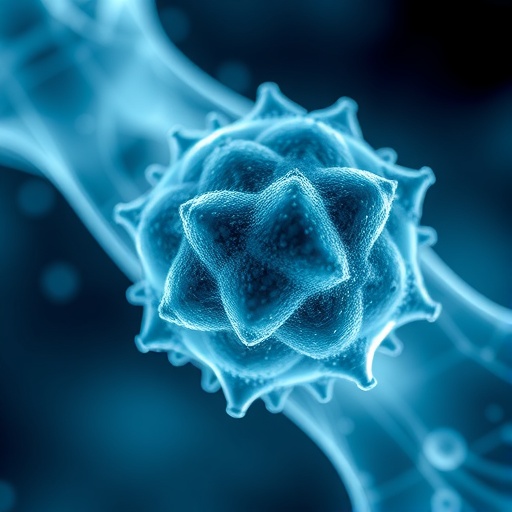
Initial findings from UC study show that immunotherapy for cancer won’t worsen complications for patients with the disease and COVID-19

IMAGE

Credit: Colleen Kelley/UC Creative + Brand

Preliminary data from researchers at the University of Cincinnati Cancer Center show that immunotherapy doesn’t necessarily worsen complications for patients with both COVID-19 and cancer.

This data is being presented by Layne Weatherford, PhD, UC postdoctoral fellow, at the American Association for Cancer Research Virtual Meeting: COVID-19 and Cancer, Monday, July 20.

Weatherford works in the lab of Trisha Wise-Draper, PhD, an associate professor of medicine, Division of Hematology Oncology, at the UC College of Medicine, UC Health oncologist and medical director of the UC Cancer Center Clinical Trials Office.

“Many COVID-19 complications result from an overactive immune response, leading to an increased production of proteins called cytokines,” Weatherford says. “Increased production of these proteins can cause issues like respiratory failure. Patients with cancer are more susceptible to COVID-19 infection as well as severe complications from it.

“Many patients with cancer are treated with immunotherapy, which activates the immune system against cancer to destroy it. In patients with both COVID-19 and cancer, our team thought that immunotherapy might increase the immune system response, which could already be overactive because of the COVID-19 infection.”

Wise-Draper says researchers thought treating COVID-19 patients with cancer immunotherapy might result in worsening patients’ health and overall outcomes.

“We are continuing to investigate whether immunotherapy causes an increased production of these proteins by immune cells from COVID-19 patients, but our initial findings are showing that immunotherapy is not significantly impacting it,” she adds.

Researchers are conducting this study using blood samples from patients with cancer taken from the UC COVID-19 biorepository, which Kris Hudock, MD, assistant professor in the Division of Pulmonary, Critical Care and Sleep Medicine at the UC College of Medicine, oversees.

“We are examining how immune checkpoint inhibitors, drugs that allow immune cells to respond more strongly, in combination with other treatments, like chemotherapy or radiation, affect the immune cells of COVID-19 patients and patients with both COVID-19 and cancer,” she says.

She and Weatherford add that their preliminary data show that an anti-diabetic drug, metformin, can reduce production of these proteins by immune cells of COVID-19 patients.

“These are promising, initial findings,” Wise-Draper says. “Additional research is needed, but our results show that we might be able to treat COVID-19 complications with metformin or a similar drug one day.”

###

Media Contact
Katie Pence
[email protected]

Tags: cancerClinical TrialsInfectious/Emerging DiseasesMedicine/Health
Share12Tweet8Share2ShareShareShare2

Related Posts

Infinite Hidden Markov Models Decode Learning Complexities

December 30, 2025

UCHL1 Boosts Twist1 Stability, Fuels Lung Cancer Metastasis

December 30, 2025

Exploring SLC25A Carriers: Potential in Spaceflight Health

December 30, 2025

Neonatal Nurses Excel in Advancing Congenital Heart Screening

December 30, 2025
Please login to join discussion

POPULAR NEWS

  • blank

    PTSD, Depression, Anxiety in Childhood Cancer Survivors, Parents

    65 shares
    Share 26 Tweet 16
  • NSF funds machine-learning research at UNO and UNL to study energy requirements of walking in older adults

    71 shares
    Share 28 Tweet 18
  • Exploring Audiology Accessibility in Johannesburg, South Africa

    52 shares
    Share 21 Tweet 13
  • Nurses’ Views on Online Learning: Effects on Performance

    71 shares
    Share 28 Tweet 18

About

We bring you the latest biotechnology news from best research centers and universities around the world. Check our website.

Follow us

Recent News

Assessing AI Toolchains for Literature Reviews: A Rubric Approach

Infinite Hidden Markov Models Decode Learning Complexities

UCHL1 Boosts Twist1 Stability, Fuels Lung Cancer Metastasis

Subscribe to Blog via Email

Enter your email address to subscribe to this blog and receive notifications of new posts by email.

Join 71 other subscribers
  • Contact Us

Bioengineer.org © Copyright 2023 All Rights Reserved.

Welcome Back!

Login to your account below

Forgotten Password?

Retrieve your password

Please enter your username or email address to reset your password.

Log In
No Result
View All Result
  • Homepages
    • Home Page 1
    • Home Page 2
  • News
  • National
  • Business
  • Health
  • Lifestyle
  • Science

Bioengineer.org © Copyright 2023 All Rights Reserved.