• HOME
  • NEWS
  • EXPLORE
    • CAREER
      • Companies
      • Jobs
    • EVENTS
    • iGEM
      • News
      • Team
    • PHOTOS
    • VIDEO
    • WIKI
  • BLOG
  • COMMUNITY
    • FACEBOOK
    • INSTAGRAM
    • TWITTER
Thursday, September 24, 2026
BIOENGINEER.ORG
No Result
View All Result
  • Login
  • HOME
  • NEWS
  • EXPLORE
    • CAREER
      • Companies
      • Jobs
        • Lecturer
        • PhD Studentship
        • Postdoc
        • Research Assistant
    • EVENTS
    • iGEM
      • News
      • Team
    • PHOTOS
    • VIDEO
    • WIKI
  • BLOG
  • COMMUNITY
    • FACEBOOK
    • INSTAGRAM
    • TWITTER
  • HOME
  • NEWS
  • EXPLORE
    • CAREER
      • Companies
      • Jobs
        • Lecturer
        • PhD Studentship
        • Postdoc
        • Research Assistant
    • EVENTS
    • iGEM
      • News
      • Team
    • PHOTOS
    • VIDEO
    • WIKI
  • BLOG
  • COMMUNITY
    • FACEBOOK
    • INSTAGRAM
    • TWITTER
No Result
View All Result
Bioengineer.org
No Result
View All Result
Home NEWS Science News Health

Immune cell discovery could improve the fight against hepatitis B

Bioengineer by Bioengineer
June 9, 2020
in Health
Reading Time: 3 mins read
0
IMAGE
Share on FacebookShare on TwitterShare on LinkedinShare on RedditShare on Telegram

IMAGE

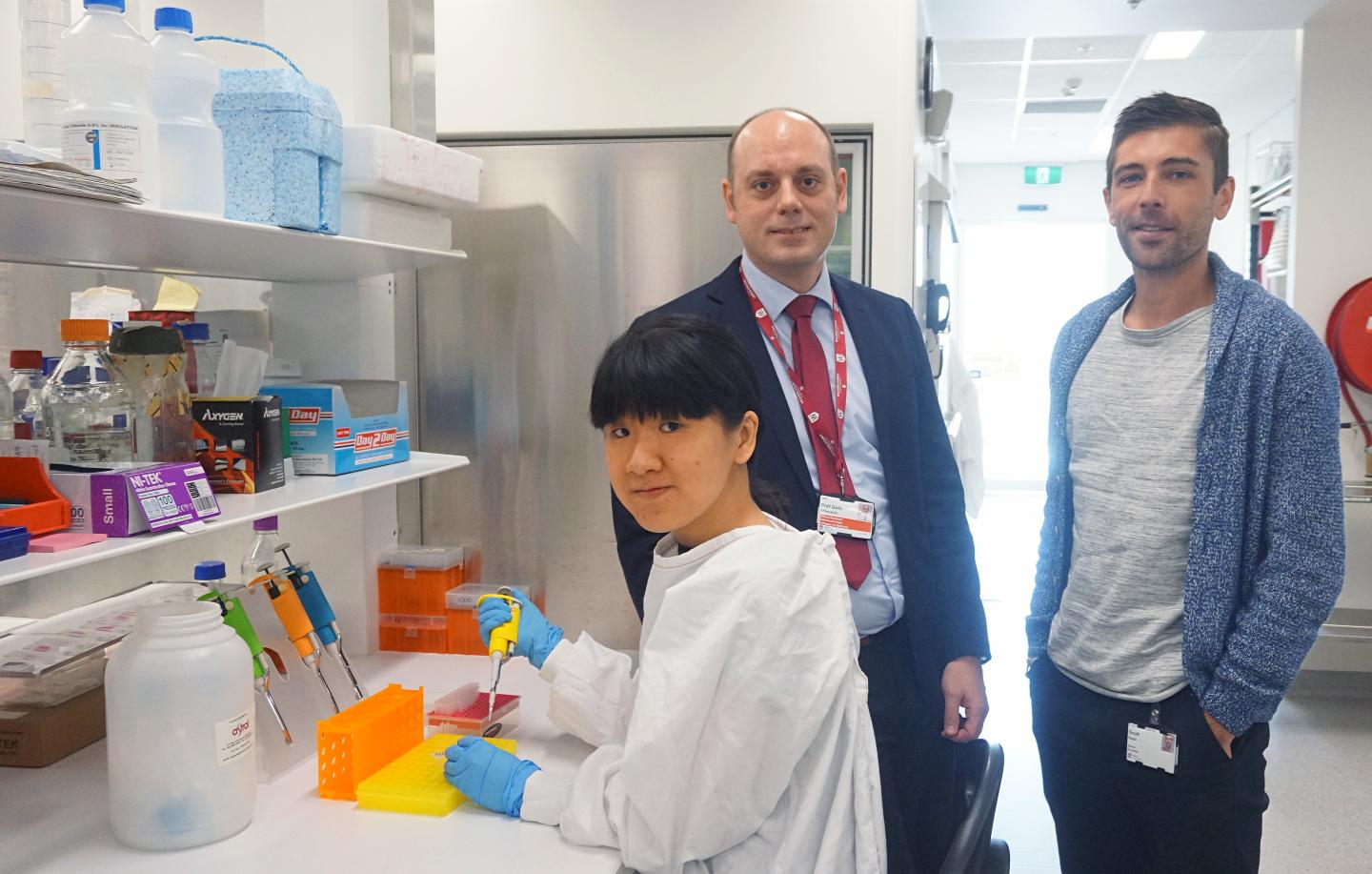
Credit: The Westmead Institute for Medical Research (WIMR)

For the first time, researchers at The Westmead Institute for Medical Research (WIMR) have identified and described a new and unique subset of human cells that are involved in the immune response against hepatitis B (HBV) infection. The discovery could help develop new treatments for HBV and inform future vaccine design.

Currently, HBV vaccination protects against subsequent infection through immunological memory – the vaccine ‘trains’ the immune system to eliminate pathogens when the body is exposed to the virus.

For years, immunological memory was thought to be driven by B and T immune cell responses. Recent studies in mice have suggested that natural killer (NK) cells can also ‘remember’ viral infections, but it remained unknown whether this applied to human viral infections.

Researchers from WIMR studied NK cells in humans who had been vaccinated against, or infected with HBV, and compared them to those who had not been exposed to the virus.

The study, undertaken by PhD student Ratna Wijaya and led by Professor Golo Ahlenstiel and Dr Scott Read, describes for the first time, the presence of memory NK cells (mNKs) in humans following exposure to HBV.

Professor Ahlenstiel said, “This finding is quite significant, as it helps our understanding of how the body fights against HBV following vaccination.

“Previously, we thought that the NK immune response was part of our ‘innate’ immune system. The innate immune system fights against all antigens (foreign bodies, such as viruses), rather than specifically targeting certain antigens. We have now confirmed that NK cells in humans can acquire an immunological ‘memory’, and specifically target HBV-infected cells in subsequent infections.”

HBV is a virus that attacks the liver. Although some individuals who are infected with HBV can eliminate the virus from their body, others, particularly those who are infected in childhood, may develop chronic infections.

“Vaccines have been vital in preventing the spread of HBV,” Professor Ahlenstiel said.

“However, not everyone who is vaccinated will experience the same level of protection. A percentage of those vaccinated – roughly five per cent – will not develop immunity against HBV. This means they can still develop an infection, including a chronic infection.

“Without proper treatment, chronic HBV can lead to serious complications, including liver cancer, and liver cirrhosis with chronic liver failure. It is vital that we prevent such infections where we can.

“We hope that, through our discovery, we can harness the anti-viral properties of mNKs to develop new treatments and improve vaccines so that everyone is protected against this virus.”

###

The research was published in Gut: https://gut.bmj.com/content/early/2020/03/29/gutjnl-2019-319252

Professor Golo Ahlenstiel and Dr Scott Read are affiliated with Storr Liver Centre at WIMR, WSLHD, Western Sydney University and the University of Sydney.

Ratna Wijaya is a PhD student supervised by Professor Golo Ahlenstiel and Dr Scott Read.

Media Contact
Alison Grinyer
[email protected]

Original Source

https://www.westmeadinstitute.org.au/news-and-events/2020/immune-cell-discovery-could-improve-the-fight-agai

Related Journal Article

http://dx.doi.org/10.1136/gutjnl-2019-319252

Tags: Internal MedicineLiverMedicine/Health
Share12Tweet8Share2ShareShareShare2

Related Posts

Swedish Birth Cohort Turns Its Lens on Mothers to Trace Breast Cancer’s Environmental Roots

September 24, 2026

New Risk Model Predicts Kidney Disease Years Before It Strikes People With Prediabetes

September 24, 2026

Hand-Sewn Suture Technique Achieves Coupler-Level Vessel Results in Head and Neck Rebuilds

September 24, 2026

Stigma in the Clinic Strongly Predicts HIV Treatment Interruption in Kenya

September 24, 2026
Please login to join discussion

POPULAR NEWS

  • Locked and Loaded: Structural Studies Reveal How the SCREW Peptide Engages Its NUT Receptor

    29 shares
    Share 12 Tweet 7
  • Slanted Groove Welding Tames Distortion in Thick Steel Plates

    29 shares
    Share 12 Tweet 7
  • AI Moves to the Heart of Radiotherapy as Digital Twins Loom

    29 shares
    Share 12 Tweet 7
  • Swedish Birth Cohort Turns Its Lens on Mothers to Trace Breast Cancer’s Environmental Roots

    29 shares
    Share 12 Tweet 7

About

We bring you the latest biotechnology news from best research centers and universities around the world. Check our website.

Follow us

Recent News

Locked and Loaded: Structural Studies Reveal How the SCREW Peptide Engages Its NUT Receptor

Slanted Groove Welding Tames Distortion in Thick Steel Plates

AI Moves to the Heart of Radiotherapy as Digital Twins Loom

Subscribe to Blog via Email

Enter your email address to subscribe to this blog and receive notifications of new posts by email.

Join 85 other subscribers
  • Contact Us

Bioengineer.org © Copyright 2023 All Rights Reserved.

Welcome Back!

Login to your account below

Forgotten Password?

Retrieve your password

Please enter your username or email address to reset your password.

Log In
No Result
View All Result
  • Homepages
    • Home Page 1
    • Home Page 2
  • News
  • National
  • Business
  • Health
  • Lifestyle
  • Science

Bioengineer.org © Copyright 2023 All Rights Reserved.