• HOME
  • NEWS
  • EXPLORE
    • CAREER
      • Companies
      • Jobs
    • EVENTS
    • iGEM
      • News
      • Team
    • PHOTOS
    • VIDEO
    • WIKI
  • BLOG
  • COMMUNITY
    • FACEBOOK
    • INSTAGRAM
    • TWITTER
Thursday, September 24, 2026
BIOENGINEER.ORG
No Result
View All Result
  • Login
  • HOME
  • NEWS
  • EXPLORE
    • CAREER
      • Companies
      • Jobs
        • Lecturer
        • PhD Studentship
        • Postdoc
        • Research Assistant
    • EVENTS
    • iGEM
      • News
      • Team
    • PHOTOS
    • VIDEO
    • WIKI
  • BLOG
  • COMMUNITY
    • FACEBOOK
    • INSTAGRAM
    • TWITTER
  • HOME
  • NEWS
  • EXPLORE
    • CAREER
      • Companies
      • Jobs
        • Lecturer
        • PhD Studentship
        • Postdoc
        • Research Assistant
    • EVENTS
    • iGEM
      • News
      • Team
    • PHOTOS
    • VIDEO
    • WIKI
  • BLOG
  • COMMUNITY
    • FACEBOOK
    • INSTAGRAM
    • TWITTER
No Result
View All Result
Bioengineer.org
No Result
View All Result
Home NEWS Science News Health

Imaging of ballistic wounds, bullet composition and implications for MRI safety

Bioengineer by Bioengineer
December 29, 2020
in Health
Reading Time: 3 mins read
0
IMAGE
Share on FacebookShare on TwitterShare on LinkedinShare on RedditShare on Telegram

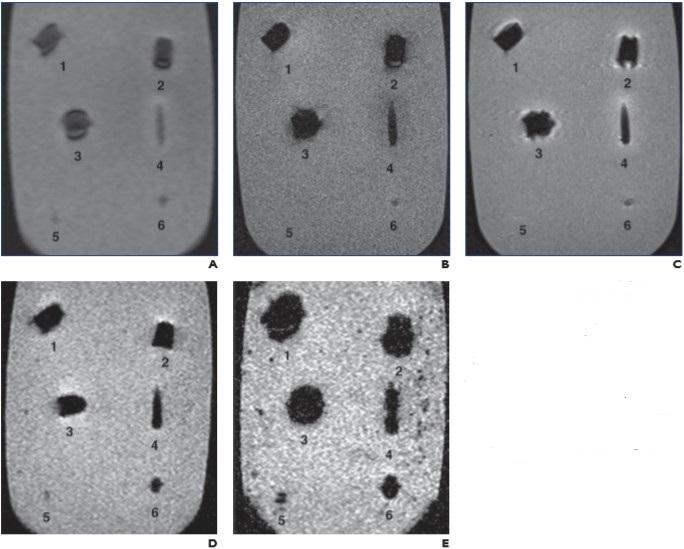
Since patients with ballistic embedded fragments are frequently denied MRI, due to indeterminate bullet composition sans shell casings, radiography and CT can be used to identify nonferromagnetic projectiles that are safe for MRI
IMAGE

Credit: American Roentgen Ray Society (ARRS), American Journal of Roentgenology (AJR)

Leesburg, VA, December 29, 2020–According to an article in ARRS’ American Journal of Roentgenology (AJR), because patients with ballistic embedded fragments are frequently denied MRI (due to indeterminate bullet composition sans shell casings), radiography and CT can be used to identify nonferromagnetic projectiles that are safe for MRI.

“Commercially available handgun and shotgun ammunition representing projectiles commonly encountered in a clinical setting was fired into ballistic gelatin as a surrogate for human tissue,” explained first author Arthur J. Fountain from the department of radiology and imaging sciences at Emory University.

After obtaining radiographs and CT images of these gelatin blocks, Fountain and colleagues then obtained MR images of unfired bullets suspended in gelatin blocks using T1- and T2-weighted sequences. Magnetic attractive force, rotational torque, and heating effects of unfired bullets were assessed at 1.5 T.

Based upon debris trail and primary projectile deformation, the team separated the fired bullets into two groups: ferromagnetic and nonferromagnetic. Although ferromagnetic bullets showed mild torque forces and marked imaging artifacts at 1.5 T, nonferromagnetic bullets did not exhibit these effects.

Importantly, heating above the Food and Drug Administration limit of 2°C was not observed in any of the projectiles tested.

Additionally, the authors of this AJR article presented a triage algorithm for patients with retained ballistic fragments. “In particular,” Fountain et al. described, “a projectile that leaves a metallic debris trail from entry to final position or has been appreciably deformed is of copper, copper-alloy, or lead composition with a partial jacketed configuration or represents lead shotgun shot and does not pose a significant risk for imaging at 1.5 T or less, regardless of when the injury occurred.”

“Nonferromagnetic ballistic projectiles do not undergo movement or heating during MRI, and the imaging modality can be performed when medically necessary without undue risk and with limited artifact susceptibility on the resulting images, even when the projectile is in or near a vital structure,” the authors concluded.

###

Founded in 1900, the American Roentgen Ray Society (ARRS) is the first and oldest radiological society in North America, dedicated to the advancement of medicine through the profession of radiology and its allied sciences. An international forum for progress in medical imaging since the discovery of the x-ray, ARRS maintains its mission of improving health through a community committed to advancing knowledge and skills with an annual scientific meeting, monthly publication of the peer-reviewed American Journal of Roentgenology (AJR), quarterly issues of InPractice magazine, AJR Live Webinars and Podcasts, topical symposia, print and online educational materials, as well as awarding scholarships via The Roentgen Fund®.

Media Contact
Logan K. Young
[email protected]

Original Source

https://arrs.org/ARRSLIVE/Pressroom/PressReleases/Imaging_Ballistic_Wounds_Bullet_Composition_Implications_MRI_Safety.aspx

Related Journal Article

http://dx.doi.org/10.2214/AJR.20.23648

Tags: Critical Care/Emergency MedicineDeath/DyingDiagnosticsHealth Care Systems/ServicesHealth ProfessionalsInternal MedicineMedicine/HealthPublic HealthTrauma/Injury
Share13Tweet8Share2ShareShareShare2

Related Posts

Swedish Birth Cohort Turns Its Lens on Mothers to Trace Breast Cancer’s Environmental Roots

September 24, 2026

New Risk Model Predicts Kidney Disease Years Before It Strikes People With Prediabetes

September 24, 2026

Hand-Sewn Suture Technique Achieves Coupler-Level Vessel Results in Head and Neck Rebuilds

September 24, 2026

Stigma in the Clinic Strongly Predicts HIV Treatment Interruption in Kenya

September 24, 2026
Please login to join discussion

POPULAR NEWS

  • Prenatal BPA Exposure Rewires the Cerebellum Differently in Male and Female Rat Offspring

    29 shares
    Share 12 Tweet 7
  • Locked and Loaded: Structural Studies Reveal How the SCREW Peptide Engages Its NUT Receptor

    29 shares
    Share 12 Tweet 7
  • Slanted Groove Welding Tames Distortion in Thick Steel Plates

    29 shares
    Share 12 Tweet 7
  • AI Moves to the Heart of Radiotherapy as Digital Twins Loom

    29 shares
    Share 12 Tweet 7

About

We bring you the latest biotechnology news from best research centers and universities around the world. Check our website.

Follow us

Recent News

Prenatal BPA Exposure Rewires the Cerebellum Differently in Male and Female Rat Offspring

Locked and Loaded: Structural Studies Reveal How the SCREW Peptide Engages Its NUT Receptor

Slanted Groove Welding Tames Distortion in Thick Steel Plates

Subscribe to Blog via Email

Enter your email address to subscribe to this blog and receive notifications of new posts by email.

Join 85 other subscribers
  • Contact Us

Bioengineer.org © Copyright 2023 All Rights Reserved.

Welcome Back!

Login to your account below

Forgotten Password?

Retrieve your password

Please enter your username or email address to reset your password.

Log In
No Result
View All Result
  • Homepages
    • Home Page 1
    • Home Page 2
  • News
  • National
  • Business
  • Health
  • Lifestyle
  • Science

Bioengineer.org © Copyright 2023 All Rights Reserved.