• HOME
  • NEWS
  • EXPLORE
    • CAREER
      • Companies
      • Jobs
    • EVENTS
    • iGEM
      • News
      • Team
    • PHOTOS
    • VIDEO
    • WIKI
  • BLOG
  • COMMUNITY
    • FACEBOOK
    • INSTAGRAM
    • TWITTER
Saturday, July 4, 2026
BIOENGINEER.ORG
No Result
View All Result
  • Login
  • HOME
  • NEWS
  • EXPLORE
    • CAREER
      • Companies
      • Jobs
        • Lecturer
        • PhD Studentship
        • Postdoc
        • Research Assistant
    • EVENTS
    • iGEM
      • News
      • Team
    • PHOTOS
    • VIDEO
    • WIKI
  • BLOG
  • COMMUNITY
    • FACEBOOK
    • INSTAGRAM
    • TWITTER
  • HOME
  • NEWS
  • EXPLORE
    • CAREER
      • Companies
      • Jobs
        • Lecturer
        • PhD Studentship
        • Postdoc
        • Research Assistant
    • EVENTS
    • iGEM
      • News
      • Team
    • PHOTOS
    • VIDEO
    • WIKI
  • BLOG
  • COMMUNITY
    • FACEBOOK
    • INSTAGRAM
    • TWITTER
No Result
View All Result
Bioengineer.org
No Result
View All Result
Home NEWS Science News

Identifying research priorities for security and safety threats in the Arctic and the North-Atlantic

Bioengineer by Bioengineer
September 15, 2022
in Science News
Reading Time: 2 mins read
0
LIVEX 1
Share on FacebookShare on TwitterShare on LinkedinShare on RedditShare on Telegram

A new method has been developed for identifying and prioritising research activities related to maritime safety and security issues for the Arctic and the North-Atlantic (ANA) region.
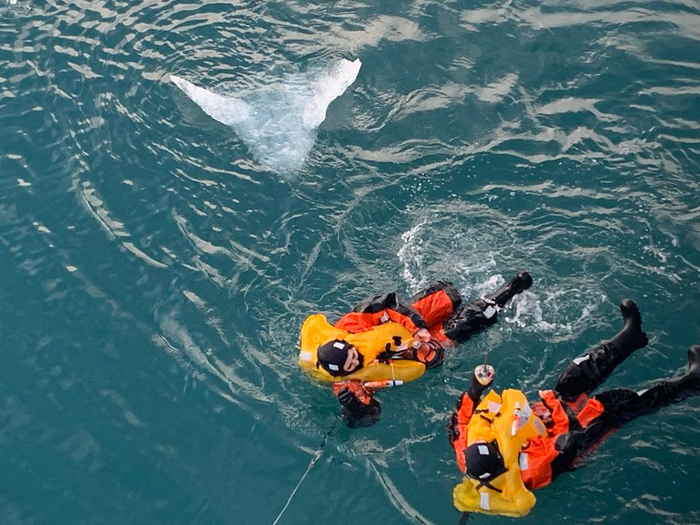
LIVEX 1

Credit: Asraf Labib, University of Portsmouth

A new method has been developed for identifying and prioritising research activities related to maritime safety and security issues for the Arctic and the North-Atlantic (ANA) region.

Researchers from the University of Portsmouth have adapted the concept of a PICK (Possible, Implement, Challenge, Keep Back) chart and a mathematical goal seeking technique to help prioritise needs and innovations to cope with the security and safety threats that will result from increased commercial activity in the region.

The ANA region has traditionally been important in terms of fisheries and fisheries-related activities. Increasingly, the region is experiencing more attention, resulting in greater traffic, and increased human activity including tourism, transport, research and naval fleet vessels including submarines.

As a result, seaborne disasters and security threats such as territorial disputes piracy, terrorism, collisions and accidents, natural disasters and pollution and environmental impacts, are more likely to occur.

The new method will help ensure that the most pressing maritime safety and security research and innovation is undertaken amongst governments, industry, and security organisations across many jurisdictions.

The research was carried out as part of the Arctic and North Atlantic Security and Emergency Preparedness Network (ARCSAR), an EU-funded project to establish the first formal security and preparedness network for the ANA region.

The University of Portsmouth is one of 20 partners from 12 countries in the project, which connects security and preparedness practitioners, academia, industry and authorities to promote interaction and innovation within search and rescue, as well as oil spill response.

Dylan Jones, Professor of Operational Research at the University of Portsmouth, said “It is important to classify and prioritise the research and innovation that needs to take place, in both the short and long term, in order to keep the ANA region safe and secure in the future.

“This research will guide our international ARCSAR partners in the future in their actions to lessen the probability and impact of catastrophes such as oil spillages and cruise ship accidents in their region.”

The research is published in the European Journal of Operational Research.


Journal

European Journal of Operational Research

DOI

10.1016/j.ejor.2022.09.002

Method of Research

Survey

Subject of Research

People

Article Title

Multi-Criteria Mapping and Prioritization of Arctic and North Atlantic Maritime Safety and Security Needs

Article Publication Date

7-Sep-2022

Share12Tweet8Share2ShareShareShare2

Related Posts

Quasi-Bound States Boost Quantum Well Photoresponse — Technology and Engineering

Quasi-Bound States Boost Quantum Well Photoresponse

July 4, 2026

Lysine Pyruvylation Links Glycolysis to Epigenetics

July 4, 2026

Multiphysics Coupling: Single vs. Multiple DeepONet Branches

July 4, 2026

Personalized Neoantigen Dendritic Cell Vaccine in Glioblastoma

July 4, 2026

POPULAR NEWS

  • Detection of EDCs in Breast Milk and Infant Urine Up to Six Months Highlights Early Exposure Risks

    77 shares
    Share 31 Tweet 19
  • Saying Goodbye to PGY-6: Pediatric Fellowship Realities

    103 shares
    Share 41 Tweet 26
  • New Drug Candidate Developed at McMaster Shows Potential for Treating Brain Cancer

    58 shares
    Share 23 Tweet 15
  • KTU Researchers Explore Ultrasound’s Role in Enhancing Blood Flow Beyond Diagnostics

    53 shares
    Share 21 Tweet 13

About

We bring you the latest biotechnology news from best research centers and universities around the world. Check our website.

Follow us

Recent News

Quasi-Bound States Boost Quantum Well Photoresponse

Lysine Pyruvylation Links Glycolysis to Epigenetics

Multiphysics Coupling: Single vs. Multiple DeepONet Branches

Subscribe to Blog via Email

Success! An email was just sent to confirm your subscription. Please find the email now and click 'Confirm' to start subscribing.

Join 83 other subscribers
  • Contact Us

Bioengineer.org © Copyright 2023 All Rights Reserved.

Welcome Back!

Login to your account below

Forgotten Password?

Retrieve your password

Please enter your username or email address to reset your password.

Log In
No Result
View All Result
  • Homepages
    • Home Page 1
    • Home Page 2
  • News
  • National
  • Business
  • Health
  • Lifestyle
  • Science

Bioengineer.org © Copyright 2023 All Rights Reserved.