• HOME
  • NEWS
  • EXPLORE
    • CAREER
      • Companies
      • Jobs
    • EVENTS
    • iGEM
      • News
      • Team
    • PHOTOS
    • VIDEO
    • WIKI
  • BLOG
  • COMMUNITY
    • FACEBOOK
    • INSTAGRAM
    • TWITTER
Wednesday, May 20, 2026
BIOENGINEER.ORG
No Result
View All Result
  • Login
  • HOME
  • NEWS
  • EXPLORE
    • CAREER
      • Companies
      • Jobs
        • Lecturer
        • PhD Studentship
        • Postdoc
        • Research Assistant
    • EVENTS
    • iGEM
      • News
      • Team
    • PHOTOS
    • VIDEO
    • WIKI
  • BLOG
  • COMMUNITY
    • FACEBOOK
    • INSTAGRAM
    • TWITTER
  • HOME
  • NEWS
  • EXPLORE
    • CAREER
      • Companies
      • Jobs
        • Lecturer
        • PhD Studentship
        • Postdoc
        • Research Assistant
    • EVENTS
    • iGEM
      • News
      • Team
    • PHOTOS
    • VIDEO
    • WIKI
  • BLOG
  • COMMUNITY
    • FACEBOOK
    • INSTAGRAM
    • TWITTER
No Result
View All Result
Bioengineer.org
No Result
View All Result
Home NEWS Science News Biology

Hydrogen peroxide protects plants against sun damage

Bioengineer by Bioengineer
June 29, 2017
in Biology
Reading Time: 2 mins read
0
Share on FacebookShare on TwitterShare on LinkedinShare on RedditShare on Telegram
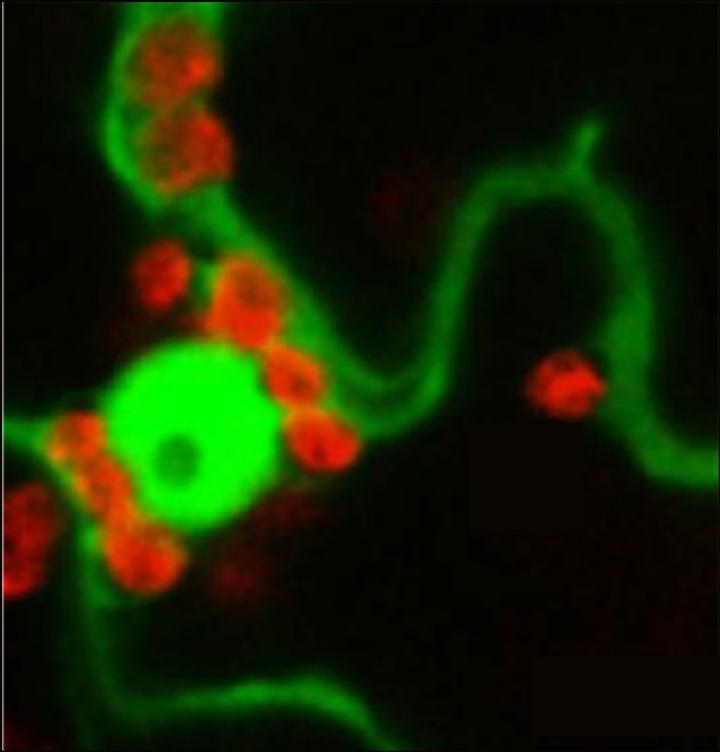
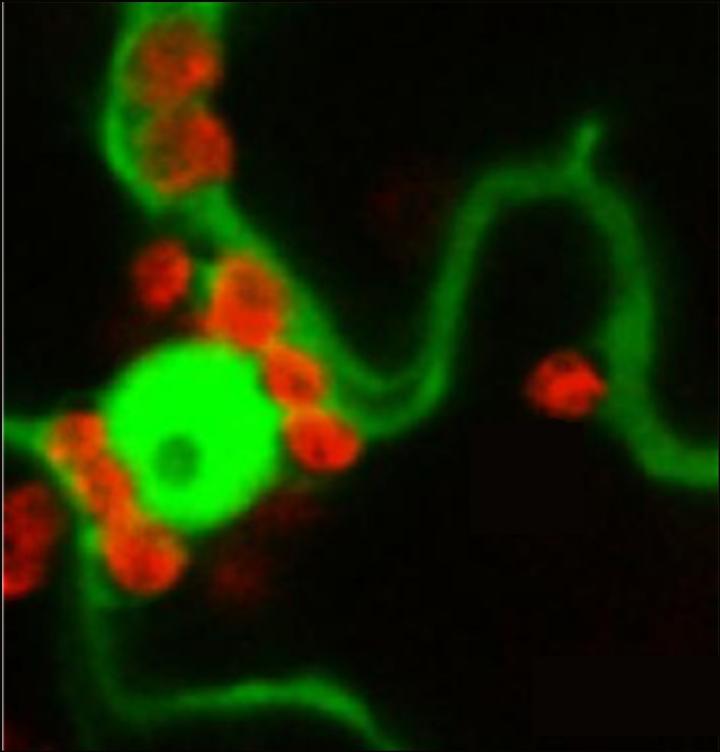
IMAGE

Credit: University of Exeter

Plants use hydrogen peroxide (H2O2) – best known for use in bleach and hair treatments – to control how their cells react to varying levels of light, new research shows.

The chemical is a by-product of photosynthesis in parts of plant cells called chloroplasts.

The signalling role of hydrogen peroxide had previously been suspected, but this study – by the University of Exeter and the University of Essex – is the first to discover where and how it happens.

"It's important for plants to be able to detect how much light there is, so they can make the most of it for photosynthesis," said Professor Nick Smirnoff, of the University of Exeter.

"They also have to adjust to protect themselves, as high levels of light can damage leaves – similar in some ways to how we humans get sunburn on our skin."

Professor Phil Mullineaux, of the University of Essex, said: "We know that there are a lot of different signals sent to cell nuclei to switch on genes and reorganise the way cells work, but this is the first time these signals have been observed moving from the chloroplasts (where photosynthesis takes place) to the nucleus."

The study was funded by the UK Biotechnology and Biological Sciences Research Council (BBSRC).

Using a fluorescent protein that detects hydrogen peroxide, the researchers observed how H2O2 moves from chloroplasts and can be detected in cell nuclei.

Plants' genes are located in the nuclei, and the process discovered shows how plants activate the genes needed for the leaves to adapt to the potentially damaging effects of bright light. This process of chloroplasts communicating with the nucleus ensures that plants continue to protect photosynthesis and adjust to prevailing conditions. Photosynthesis in crop plants determines how well they grow and yield.

The scientists also found that some of the chloroplasts which produce the H2O2 signal are attached to the cell nucleus, allowing them to pass the chemical effectively.

Lead author Dr Marino Exposito-Rodriguez, formerly of the University of Exeter but now at the University of Essex, said: "This breakthrough was made possible by the development of the hydrogen peroxide fluorescent protein sensors, which allowed us to observe the movement of H2O2 in plant cells in real time."

###

The paper, published in the journal Nature Communications, is entitled: "Photosynthesis-dependent H2O2 transfer from chloroplasts to nuclei provides a high-light signalling mechanism."

Media Contact

Alex Morrison
[email protected]
01-392-724-828
@uniofexeter

http://www.exeter.ac.uk

############

Story Source: Materials provided by Scienmag

Share12Tweet8Share2ShareShareShare2

Related Posts

Brookfield Zoo Chicago Achieves Major Milestone in Puerto Rican Crested Toad Conservation with Over 12,000 Tadpoles — Biology

Brookfield Zoo Chicago Achieves Major Milestone in Puerto Rican Crested Toad Conservation with Over 12,000 Tadpoles

May 19, 2026
Decoding p53 Vulnerability: Unraveling Why the Genome Guardian Often Fails — Biology

Decoding p53 Vulnerability: Unraveling Why the Genome Guardian Often Fails

May 19, 2026

New Imaging Technique Simultaneously Maps Brain Activity in Nine Cell Types — Over Four Times the Previous Limit

May 19, 2026

Decoding the Tumor Microenvironment Chemokine Network: From Immune Evasion to Innovative Multi-Target Therapies

May 19, 2026
Please login to join discussion

POPULAR NEWS

  • blank

    New Study Reveals Plants Can Detect the Sound of Rain

    732 shares
    Share 292 Tweet 183
  • Research Indicates Potential Connection Between Prenatal Medication Exposure and Elevated Autism Risk

    846 shares
    Share 338 Tweet 212
  • ESMO 2025: mRNA COVID Vaccines Enhance Efficacy of Cancer Immunotherapy

    281 shares
    Share 112 Tweet 70
  • Breastmilk Balances E. coli and Beneficial Bacteria in Infant Gut Microbiomes

    58 shares
    Share 23 Tweet 15

About

We bring you the latest biotechnology news from best research centers and universities around the world. Check our website.

Follow us

Recent News

Hepatic SNHG9 Connects Gut Microbiota to Liver Defense

NCCN Reinforces Global Commitment to Cancer-Related Distress Resources in Observance of Mental Health Awareness Month

Introducing AGA’s New President: Dr. Byron L. Cryer

Subscribe to Blog via Email

Enter your email address to subscribe to this blog and receive notifications of new posts by email.

Join 82 other subscribers
  • Contact Us

Bioengineer.org © Copyright 2023 All Rights Reserved.

Welcome Back!

Login to your account below

Forgotten Password?

Retrieve your password

Please enter your username or email address to reset your password.

Log In
No Result
View All Result
  • Homepages
    • Home Page 1
    • Home Page 2
  • News
  • National
  • Business
  • Health
  • Lifestyle
  • Science

Bioengineer.org © Copyright 2023 All Rights Reserved.