Deep inside the caves of the Pyrenees, some of Earth’s most specialized animals are living on a physiological knife edge, and new research suggests the blade is sharper than anyone realized. A team of Spanish biologists has shown that a seemingly modest drop in humidity, from fully saturated air down to 75 percent relative humidity, is enough to kill every single cave beetle they tested, even when temperatures stayed at the cool levels these animals have experienced for millennia. The findings, published in the journal Subterranean Biology, reveal that water, not just heat, may be the decisive factor determining whether subterranean biodiversity survives the intensifying droughts of a warming world.
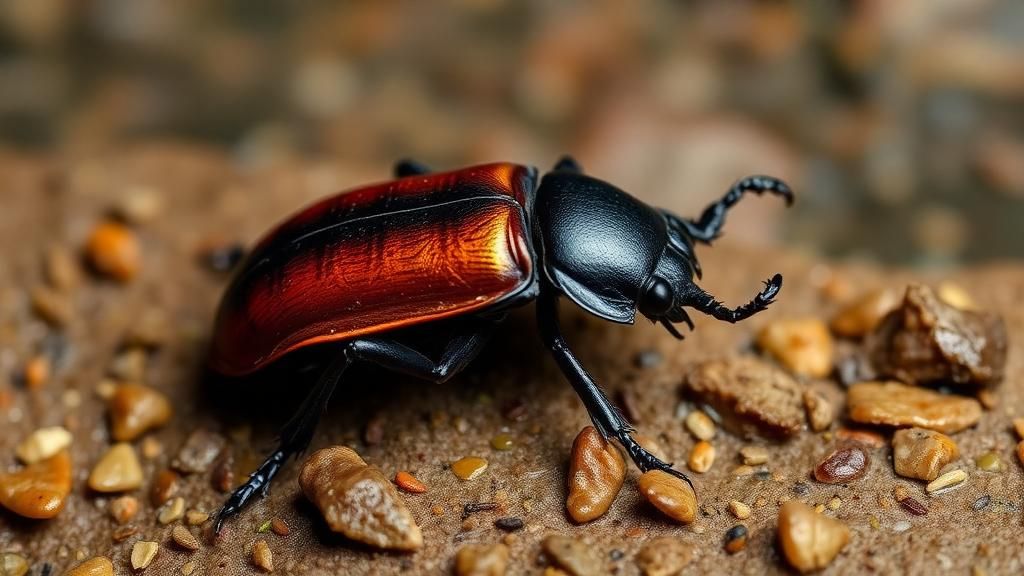
The study focused on four species of minute cave beetles belonging to the tribe Leptodirini, a lineage of wingless, eyeless, pale insects that rank among the most thoroughly cave-adapted animals known. Euryspeonomus eloseguii, Troglocharinus impellitieri, Troglocharinus hustachei and Stygiophyes ribagorzanus were collected from four separate caves scattered across the Pyrenees and Cantabrian Mountains, from Navarra to Catalonia, in caves whose in-situ temperatures ranged from 9.1 to 13.2 degrees Celsius. Adult beetles were captured with mouth aspirators between March and July 2023, transported in portable refrigerators held at their home cave temperatures, and acclimated in the laboratory at the University of Murcia for 72 hours before the experiments began.
The experimental design was elegantly simple but technically rigorous. Beetles were placed in plastic trays with a three-centimeter layer of plaster of Paris on the bottom, topped with a cotton disc to mimic the small crevices and humid areas beneath rocks that these species encounter in caves. The trays were housed in programmable climatic chambers that controlled both temperature and humidity with precision. Each species faced eight combined treatments: four temperatures of 11, 20, 23 and 25 degrees Celsius, crossed with two relative humidity levels of 100 and 75 percent. Humidity was monitored in real time at five-minute intervals throughout the seven-day experiments using Bluetooth-equipped data loggers, and the beetles were fed daily with humidified fish food pellets while survival was checked every 24 hours.
The results were stark. Under control conditions of 11 degrees Celsius and 100 percent relative humidity, nearly all beetles survived the full week, with survival rates between 80 and 100 percent. But at 23 and 25 degrees Celsius, no individual of any species survived seven days, regardless of humidity. More surprising was the effect of humidity alone: at 75 percent relative humidity, every beetle died within a timespan ranging from 24 hours to six days, even at the non-stressful control temperature of 11 degrees Celsius. On average, beetles kept at saturated humidity survived 3.58 days across all treatments, while those at 75 percent humidity lasted only 2.02 days, a 43 percent reduction in survival time caused by a mere 25 percent drop in relative humidity.
Statistical analysis using Cox proportional-hazards models, a semiparametric technique that estimates the instantaneous rate of death over time as a function of predictor variables, confirmed the overwhelming effect of humidity. For Troglocharinus hustachei, the hazard ratio at 75 percent relative humidity compared to 100 percent reached an extraordinary 3.47 million, meaning the mortality risk was millions of times higher under the drier conditions. The temperature-by-humidity interaction was statistically significant in all four species, with hazard ratios below one for the interaction term. This seemingly paradoxical pattern reflects the fact that death was already so imminent at 75 percent humidity that further temperature increases had comparatively little additional effect on mortality.
Species differed subtly in their sensitivities, and these differences appear linked to their evolutionary histories and degrees of subterranean specialization. Euryspeonomus eloseguii, collected from the coldest cave at 9.1 degrees Celsius, proved the most vulnerable on both fronts: it showed complete mortality at 20 degrees Celsius even under saturated humidity, and no individual survived beyond 48 hours at 75 percent relative humidity regardless of temperature. Its mean lethal temperature, the point at which 50 percent of individuals die after seven days, was just 15.4 degrees Celsius, the lowest of the four. For every degree of temperature increase, the Cox model showed that its hazard of death doubled. The remaining three species showed similar lethal temperatures around 19 degrees Celsius, with Stygiophyes ribagorzanus displaying the slowest mortality response to desiccation, though it too suffered complete mortality by the end of the experiment.
The physiological explanation likely lies in the cuticle, the outer covering of insects that serves as the primary barrier against water loss. Surface-dwelling insects from arid environments typically evolve thickened cuticles, abundant waterproofing cuticular hydrocarbons, reduced respiratory water loss, and behavioral adaptations like burrowing or nocturnal activity. Cave-adapted species, having evolved under consistently saturated conditions for millions of years, appear to have relaxed selection for these protective traits. This hypothesis is supported by earlier cuticular studies on subterranean taxa: the troglobitic spider Lycosa howarthi from Hawaiian lava tubes showed lower densities of cuticular lipids and reduced abundances of hydrocarbon classes associated with waterproofing compared to its surface relatives. Thin, highly permeable cuticles, combined with extremely low dispersal ability, make cave invertebrates exceptionally susceptible to desiccation.
Field observations suggest the laboratory conditions were not unrealistic. In July 2023, the researchers recorded 14 degrees Celsius and 82 percent relative humidity, along with dry, dusty soil, in a cave at the Sant Gervasi castle in the Montsec mountain range of Lleida, where the normally abundant endemic beetle Speonomites aurouxi was observed at very low abundance. Recent studies in southeastern Iberian caves documented sharp declines in invertebrate species richness and abundance, with surviving individuals restricted to scarce humid microhabitats in caves that had dried to 82 to 86 percent relative humidity. In one cave, the historically abundant leiodid beetle Anillochlamys tropica had almost disappeared. A study in northwestern Italy reported drastic reductions and complete absence of reproduction in populations of the cave spider Meta bourneti following the severe 2021 to 2022 drought.
The conservation implications are profound. Previous research on cave arthropods, including beetles, pseudoscorpions, spiders and springtails, has consistently revealed narrow thermal niches and low heat tolerance, leading to concerns about their vulnerability to warming. This study suggests those concerns may actually be underestimated, because increasing aridification could further compromise thermal limits through a physiological trade-off between limiting water loss through the spiracles and maintaining adequate oxygen intake, a mechanism previously proposed for click beetles whose thermal tolerance declines with decreasing humidity. Sub-lethal humidity levels above 75 percent relative humidity most likely cause negative fitness effects, potentially altering behavior, suppressing reproduction and foraging, and increasing susceptibility to pathogens, even at humidity values higher than those tested here.
The researchers acknowledge limitations, including small sample sizes of 10 to 12 specimens per treatment, constrained by the difficulty of collecting large numbers from cave populations, and the inability to test additional temperature or humidity conditions. Notably, they observed that unpublished experiments at 80 percent relative humidity showed relatively high survival rates, indicating the existence of a narrow critical humidity threshold below which these species cannot persist. As global climate change intensifies both ambient temperatures and drought frequency, these combined stressors should be considered together in future vulnerability assessments of subterranean fauna, whose restricted distributions and small population sizes leave them little room for escape.
Subject of Research: The key role of humidity for the survival of cave beetles in a context of climate change
Article Title: The key role of humidity for the survival of cave beetles in a context of climate change
Article References: Plaza-Buendía, J., Sánchez-Fernández, D., Colado, R., Beruete Azpilikueta, E., & Pallarés, S. (2025). The key role of humidity for the survival of cave beetles in a context of climate change. Subterranean Biology, 53, 179-196. https://doi.org/10.3897/subtbiol.53.157901
Image Credits: AI Generated
DOI: 10.3897/subtbiol.53.157901
Keywords: role, humidity, survival, cave, beetles, context, climate, change, scientific research
News Source: Sloane Callahan. (October 17, 2026). Humidity emerges as the decisive factor for cave beetle survival under climate change. Scienmag.