• HOME
  • NEWS
  • EXPLORE
    • CAREER
      • Companies
      • Jobs
    • EVENTS
    • iGEM
      • News
      • Team
    • PHOTOS
    • VIDEO
    • WIKI
  • BLOG
  • COMMUNITY
    • FACEBOOK
    • INSTAGRAM
    • TWITTER
Monday, May 11, 2026
BIOENGINEER.ORG
No Result
View All Result
  • Login
  • HOME
  • NEWS
  • EXPLORE
    • CAREER
      • Companies
      • Jobs
        • Lecturer
        • PhD Studentship
        • Postdoc
        • Research Assistant
    • EVENTS
    • iGEM
      • News
      • Team
    • PHOTOS
    • VIDEO
    • WIKI
  • BLOG
  • COMMUNITY
    • FACEBOOK
    • INSTAGRAM
    • TWITTER
  • HOME
  • NEWS
  • EXPLORE
    • CAREER
      • Companies
      • Jobs
        • Lecturer
        • PhD Studentship
        • Postdoc
        • Research Assistant
    • EVENTS
    • iGEM
      • News
      • Team
    • PHOTOS
    • VIDEO
    • WIKI
  • BLOG
  • COMMUNITY
    • FACEBOOK
    • INSTAGRAM
    • TWITTER
No Result
View All Result
Bioengineer.org
No Result
View All Result
Home NEWS Science News Chemistry

Hubble sets sights on an explosive galaxy

Bioengineer by Bioengineer
June 14, 2019
in Chemistry
Reading Time: 2 mins read
0
IMAGE
Share on FacebookShare on TwitterShare on LinkedinShare on RedditShare on Telegram

IMAGE

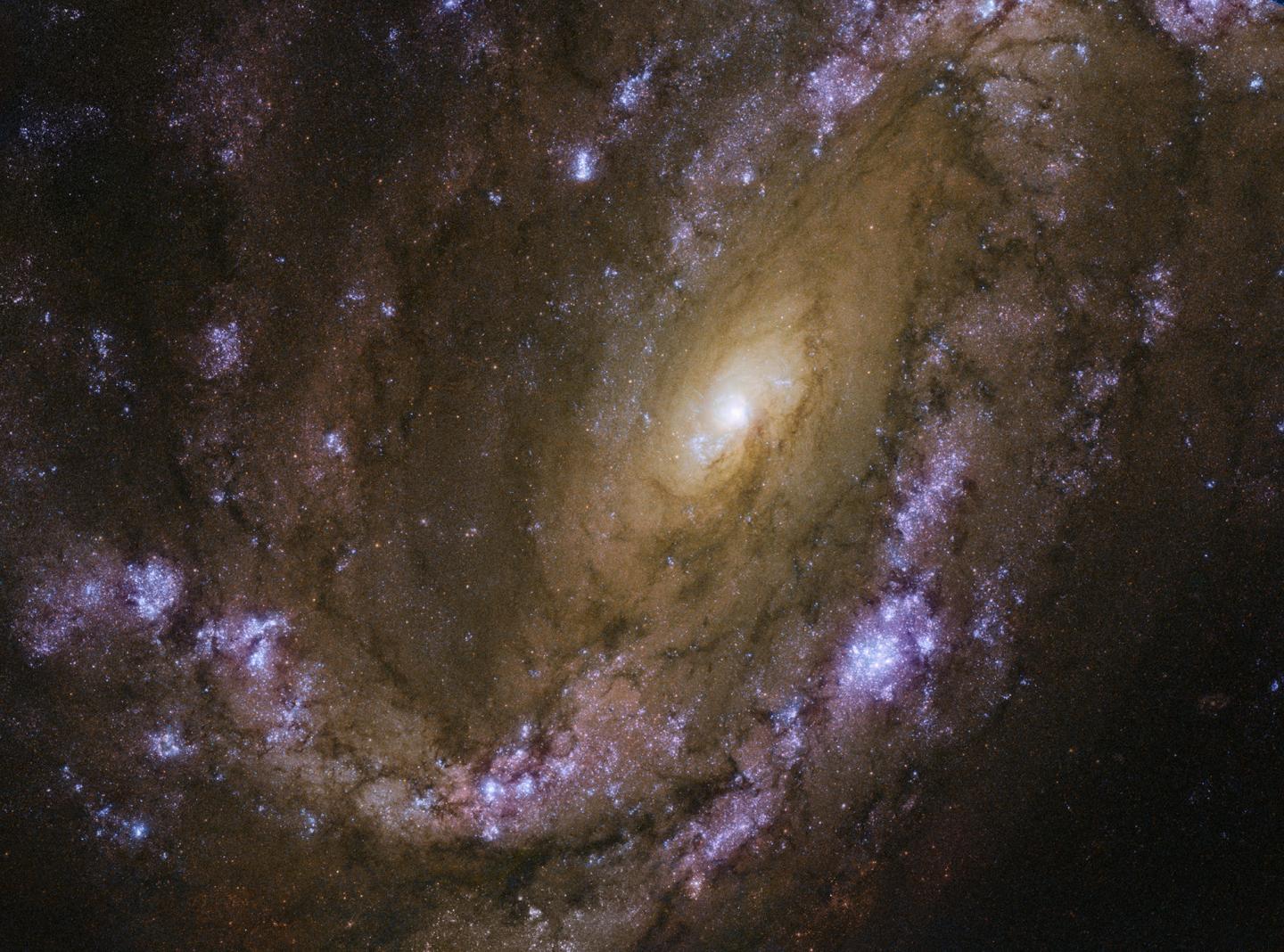
Credit: ESA/Hubble & NASA, D. Crenshaw and O. Fox

When massive stars die at the end of their short lives, they light up the cosmos with bright, explosive bursts of light and material known as supernovae. A supernova event is incredibly energetic and intensely luminous — so much so that it forms what looks like an especially bright new star that slowly fades away over time.

These exploding stars glow so incredibly brightly when they first form that they can be spotted from afar using telescopes such as the NASA/ESA Hubble Space Telescope. The subject of this image, a spiral galaxy named NGC 4051 — about 45 million light-years from Earth — has hosted multiple supernovae in past years. The first was spotted in 1983 (SN 1983I), the second in 2003 (SN 2003ie), and the most recent in 2010 (SN 2010br). These explosive events were seen scattered throughout the center and spiral arms of NGC 4051.

SN 1983I and SN 2010br were both categorized as Type Ic supernovae. This type of supernova is produced by the core collapse of a massive star that has lost its outer layer of hydrogen and helium, either via winds or by mass transfer to a companion star. Because of this, Type Ic — and also Type Ib — supernovae are sometimes referred to as stripped core-collapse supernovae.

NGC 4501 sits in the southern part of a cluster of galaxies known as the Ursa Major I Cluster. This cluster is especially rich in spirals such as NGC 4051, and is a subset of the larger Virgo Supercluster, which also houses the Milky Way.

###

Media Contact
Claire Andreoli
[email protected]

Original Source

http://www.nasa.gov/image-feature/goddard/2019/hubble-sets-sights-on-an-explosive-galaxy

Tags: AstronomyAstrophysicsSatellite Missions/ShuttlesSpace/Planetary ScienceStars/The Sun
Share12Tweet8Share2ShareShareShare2

Related Posts

Miniature Sensor Uses Light to Detect Touch — Chemistry

Miniature Sensor Uses Light to Detect Touch

May 8, 2026
Iron Minerals Determine Whether Dissolved Organic Matter Fuels Microbes or Becomes Long-Term Carbon Storage — Chemistry

Iron Minerals Determine Whether Dissolved Organic Matter Fuels Microbes or Becomes Long-Term Carbon Storage

May 8, 2026

Kate Evans Appointed Associate Lab Director for Biological and Environmental Systems Science at ORNL

May 8, 2026

Advancing Multiscale Modeling and Overcoming Operational Challenges in Autothermal CO₂-to-Methanol Reactors

May 8, 2026
Please login to join discussion

POPULAR NEWS

  • Research Indicates Potential Connection Between Prenatal Medication Exposure and Elevated Autism Risk

    840 shares
    Share 336 Tweet 210
  • New Study Reveals Plants Can Detect the Sound of Rain

    727 shares
    Share 290 Tweet 181
  • Scientists Investigate Possible Connection Between COVID-19 and Increased Lung Cancer Risk

    68 shares
    Share 27 Tweet 17
  • Salmonella Haem Blocks Macrophages, Boosts Infection

    61 shares
    Share 24 Tweet 15

About

We bring you the latest biotechnology news from best research centers and universities around the world. Check our website.

Follow us

Recent News

Evaluating Digoxin Use in Patients with Symptomatic Rheumatic Heart Disease

Evaluating the Effectiveness and Safety of Digitalis Glycosides in Treating Heart Failure

Urdu Fall Risk Questionnaire Adapted for Elderly

Subscribe to Blog via Email

Success! An email was just sent to confirm your subscription. Please find the email now and click 'Confirm' to start subscribing.

Join 82 other subscribers
  • Contact Us

Bioengineer.org © Copyright 2023 All Rights Reserved.

Welcome Back!

Login to your account below

Forgotten Password?

Retrieve your password

Please enter your username or email address to reset your password.

Log In
No Result
View All Result
  • Homepages
    • Home Page 1
    • Home Page 2
  • News
  • National
  • Business
  • Health
  • Lifestyle
  • Science

Bioengineer.org © Copyright 2023 All Rights Reserved.