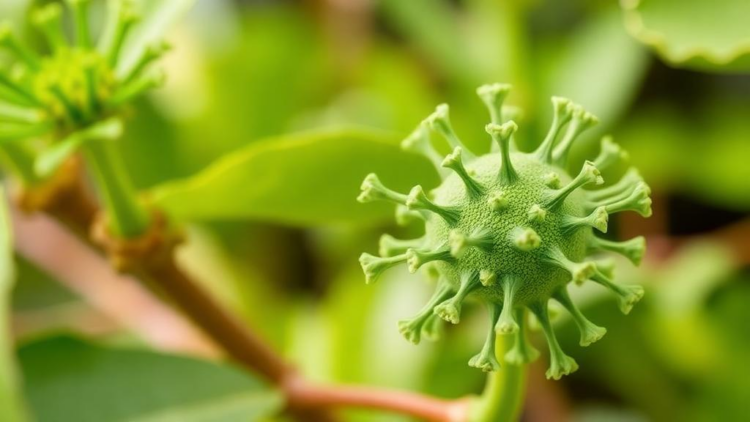
Plant viruses are among the most economically damaging pathogens in agriculture, with annual yield losses estimated to exceed 30 billion dollars worldwide. Because viruses replicate exclusively inside living host cells, conventional chemical treatments are largely ineffective, leaving genetic improvement of virus resistance in crops as the cornerstone of sustainable disease control. A new review published in the journal Stress Biology by Juan Zhang, Chunyan Qi, Jian Yang, Peng Liu and colleagues at Ningbo University and collaborators provides a comprehensive synthesis of how protein-protein interactions between viruses and their hosts govern every stage of infection, and how mapping these interactions can be translated into practical strategies for breeding virus-resistant crops.
The authors argue that the core of viral infection lies in the intricate interaction network between viral proteins and host proteins. As obligate intracellular parasites, plant viruses carry compact genomes encoding only a handful to a few dozen proteins, and they depend extensively on host factors to accomplish entry, replication, assembly, movement and release of progeny virions. Crucially, these interactions also serve as molecular interfaces linking infection to plant defense. Many viral proteins physically interact with key components of the salicylic acid, jasmonic acid and abscisic acid signaling pathways, often suppressing host immunity to promote infection, while plants can exploit specific interactions as molecular cues to activate immune signaling and restrict viral spread. This bidirectional character makes protein interactions simultaneously virulence factors and defense regulators.
A substantial portion of the review is devoted to the technical arsenal available for detecting these interactions. Biophysical techniques such as microscale thermophoresis, isothermal titration calorimetry and biolayer interferometry quantify binding affinities with high sensitivity, minimal sample volumes and low false-positive rates. Microscale thermophoresis monitors the thermophoretic movement of fluorescently labeled proteins across a temperature gradient, and is particularly useful for proteins that are difficult to express or unstable. Isothermal titration calorimetry directly yields full thermodynamic profiles, including enthalpy, entropy and Gibbs free energy, without the need for labeling. Biolayer interferometry measures binding-induced shifts in the interference pattern of light reflected from fiber-optic biosensors, enabling real-time observation of association and dissociation kinetics, and has been applied to quantify binding between viral effectors and host receptors.
Biochemical and cell-based methods complement these quantitative approaches. Co-immunoprecipitation examines interactions in their natural state inside cells, whereas GST pull-down assays test direct bait-prey interactions in vitro, albeit with the risk of tag-induced nonspecific binding. Bimolecular fluorescence complementation reconstitutes a fluorescent protein from two nonfluorescent fragments fused to the proteins of interest, allowing direct visualization of interactions in living cells, though the technique is notoriously temperature sensitive and can fail at higher physiological temperatures. On the computational side, databases such as STRING and Pfam integrate experimental evidence, domain annotations and literature data to predict and visualize interaction networks, providing structural and functional context for experimentally detected pairs.
The review highlights the growing dominance of mass spectrometry-based proteomics in interaction discovery. By the end of 2023, the BioGRID database had compiled more than 2.63 million protein interaction entries, with mass spectrometry techniques such as affinity capture-MS, proximity labeling-MS and co-fractionation collectively contributing over 45 percent of the data. Affinity purification coupled with mass spectrometry remains the predominant high-throughput method, but it struggles with membrane proteins and transient or weak interactions. Proximity labeling overcomes these limits by biotinylating proteins near a target of interest in living cells; the engineered ligases TurboID and miniTurbo, developed through directed evolution, achieve substantial biotinylation within ten minutes, dramatically shortening experimental timelines. Cofractionation mass spectrometry infers interactions from co-elution during chromatographic separation, while chemical cross-linking mass spectrometry captures direct physical contacts by covalently linking proximal amino acid residues, providing distance constraints for structural modeling. The lysis-free Virotrap method, which packages bait proteins into virus-like particles to capture associated host factors under near-native conditions, further reduces purification artifacts.
Despite these advances, the authors caution that no single method suffices. Mass spectrometry generates vast datasets that demand sophisticated processing, and variability in protein abundance complicates detection of low-abundance interactors. Protein interactions are inherently transient, low-affinity and dynamic, varying across tissues, developmental stages and infection time points. Artificial intelligence tools such as AlphaFold and RoseTTAFold have accelerated structure-based prediction of interactions, but their accuracy depends heavily on the quality of multiple sequence alignments and they perform poorly on orphan proteins and complexes with limited homologous sequences. The review therefore advocates an integrative, dynamic and network-centric strategy combining in vitro, in vivo and computational approaches.
The mechanistic core of the review documents how viruses manipulate host proteins at nearly every regulatory layer. RNA silencing is a central antiviral defense in plants, and viruses counter it with dedicated suppressors. The 38 kDa coat protein of turnip crinkle virus interacts with SGS3 to enhance its suppressor activity; the p19 protein of tomato bushy stunt virus sequesters small interfering RNAs and prevents their incorporation into the RNA-induced silencing complex; and the F-box protein P0 of potato leafroll virus promotes the autophagic degradation of ARGONAUTE1. Beyond post-transcriptional silencing, the P3 protein of rice grassy stunt virus triggers P3IP1- and SERK4-dependent degradation of NRPD1a, the largest subunit of RNA polymerase IV, thereby suppressing RNA-directed DNA methylation. A plant bunyaviral protein has also been shown to disrupt the phase separation of SERRATE, dismantling dicing bodies and reducing microRNA biogenesis.
Viruses likewise target signaling cascades and cellular quality-control systems. The coat protein of beet black scorch virus suppresses MAPKKKα-mediated innate immunity through interaction with 14-3-3a, while the βC1 protein of cotton leaf curl Multan virus inhibits MKK2 and MPK4. The NIb protein of turnip mosaic virus blocks SUMOylation-dependent phosphorylation of the salicylic acid receptor NPR1, and the P2 capsid protein of rice dwarf virus competes with the auxin receptor OsTIR1 for binding to OsIAA10, rewiring auxin signaling to promote symptoms. Tobacco mosaic virus coat protein suppresses the calmodulin-like protein NbCML30, and the RNA-dependent RNA polymerases of cucumber mosaic virus, potato virus Y and tobacco mosaic virus disrupt the phyA-FHY1 interaction to impair far-red light-mediated immunity. Autophagy is another contested hub: the γb protein of barley stripe mosaic virus interferes with the ATG7-ATG8 interaction, while the host receptor NBR1 mediates autophagic degradation of turnip mosaic virus HCpro, which the virus counteracts through VPg and 6K2.
Viruses also co-opt host machinery for replication and movement. Potyviruses use their genome-linked VPg protein to mimic a cap structure and recruit translation initiation factors of the eIF4E family, with different potyviruses requiring different eIF4E isoforms in different hosts. The conserved chaperone HSP70 supports the assembly of tomato bushy stunt virus replication complexes on peroxisomal membranes and the cell-to-cell movement of abutilon mosaic virus, and silencing HSP70 attenuates symptoms. Translationally controlled tumor protein supports potyvirus multiplication, and its silencing in tobacco nearly abolishes potato virus Y symptoms. Conversely, plants deploy sensors and resistance proteins: the E3 ubiquitin ligase RBRL recognizes the coat proteins of rice stripe virus and rice dwarf virus to activate jasmonate-mediated immunity; the tomato Tm-22 and Sw-5b immune receptors recognize viral movement proteins; the RTM genes restrict phloem-based systemic movement of potyviruses; and host kinases such as PKA and CK2 phosphorylate viral proteins to impair their function.
These insights are now feeding directly into crop protection. The review outlines how interaction maps distinguish susceptibility genes, which encode host factors hijacked by viruses, from resistance genes, which mediate immune recognition, enabling targeted genome editing of the former and overexpression of the latter. CRISPR/Cas systems have been used both to cleave viral genomes, as demonstrated for geminiviruses and, using FnCas9 and Cas13a, for RNA viruses such as cucumber mosaic virus and tobacco mosaic virus, and to edit host factors such as the cassava eIF4E-family proteins nCBP-1 and nCBP-2 that interact with cassava brown streak virus VPg. In a striking example of precision editing, base editing of a single residue in the rice strigolactone receptor D14 abolished binding by the rice grassy stunt virus P3 protein while preserving hormone perception, conferring robust resistance in both japonica and indica rice. The authors conclude that integrating interactome mapping, AI-assisted structural prediction and CRISPR-based functional validation offers a rational path toward broad-spectrum, durable virus resistance, while warning that single-point edits can be bypassed by viral mutation and that plant virus interaction databases remain far less mature than their animal-virus counterparts, underscoring the need for sustained, systematic data generation.
Subject of Research: Virus-host protein-protein interactions and their role in plant antiviral defense and crop resistance breeding
Article Title: The multidimensional significance of virus-host protein interactions and their implications in the antiviral defense of plants
Article References: Zhang, J., Qi, C., Wu, Z., Zhang, Y., Shi, J., Li, Z., Guo, J., Zhou, X., Tang, S., Yang, J., & Liu, P. (2026). The multidimensional significance of virus-host protein interactions and their implications in the antiviral defense of plants. Stress Biology, 6(1), Article 39. https://doi.org/10.1007/s44154-026-00309-1
Image Credits: AI Generated
DOI: 10.1007/s44154-026-00309-1
Keywords: plant viruses, protein-protein interactions, antiviral defense, RNA silencing, mass spectrometry, proximity labeling, AlphaFold, CRISPR, susceptibility genes, resistance genes, crop breeding, phytohormone signaling
Cite Scienmag News
APA MLA Chicago
Kristina Jarvis. (October 1, 2026). How Virus-Host Protein Interactions Shape Plant Antiviral Defense. Scienmag. https://scienmag.com/how-virus-host-protein-interactions-shape-plant-antiviral-defense/
Kristina Jarvis. “How Virus-Host Protein Interactions Shape Plant Antiviral Defense.” Scienmag, 1 October 2026, https://scienmag.com/how-virus-host-protein-interactions-shape-plant-antiviral-defense/. Accessed 1 October 2026.
Kristina Jarvis. “How Virus-Host Protein Interactions Shape Plant Antiviral Defense.” Scienmag. October 1, 2026. https://scienmag.com/how-virus-host-protein-interactions-shape-plant-antiviral-defense/
Copy citation Download RIS
Tags: AlphaFoldantiviral defenseCRISPRcrop breedingcrop disease resistance breeding strategiesgenetic engineering for virus resistancemapping virus-host protein interactionsmass spectrometrymolecular interfaces in plant viral infectionphytohormone signalingplant antiviral defense mechanismsplant immune signaling pathwaysplant virus genome and protein functionsplant virus-host protein interactionsplant virusesprotein-protein interactionsproximity labelingresistance genesRNA silencingsusceptibility genessustainable plant disease managementvirus replication and movement in plantsvirus suppression of plant immune responsesvirus-host protein interaction networks