• HOME
  • NEWS
  • EXPLORE
    • CAREER
      • Companies
      • Jobs
    • EVENTS
    • iGEM
      • News
      • Team
    • PHOTOS
    • VIDEO
    • WIKI
  • BLOG
  • COMMUNITY
    • FACEBOOK
    • INSTAGRAM
    • TWITTER
Tuesday, May 12, 2026
BIOENGINEER.ORG
No Result
View All Result
  • Login
  • HOME
  • NEWS
  • EXPLORE
    • CAREER
      • Companies
      • Jobs
        • Lecturer
        • PhD Studentship
        • Postdoc
        • Research Assistant
    • EVENTS
    • iGEM
      • News
      • Team
    • PHOTOS
    • VIDEO
    • WIKI
  • BLOG
  • COMMUNITY
    • FACEBOOK
    • INSTAGRAM
    • TWITTER
  • HOME
  • NEWS
  • EXPLORE
    • CAREER
      • Companies
      • Jobs
        • Lecturer
        • PhD Studentship
        • Postdoc
        • Research Assistant
    • EVENTS
    • iGEM
      • News
      • Team
    • PHOTOS
    • VIDEO
    • WIKI
  • BLOG
  • COMMUNITY
    • FACEBOOK
    • INSTAGRAM
    • TWITTER
No Result
View All Result
Bioengineer.org
No Result
View All Result
Home NEWS Science News

How tiny machines become capable of learning

Bioengineer by Bioengineer
March 25, 2021
in Science News
Reading Time: 2 mins read
0
IMAGE
Share on FacebookShare on TwitterShare on LinkedinShare on RedditShare on Telegram

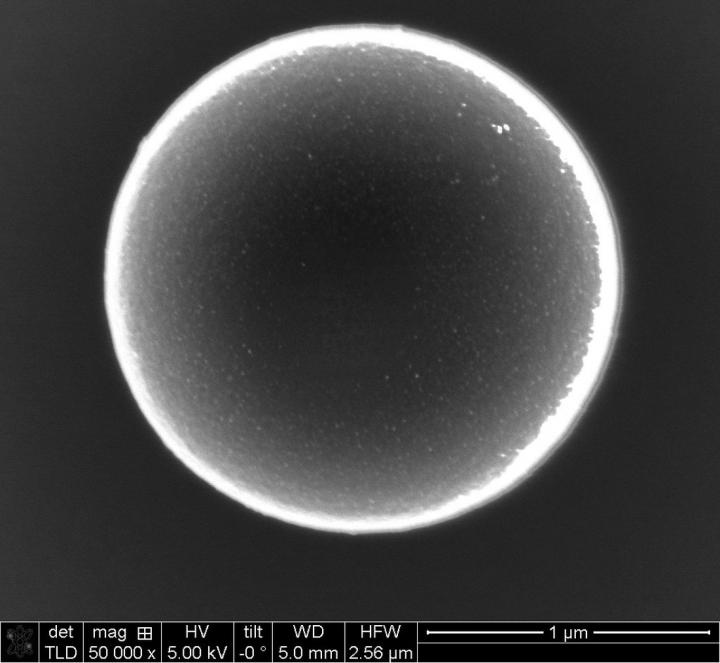
Team of physicists led by Professor Frank Cichos develop learning microswimmers
IMAGE

Credit: Photo: Leipzig University, Faculty of Physics and Earth Sciences

Microswimmers are artificial, self-propelled, microscopic particles. They are capable of directional motion in a solution. The Molecular Nanophotonics Group at Leipzig University has developed special particles that are smaller than one-thirtieth of the diameter of a hair. They can change their direction of motion by heating tiny gold particles on their surface and converting this energy into motion. “However, these miniaturised machines cannot take in and learn information like their living counterparts. To achieve this, we control the microswimmers externally so that they learn to navigate in a virtual environment through what is known as reinforcement learning,” said Cichos.

With the help of virtual rewards, the microswimmers find their way through the liquid while repeatedly being thrown off of their path, mainly by Brownian motion. “Our results show that the best swimmer is not the one that is fastest, but rather that there is an optimal speed,” said Viktor Holubec, who worked on the project as a fellow of the Alexander von Humboldt Foundation and has now returned to the university in Prague. According to the scientists, linking artificial intelligence and active systems like in these microswimmers is a first small step towards new intelligent microscopic materials that can autonomously perform tasks while also adapting to their new environment. At the same time, they hope that the combination of artificial microswimmers and machine learning methods will provide new insights into the emergence of collective behaviour in biological systems. “Our goal is to develop artificial, smart building blocks that can perceive their environmental influences and actively react to them,” said the physicist. Once this method is fully developed and has been applied to other material systems, including biological ones, it could be used, for example, in the development of smart drugs or microscopic robot swarms.

###

Original title of the publication in Science Robotics:

“Reinforcement Learning with Artificial Microswimmers”

Media Contact
Professor Frank Cichos
[email protected]

Original Source

https://www.uni-leipzig.de/en/newsdetail/artikel/wie-winzige-maschinen-lernfaehig-werden-2021-03-25/+

Related Journal Article

http://dx.doi.org/10.1126/scirobotics.abd9285

Tags: Chemistry/Physics/Materials SciencesNanotechnology/MicromachinesParticle Physics
Share12Tweet8Share2ShareShareShare2

Related Posts

Humans and Zebra Finches Share Similar Speech Learning Techniques #ASA190 — Chemistry

Humans and Zebra Finches Share Similar Speech Learning Techniques #ASA190

May 11, 2026
New Study Uncovers How Fungal Parasites Attack Strawberries and Raspberries — Agriculture

New Study Uncovers How Fungal Parasites Attack Strawberries and Raspberries

May 11, 2026

City of Hope Researchers to Present Groundbreaking Immunotherapy and Precision Medicine Advances Across Multiple Cancer Types at ASCO 2026

May 11, 2026

Medicaid Expansion Reduces Mortality in Young Adults with Kidney Failure

May 11, 2026
Please login to join discussion

POPULAR NEWS

  • Research Indicates Potential Connection Between Prenatal Medication Exposure and Elevated Autism Risk

    841 shares
    Share 336 Tweet 210
  • New Study Reveals Plants Can Detect the Sound of Rain

    728 shares
    Share 290 Tweet 182
  • Salmonella Haem Blocks Macrophages, Boosts Infection

    62 shares
    Share 25 Tweet 16
  • Breastmilk Balances E. coli and Beneficial Bacteria in Infant Gut Microbiomes

    57 shares
    Share 23 Tweet 14

About

We bring you the latest biotechnology news from best research centers and universities around the world. Check our website.

Follow us

Recent News

Humans and Zebra Finches Share Similar Speech Learning Techniques #ASA190

New Study Uncovers How Fungal Parasites Attack Strawberries and Raspberries

City of Hope Researchers to Present Groundbreaking Immunotherapy and Precision Medicine Advances Across Multiple Cancer Types at ASCO 2026

Subscribe to Blog via Email

Enter your email address to subscribe to this blog and receive notifications of new posts by email.

Join 82 other subscribers
  • Contact Us

Bioengineer.org © Copyright 2023 All Rights Reserved.

Welcome Back!

Login to your account below

Forgotten Password?

Retrieve your password

Please enter your username or email address to reset your password.

Log In
No Result
View All Result
  • Homepages
    • Home Page 1
    • Home Page 2
  • News
  • National
  • Business
  • Health
  • Lifestyle
  • Science

Bioengineer.org © Copyright 2023 All Rights Reserved.