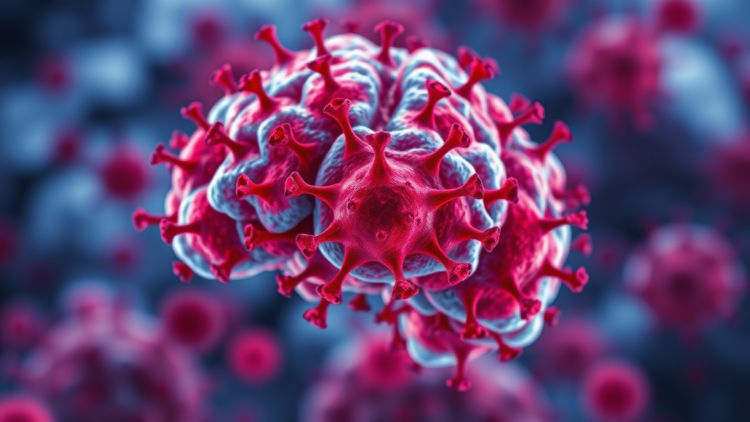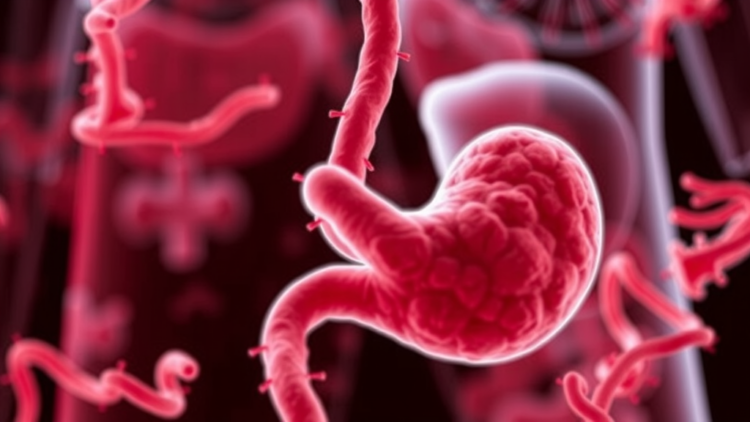
Helicobacter pylori is one of the most successful human pathogens on the planet, quietly colonizing the stomachs of roughly half the world’s population. Most carriers never fall ill, but a subset develop chronic gastritis, ulcers and, ultimately, gastric cancer, one of the deadliest malignancies worldwide. A new review published in Cancer Immunology, Immunotherapy pulls together years of molecular research to explain a crucial piece of that progression: how H. pylori drives up the expression of programmed death-ligand 1, or PD-L1, the molecular brake that tumors use to switch off the immune cells hunting them. Written by a team of Chinese researchers led by Yun Feng of The First Affiliated Hospital of Xi’an Jiaotong University, the open-access review synthesizes recent basic and clinical findings into a unified picture of the signaling networks that connect bacterial virulence to immune evasion, and it argues that this knowledge could sharpen the use of immunotherapy in gastric cancer.
PD-L1 is a ligand that sits on the surface of tumor cells and other cells in the tumor microenvironment. When it engages its receptor, PD-1, on T lymphocytes, it dampens the immune attack, allowing malignant cells to survive and proliferate. Immune checkpoint inhibitors, or ICIs, are antibodies that block this interaction, releasing the brakes on T cells. These drugs have transformed the treatment of several cancers, but their effectiveness in gastric cancer varies dramatically between patients. Understanding what drives PD-L1 expression in gastric tissue is therefore not just an academic question; it may determine who benefits from these expensive and sometimes toxic therapies.
The review’s central argument is that H. pylori does not push a single button to raise PD-L1. Instead, it manipulates an interlocking network of signaling cascades, with distinct bacterial virulence factors acting as the ignition keys. The two most important of these are cytotoxin-associated gene A, or CagA, and vacuolating cytotoxin A, or VacA. CagA is delivered into gastric epithelial cells through a syringe-like molecular machine known as the type IV secretion system, and once inside it hijacks multiple host signaling routes. VacA, meanwhile, exerts its own effects on cellular signaling and immune function. The review emphasizes that different virulent strains of H. pylori vary in how strongly they drive PD-L1 upregulation, which may partly explain why infection outcomes differ so widely between individuals.
Among the pathways the authors dissect, the nuclear factor kappa-light-chain-enhancer of activated B cells, or NF-κB, route takes center stage. NF-κB is a master transcription factor of inflammation, normally held inactive in the cytoplasm until bacterial products or inflammatory cues activate it. When H. pylori infection triggers NF-κB, the transcription factor translocates into the nucleus and binds to the promoter region of the gene encoding PD-L1, directly boosting its transcription. This provides a direct mechanistic bridge between chronic bacterial inflammation and immune checkpoint expression, and it explains why long-standing H. pylori-associated gastritis can create a microenvironment that is already immunosuppressed before cancer even develops.
Parallel to NF-κB runs the mitogen-activated protein kinase, or MAPK, cascade, another signaling highway activated by CagA and other virulence determinants. The MAPK pathway funnels signals from the cell surface through a chain of kinases to transcription factors that can also enhance PD-L1 expression. In addition, the review highlights the Janus kinase and signal transducer and activator of transcription 1 route, commonly abbreviated as JAK/STAT1. Inflammatory cytokines released during infection activate STAT1, which again can drive PD-L1 transcription, while regulatory elements such as suppressor of cytokine signaling 3, or SOCS3, modulate how long and how intensely the signal persists. These pathways are not independent wires; the authors stress that they crosstalk extensively, amplifying and modulating one another so that PD-L1 expression reflects the integrated state of multiple signaling circuits rather than any single input.
Perhaps the most intriguing thread in the review is the involvement of the Sonic Hedgehog pathway, a developmental signaling system best known for sculpting embryos but increasingly implicated in adult cancers and tissue repair. Through its downstream Glioma-associated oncogene homolog, or GLI, transcription factors, Sonic Hedgehog signaling appears to participate in the H. pylori-driven upregulation of PD-L1, linking a developmental program to immune evasion in the stomach. The review also points to the phosphoinositide 3-kinase and protein kinase B axis, often extended to the mammalian target of rapamycin, or PI3K/AKT/mTOR, as another contributor to PD-L1 regulation. On the protein level, molecules such as CKLF-like MARVEL transmembrane domain-containing protein 6, or CMTM6, which stabilizes PD-L1 on the cell surface, add a further layer of control. Together these findings sketch a regulatory network in which transcriptional activation, pathway crosstalk and post-translational stabilization all converge on a single immune checkpoint molecule.
What makes the review particularly valuable is its insistence on the dual-edged nature of H. pylori-induced PD-L1 overexpression. On one hand, high PD-L1 in the gastric tumor microenvironment is a marker of immune suppression, a sign that the bacteria and the tumor have successfully blinded the local immune system. On the other hand, elevated PD-L1 can serve as a predictor of sensitivity to immune checkpoint inhibitors, because tumors that are actively using the PD-1/PD-L1 brake are precisely the tumors most likely to respond when that brake is removed. This duality complicates clinical decision-making but also creates opportunity: measuring PD-L1 and understanding how it got there could help clinicians identify which gastric cancer patients are most likely to benefit from ICIs.
The review deepens this picture by examining how two additional molecular features modify and amplify the duality. Epstein-Barr virus infection of tumor cells, one of the recognized molecular subtypes of gastric cancer, is associated with particularly high levels of PD-L1 expression, potentially compounding the effects of H. pylori-driven signaling. Likewise, microsatellite instability, a form of hypermutation that produces abundant abnormal proteins, correlates with higher tumor mutational burden and generally better responses to immunotherapy. The review examines how these factors interact with the bacterial program, suggesting that a stratification of gastric cancer patients by H. pylori status, EBV status and microsatellite stability could yield more precise predictions of ICI benefit than any single biomarker alone.
For clinicians, the translational message is that H. pylori history may belong in the immunotherapy discussion. If bacterial virulence factors from specific strains choreograph PD-L1 expression through defined, druggable pathways, then targeting NF-κB, MAPK, STAT1 or Sonic Hedgehog signaling could theoretically complement checkpoint blockade, either by lowering PD-L1 directly or by reshaping the inflammatory microenvironment in ways that make immunotherapy work better. The review offers theoretical foundations and translational guidance for optimizing immunotherapeutic strategies in gastric cancer management, while cautioning that the network’s redundancy means no single pathway inhibitor is likely to suffice on its own. As the authors note, their synthesis aims to bridge the gap between bench-side signaling maps and bedside therapeutic decisions.
The publication also arrives at a moment when the field is wrestling with how to standardize PD-L1 testing and biomarker selection in gastric cancer. By integrating the differential effects of distinct virulent strains, the modifying influence of viral coinfection and microsatellite status, and the layered molecular machinery from CagA delivery through T4SS to CMTM6-mediated protein stabilization, the review provides a framework that researchers can use to design better stratification studies and clinicians can use to interpret ambiguous biomarker results. It is a reminder that some of the most consequential cancer biology begins not with a mutation in a tumor cell but with a bacterium that has coexisted with humans for tens of thousands of years, quietly rewriting the conversation between our immune system and our stomachs. Decoding that conversation, the authors argue, may finally let oncologists turn one of humanity’s oldest infections into a guide for treating one of its deadliest cancers.
Subject of Research: Molecular regulation of PD-L1 expression in gastric cancer under Helicobacter pylori infection and its implications for immunotherapy
Article Title: Molecular regulatory network of PD-L1 expression under Helicobacter pylori infection and its clinical translational value: a review of multi-pathway crosstalk mechanisms
Article References: Wang, Q., Duan, T., Feng, J., Sun, L., Wei, J., Zhang, Y., Song, A., Gao, T., & Feng, Y. (2026). Molecular regulatory network of PD-L1 expression under Helicobacter pylori infection and its clinical translational value: a review of multi-pathway crosstalk mechanisms. Cancer Immunology, Immunotherapy. https://doi.org/10.1007/s00262-026-04581-y
Image Credits: AI Generated
DOI: 10.1007/s00262-026-04581-y
Keywords: Helicobacter pylori, PD-L1, gastric cancer, CagA, VacA, NF-κB, MAPK, STAT1, Sonic Hedgehog, immune checkpoint inhibitors, Epstein-Barr virus, microsatellite instability
Cite Scienmag News
APA MLA Chicago
Nathaniel Bowman. (September 23, 2026). How Stomach Bacteria Rewire Immune Checkpoints to Fuel Gastric Cancer. Scienmag. https://scienmag.com/how-stomach-bacteria-rewire-immune-checkpoints-to-fuel-gastric-cancer/
Nathaniel Bowman. “How Stomach Bacteria Rewire Immune Checkpoints to Fuel Gastric Cancer.” Scienmag, 23 September 2026, https://scienmag.com/how-stomach-bacteria-rewire-immune-checkpoints-to-fuel-gastric-cancer/. Accessed 23 September 2026.
Nathaniel Bowman. “How Stomach Bacteria Rewire Immune Checkpoints to Fuel Gastric Cancer.” Scienmag. September 23, 2026. https://scienmag.com/how-stomach-bacteria-rewire-immune-checkpoints-to-fuel-gastric-cancer/
Copy citation Download RIS
Tags: advances in immunbacterial influence on immune checkpointsbacterial virulence factors and immune signalingCagAchronic gastritis to gastric cancer progressionEpstein-Barr virusgastric cancerHelicobacter pyloriHelicobacter pylori and gastric cancerimmune checkpoint inhibitorsimmune checkpoint regulation in stomach cancerimmune evasion pathways in gastric malignanciesimmunotherapy targets for gastric cancerMAPKmicrosatellite instabilitymolecular mechanisms of H. pylori-induced carcinogenesisNF-κBPD-L1PD-L1 expression in tumor immune evasionrole of PD-1/PD-L1 in gastric tumor immune escapeSonic HedgehogSTAT1tumor microenvironment and bacterial modulationVacA