


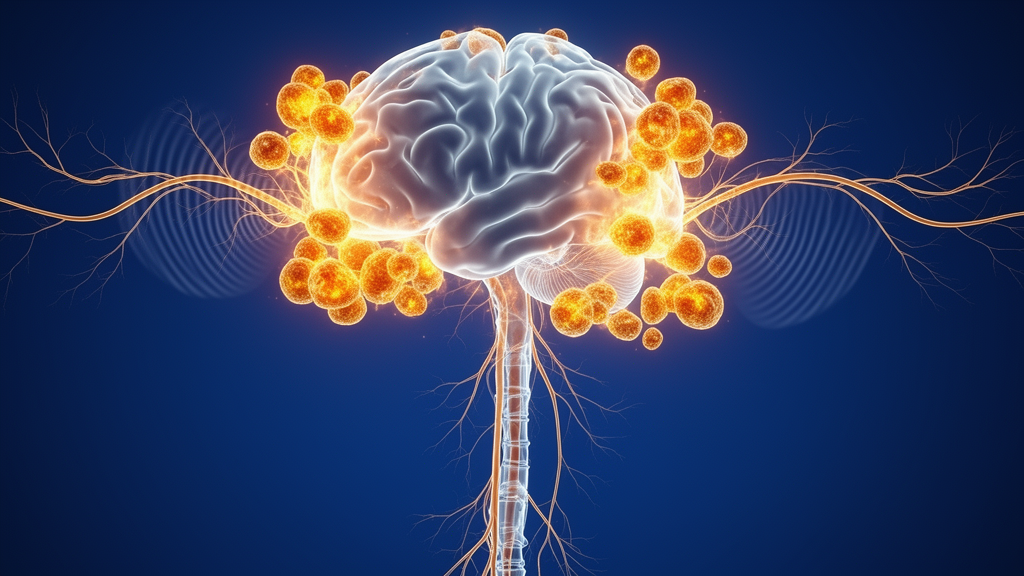
Anxiety may not always begin in the mind. A new narrative mini-review published in Frontiers in Endocrinology on 29 October 2026 argues that two bodily processes—low-grade metabolic inflammation and instability of the autonomic nervous system—deserve far more attention as potential contributors to anxious states. The review, authored by Milica M. Borovcanin of the University of Kragujevac and colleagues from Serbian clinical and academic institutions, is, according to its authors, the first work to jointly examine the triad of metainflammation, autonomic instability and anxiety, with the aim of clarifying these associations for future research and eventual clinical practice.
The authors frame anxiety broadly. It is a core symptom of several neurotic disorders, including anticipatory anxiety, pervasive anxiety, panic attacks, obsessive-compulsive, conversion and somatoform disorders, and it can also appear as a constituent of depression, psychosis, delirium, dementia, addiction and personality disorders. Crucially, the review stresses that anxiety does not arise solely from mental disorders. It can also occur alongside somatic conditions linked to autonomic instability and cardiorenometabolic syndrome, the cluster of metabolic and cardiovascular disturbances that can progress to type 2 diabetes and is associated with metainflammation.
Metainflammation—short for metabolic inflammation—is defined in the review as a state of low-grade inflammation caused by excessive nutrition. At its core is an increase in adipocyte volume associated with adiposopathy and local inflammation. Over the long term, this process further deteriorates adipocyte function, worsens insulin resistance and leads to disorders of lipid and glucose regulation. Unlike pronounced acute inflammation or infection, metainflammation very often goes unrecognized in clinical practice, because the parameters routinely used to detect it fall within the normal range or are only slightly elevated. The authors highlight a recently developed composite measure, the metaLGIscore, which they describe as widely accessible and as showing superior specificity and sensitivity compared with commonly used markers across obesity-related diseases.
The proposed link between this peripheral state and the brain runs largely through the vagus nerve and the autonomic nervous system. Communication between adipose tissue and the central nervous system is bidirectional: ascending vagal fibers convey information about meal size and duration, while descending fibers control digestion, absorption and epithelial permeability. The review cites experimental and mechanistic evidence that obesity-associated hyperleptinemia can induce leptin resistance in vagal afferent neurons, disrupting how the brain interprets the body’s energy signal during a meal. In the authors’ synthesis, metainflammation communicated through brain-fat and brain-gut axes can induce neuroinflammation via the vagus nerve, contributing to anxiety. Neuroinflammation, in this framing, is viewed as a consequence within the central nervous system of systemic inflammation.
Within the brain, the review draws on prior findings to sketch how inflammatory signaling might translate into anxious symptoms. Elevated serum levels of proinflammatory cytokines have been measured in subjects with anxiety disorders and reflect symptom severity. Interleukin-6 has been reported to activate the amygdala and hypothalamus, resulting in hypervigilance and somatic anxiety symptoms, while tumor necrosis factor-alpha acts on the hypothalamic-pituitary-adrenal axis and can exacerbate the physiological and psychological symptoms of anxiety. The review also describes how interleukin-1 beta can penetrate the blood-brain barrier, activate microglial cells and disrupt neurotransmission, potentiating amygdala reactivity and impairing regulatory functions of the prefrontal cortex—together, according to the cited work, provoking anxiety. An animal model of sepsis confirmed neuroinflammatory changes and long-term persistent anxiety, though animal findings cannot be directly extrapolated to human clinical benefit.
Chronic stress occupies a central position in the proposed cascade. The review describes how constant chronic stress with elevated cortisol enhances the stimulatory effect of neuropeptide Y, increases hunger, and is associated with a positive caloric balance and the development of obesity. It distinguishes two interconnected types of obesity adaptation—hypertrophic and hyperplastic—with the hypertrophic type characterized by greater insulin resistance, compensatory hyperinsulinemia, increased leptin secretion, leptin resistance and more pronounced metabolic inflammation. Chronic anxiety-induced stress is further described as increasing sympathetic activity and reducing parasympathetic tone, disrupting homeostatic mechanisms within internal organs. Systemic inflammation marked by elevated interleukin-6, tumor necrosis factor-alpha and C-reactive protein can be perpetuated by chronic activation of the stress axis and dysregulation of the autonomic nervous system, creating what the authors call a vicious cycle of disease progression.
The review assembles a range of clinical observations supporting the connection between autonomic dysfunction, metabolic disease and anxiety. Diabetes mellitus is recognized as a leading cause of autonomic neuropathy, and a distinct neural baroreflex pathway has been identified in cardiometabolic syndrome, establishing a connection to autonomic dysfunction. Higher baseline metabolic activity in the amygdala has been reported to predict new-onset diabetes regardless of other risk factors, with higher adiposity increasing diabetes risk only in the presence of higher amygdala activity. Clinical evidence also indicates that autonomic dysfunction is more pronounced in patients with diabetes and severe aortic stenosis, with a predominant impact on parasympathetic modulation. Post-infective syndromes add another thread: conditions such as postural orthostatic tachycardia syndrome, chronic fatigue syndrome and persistent autonomic dysfunction after infection with Coxiella burnetii illustrate how infection-related autonomic instability and anxiety can travel together.
On the therapeutic side, the review surveys strategies that could, in principle, act on several nodes of the proposed network at once. Psychotherapy is described as balancing autonomic nervous system tone, ameliorating inflammation and stabilizing metabolic functioning. Beta-blockers are noted as useful for cardiological symptomatology and autonomic dysregulation and are included in protocols for treating acute stress reactions. Sodium-glucose cotransporter 2 inhibitors have been explored for reducing sympathetic tone in cardiovascular and metabolic disease states, though the review emphasizes that results remain conflicting. Vagus nerve stimulation could alleviate anxiety in long COVID symptoms, with improvements linked to reductions in systemic inflammation, enhanced cerebral blood flow, neurotransmitter modulation and restoration of autonomic function. The authors also point to future possibilities, including targeting the NLRP3 inflammasome pathway and the lectin family protein galectin-3, described as candidate polyvalent approaches spanning neuroinflammation, immunometabolism and autonomic instability.
Importantly, the review does not present these interventions as established remedies. It cautions that medications and procedures influencing these interrelated processes may also lead to undesirable side effects. Patients with obesity treated with tirzepatide experienced dyslipidemia, hypertension and anxiety among the most frequent complications, and the authors underscore the importance of clinical vigilance for anxiety symptoms after discontinuation of GLP-1 receptor agonist therapy. Current anxiety medications, which correct neurotransmitter imbalances of serotonin, dopamine and noradrenaline, have broader effects on the immune system, metabolism and the autonomic nervous system, making drug repurposing a current research topic—but also raising the risk of polypharmacy and undesirable interactions.
The authors are candid about the limits of their work. They describe the piece as a narrative mini-review positioned at the border with a perspective paper, deliberately abandoning a systematic format, and they list potential biases including its broad scope, transdisciplinary approach and the authors’ narrow fields of interest. They also warn that excessive and continuous exploration of the patient could reinforce a belief in a clear organ dysfunction, while a purely psychological focus could irrationally disregard somatic components; the key aspect of any diagnostic algorithm, they write, is to first rule out physical causes. What the review ultimately offers is not proof of causation but an integrative framework: a bidirectional cascade linking stress, hypothalamic-pituitary-adrenal axis activation and cortisol secretion, autonomic nervous system function and immunometabolic disturbances, culminating in neuroinflammation associated with anxiety. The authors call for precision medicine and robust data analysis to generate new clinical guidelines for prevention, early recognition and therapy, and for doctors to focus on the whole person rather than a single organ or disease.
Subject of Research: The interplay of metabolic inflammation, autonomic instability and anxiety
Article Title: Metainflammation and autonomic instability in the genesis of anxiety
Article References: Borovcanin, M. M., Milovanovic, B., Markovic, N., & Petrovic, I. (2026). Metainflammation and autonomic instability in the genesis of anxiety. Frontiers in Endocrinology, 17, Article 2008588. https://doi.org/10.3389/fendo.2026.2008588
Image Credits: AI Generated
DOI: 10.3389/fendo.2026.2008588
Keywords: anxiety, metainflammation, autonomic instability, neuroinflammation, vagus nerve, immunometabolism, obesity, diabetes, HPA axis, cytokines, cardiorenometabolic syndrome, narrative review
News Source: Glenn Wilkins. (October 29, 2026). How Metabolic Inflammation and a Wobbling Nervous System May Feed Anxiety. Scienmag.



