• HOME
  • NEWS
  • EXPLORE
    • CAREER
      • Companies
      • Jobs
    • EVENTS
    • iGEM
      • News
      • Team
    • PHOTOS
    • VIDEO
    • WIKI
  • BLOG
  • COMMUNITY
    • FACEBOOK
    • INSTAGRAM
    • TWITTER
Saturday, April 18, 2026
BIOENGINEER.ORG
No Result
View All Result
  • Login
  • HOME
  • NEWS
  • EXPLORE
    • CAREER
      • Companies
      • Jobs
        • Lecturer
        • PhD Studentship
        • Postdoc
        • Research Assistant
    • EVENTS
    • iGEM
      • News
      • Team
    • PHOTOS
    • VIDEO
    • WIKI
  • BLOG
  • COMMUNITY
    • FACEBOOK
    • INSTAGRAM
    • TWITTER
  • HOME
  • NEWS
  • EXPLORE
    • CAREER
      • Companies
      • Jobs
        • Lecturer
        • PhD Studentship
        • Postdoc
        • Research Assistant
    • EVENTS
    • iGEM
      • News
      • Team
    • PHOTOS
    • VIDEO
    • WIKI
  • BLOG
  • COMMUNITY
    • FACEBOOK
    • INSTAGRAM
    • TWITTER
No Result
View All Result
Bioengineer.org
No Result
View All Result
Home NEWS Science News Biology

How lactoferrin clamps down on free roaming iron ions to stop nefarious effects on cells

Bioengineer by Bioengineer
September 20, 2018
in Biology
Reading Time: 2 mins read
0
Share on FacebookShare on TwitterShare on LinkedinShare on RedditShare on Telegram

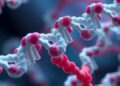
What prevents our cells from being overexposed to iron ions roaming freely in the body is a protein called lactoferrin, known for its ability to bind tightly to such ions. These free ions are essential for a number of biological processes. If found in excessive quantities, however, they could cause damage to proteins and DNA in the body, sometimes even leading to cell death. This is because free iron ions lead to an increase of the concentration of reactive substances with oxidising power roaming freely in the body. This has driven scientists to develop a better understanding of how lactoferrin's structural change helps to clamp down on free iron ions. In a new study published in EPJ E, Lilia Anghel from the Institute of Chemistry in Chisinau, Republic of Moldova, and research collaborators study the changes in the structure of lactoferrin as it binds to iron ions, using combined experimental and molecular dynamics simulations.

Scientists who have previously studied the X-ray crystal structure of human lactoferrin have shown that changes in conformation within the protein structure occur as the iron ion binds to it. In this study, the authors rely on a method called small angle neutron scattering to detect the structural differences between the open and closed conformation of human lactoferrin in solution.

The authors demonstrate that an amino acid — namely Arginine 121 — plays a key role in the conformation stability of the lactoferrin protein. In addition, by focusing on understanding how human lactoferrin changes from its open to its closed conformation, they also find that the open conformation appears to offer a smaller twisting radius than that of the closed version.

Lastly, they detect visible differences between the two low-resolution, three-dimensional models of open and closed structure of human lactoferrin in solution. Both have a more compact conformation than high-resolution structures.

###

References:

L. Anghel, A. Radulescu, R. V. Erhan (2018), Structural aspects of human lactoferrin in the iron binding process studied by molecular dynamics and small-angle neutron scattering, Eur. Phys. J. E, 2018, 41:109.

DOI 10.1140/epje/i2018-11720-x

Media Contact

Sabine Lehr Springer Physics Editorial
[email protected]
49-622-148-78336
@SpringerNature

http://www.springer.com

https://www.springer.com/gp/about-springer/media/research-news/all-english-research-news/how-lactoferrin-clamps-down-on-free-roaming-iron-ions-to-stop-nefarious-effects-on-cells/16139112

Related Journal Article

http://dx.doi.org/10.1140/epje/i2018-11720-x

Share12Tweet8Share2ShareShareShare2

Related Posts

On-Demand Growth of Liver Tissue Directly Within the Body

On-Demand Growth of Liver Tissue Directly Within the Body

April 17, 2026
Conserved DNA Architect Links Chloroplasts to Cell Cycle

Conserved DNA Architect Links Chloroplasts to Cell Cycle

April 17, 2026

UTS Study Reveals Toxic Metal Exposure from E-Cigarette Devices

April 17, 2026

Can Exercise Help You Beat Stress Hormones? New Insights from a Clinical Trial

April 17, 2026
Please login to join discussion

POPULAR NEWS

  • Scientists Investigate Possible Connection Between COVID-19 and Increased Lung Cancer Risk

    62 shares
    Share 25 Tweet 16
  • NSF funds machine-learning research at UNO and UNL to study energy requirements of walking in older adults

    101 shares
    Share 40 Tweet 25
  • Boosting Breast Cancer Risk Prediction with Genetics

    47 shares
    Share 19 Tweet 12
  • Popular Anti-Aging Compound Linked to Damage in Corpus Callosum, Study Finds

    46 shares
    Share 18 Tweet 12

About

We bring you the latest biotechnology news from best research centers and universities around the world. Check our website.

Follow us

Recent News

Swedish Study: Person-Centred Communication Training for Caregivers

Membrane Protein Amuc_1098 Eases Pancreatitis via TLR2

Cadmium Exposure Boosts Metallothionein, Oxidative Damage Markers

Subscribe to Blog via Email

Enter your email address to subscribe to this blog and receive notifications of new posts by email.

Join 79 other subscribers
  • Contact Us

Bioengineer.org © Copyright 2023 All Rights Reserved.

Welcome Back!

Login to your account below

Forgotten Password?

Retrieve your password

Please enter your username or email address to reset your password.

Log In
No Result
View All Result
  • Homepages
    • Home Page 1
    • Home Page 2
  • News
  • National
  • Business
  • Health
  • Lifestyle
  • Science

Bioengineer.org © Copyright 2023 All Rights Reserved.