• HOME
  • NEWS
  • EXPLORE
    • CAREER
      • Companies
      • Jobs
    • EVENTS
    • iGEM
      • News
      • Team
    • PHOTOS
    • VIDEO
    • WIKI
  • BLOG
  • COMMUNITY
    • FACEBOOK
    • INSTAGRAM
    • TWITTER
Sunday, August 16, 2026
BIOENGINEER.ORG
No Result
View All Result
  • Login
  • HOME
  • NEWS
  • EXPLORE
    • CAREER
      • Companies
      • Jobs
        • Lecturer
        • PhD Studentship
        • Postdoc
        • Research Assistant
    • EVENTS
    • iGEM
      • News
      • Team
    • PHOTOS
    • VIDEO
    • WIKI
  • BLOG
  • COMMUNITY
    • FACEBOOK
    • INSTAGRAM
    • TWITTER
  • HOME
  • NEWS
  • EXPLORE
    • CAREER
      • Companies
      • Jobs
        • Lecturer
        • PhD Studentship
        • Postdoc
        • Research Assistant
    • EVENTS
    • iGEM
      • News
      • Team
    • PHOTOS
    • VIDEO
    • WIKI
  • BLOG
  • COMMUNITY
    • FACEBOOK
    • INSTAGRAM
    • TWITTER
No Result
View All Result
Bioengineer.org
No Result
View All Result
Home NEWS Science News Chemistry

How human brain development diverged from great apes

Bioengineer by Bioengineer
October 16, 2019
in Chemistry
Reading Time: 2 mins read
0
IMAGE
Share on FacebookShare on TwitterShare on LinkedinShare on RedditShare on Telegram

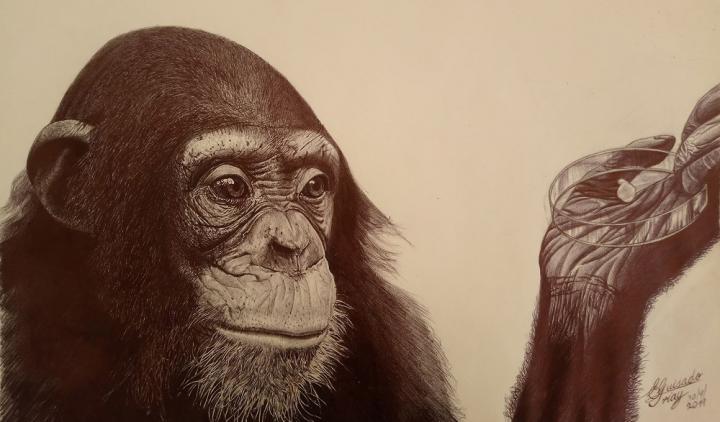
Cell atlas of great ape forebrain development illuminates dynamic gene-regulatory features that are unique to humans
IMAGE

Credit: Enrique Guisado Triay


Since humans diverged from a common ancestor shared with chimpanzees and the other great apes, the human brain has changed dramatically. However, the genetic and developmental processes responsible for this divergence are not understood. Cerebral organoids (brain-like tissues), grown from stem cells in a dish, offer the possibility to study the evolution of early brain development in the laboratory.

Sabina Kanton, Michael James Boyle and Zhisong He, co-first authors of the study, together with Gray Camp, Barbara Treutlein and colleagues analysed human cerebral organoids through their development from stem cells to explore the dynamics of gene expression and regulation (using methods called single-cell RNA-seq and ATAC-seq). The authors also examined chimpanzee and macaque cerebral organoids to understand how organoid development differs in humans. “We observed more pronounced cortical neuron maturation in chimpanzee and macaque organoids compared to human organoids at the same point of development”, said co-senior author Barbara Treutlein. “This would suggest that human neuronal development takes place more slowly than in the other two primates.”

Human-specific gene expression and regulation

The researchers also identified genes exhibiting expression patterns that are unique to humans during the generation and maturation of neurons. Gene expression can be regulated by the accessibility of DNA, which can be in an open or compact state. Many of the gene expression changes that the authors identified could be linked to nearby changes in accessibility of the human genome. Most of the differentially accessible regions harbor mutations that are shared among all humans living today, some of which may be responsible for observed changes in DNA accessibility and gene expression. “Some genetic changes are predicted to alter transcription factor binding, proving a potential explanation of how these gene expression differences occur”, said Gray Camp, co-senior author of the study. “Among the gene regulation changes we identified could be those contributing to the larger brain and cognitive abilities observed in humans relative to other primates.”

The authors further investigated human-specific gene expression in the adult prefrontal cortex, a region of the brain that has increased in size in humans and is believed to influence complex cognitive behaviors. They identified developmental differences in gene expression that persist into adulthood, as well as changes exclusive to the adult brain in specific cell types. “Our data provide a resource to guide further research into the mechanisms of gene regulation dynamics during early brain development, especially those potentially distinguishing developing human and chimpanzee brains”, conclude the authors.

###

Prof. Dr. Barbara Treutlein

Max Planck Institute for Evolutionary Anthropology, Leipzig &

ETH Zurich, Quantitative Developmental Biology Lab

+41 61 387-4043

[email protected]

Dr. Gray Camp

Max Planck Institute for Evolutionary Anthropology, Leipzig &

Institute of Molecular and Clinical Ophthalmology Basel

+41 61 265-9214

[email protected]

Media Contact
Sandra Jacob
[email protected]
49-341-355-0122

Related Journal Article

http://dx.doi.org/10.1038/s41586-019-1654-9

Tags: BiochemistryBiologyCell BiologyEvolutionMedicine/Health
Share14Tweet9Share2ShareShareShare2

Related Posts

Butterfly-Inspired Technology Could Transform Air Quality Monitoring

August 15, 2026
Artesunate Targets GBA, Triggering Apoptosis in Liver Cancer Cells

Artesunate Targets GBA, Triggering Apoptosis in Liver Cancer Cells

August 15, 2026

New molecule may enable cleaner, more efficient metal recovery

August 15, 2026

Controlled sulfidation enhances supercapacitor electrode performance

August 15, 2026
Please login to join discussion

POPULAR NEWS

  • KAIST develops semiconductor neuron that harnesses noise to selectively process signals

    29 shares
    Share 12 Tweet 7
  • Imagining natural and extra robotic thumbs together strengthens kinesthetic sensorimotor networks

    29 shares
    Share 12 Tweet 7
  • PARP1 Drives Neuropathic Pain Through GPX4-Dependent Ferroptosis in Injured Mice’s Sensory Neurons

    29 shares
    Share 12 Tweet 7
  • Strubbelig–NHL3 Receptor Complex Helps Arabidopsis Respond to Cellulose Deficiency

    29 shares
    Share 12 Tweet 7

About

We bring you the latest biotechnology news from best research centers and universities around the world. Check our website.

Follow us

Recent News

KAIST develops semiconductor neuron that harnesses noise to selectively process signals

Imagining natural and extra robotic thumbs together strengthens kinesthetic sensorimotor networks

PARP1 Drives Neuropathic Pain Through GPX4-Dependent Ferroptosis in Injured Mice’s Sensory Neurons

Subscribe to Blog via Email

Success! An email was just sent to confirm your subscription. Please find the email now and click 'Confirm' to start subscribing.

Join 85 other subscribers
  • Contact Us

Bioengineer.org © Copyright 2023 All Rights Reserved.

Welcome Back!

Login to your account below

Forgotten Password?

Retrieve your password

Please enter your username or email address to reset your password.

Log In
No Result
View All Result
  • Homepages
    • Home Page 1
    • Home Page 2
  • News
  • National
  • Business
  • Health
  • Lifestyle
  • Science

Bioengineer.org © Copyright 2023 All Rights Reserved.