The work, published in the Bird Study scientific journal, is part of the PhD thesis that Pau Lucio, Associate Lecturer in the Animal Science Department at the Gandia Campus, is developing between the UPV and the Cavanilles Institute of Biodiversity and Evolutionary Biology of the University of Valencia.
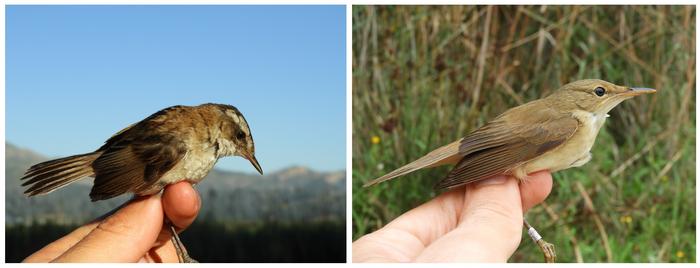
Credit: UPV
The work, published in the Bird Study scientific journal, is part of the PhD thesis that Pau Lucio, Associate Lecturer in the Animal Science Department at the Gandia Campus, is developing between the UPV and the Cavanilles Institute of Biodiversity and Evolutionary Biology of the University of Valencia.
The two species studied were the moustached warbler (Acrocephalus melanopogon) and the common reed warbler (Acrocephalus scirpaceus), both associated with wetlands on the Mediterranean coast.
The moustached warbler is a resident/short-distance migrant listed as “vulnerable” in the Spanish Red Data Book of Birds 2021 due to its population decline in recent years. Spain is home to the largest population of this species in Western Europe.
In contrast, the common reed warbler, more generalist in its habitat preferences, is a long-distance migrant (it visits Spanish wetlands during the breeding season and spends the winter in Africa). Its conservation status is defined as of “least concern”, as it is widely distributed throughout Europe.
Scientific ringing
According to Pau Lucio, the research has aimed to understand to what extent different climatic and/or geographical factors are affecting productivity, i.e. the relationship between the number born in a given year and the number of adults of both species, using a large database with 25 years of ringing in Spanish wetlands. “Specifically, we have used data from the scientific ringing programme for the monitoring of breeding bird species in Spain (PASER) between 1995 and 2021”, adds Pau Lucio.
Effect of extreme weather events
The study concludes that a cumulative rainfall of up to approximately 100 mm favours the productivity of the moustached warbler, and rainfall above this threshold is detrimental to the reproduction of the species. As for temperatures, the UPV and UV team observed that high values have a negative effect.
In contrast, temperature positively affected common reed warbler productivity, while rainfall had almost no effect. However, productivity also peaked when rainfall was close to 100 mm.
“Warmer temperatures and more frequent heavy rainfall may compromise the conservation of the moustached warbler in Spain due to the adverse effect of both elements on its productivity. In contrast, higher temperatures may benefit the common reed warbler,” says Virginia Garófano from the Research Institute for Integrated Coastal Zone Management (IGIC) of the UPV Gandia Campus.
Thus, the study concludes that, given the current climate emergency, it is likely that the population of the moustached warbler will decrease while the population of the common reed warbler could increase. However, further work is needed to establish the specific impact of climate change on survival and its implications for the population trends and dynamics of these two species.
Climate-sensitive periods
One of the main advances of this work has been to be able to use a large database with a large spatial and temporal distribution and also to investigate the specific period (time window) in which climate variables have the most significant impact on productivity to define climatically sensitive periods taking into account spatial variables (site, longitude, latitude and elevation) and temporal changes (year).
“This advance in the ecological modelling of trends in bird populations has been possible thanks to the use of complex data modelling techniques such as data mining, machine learning techniques and the use of genetic algorithms in the optimisation of the models,” says Rafael Muñoz-Mas, researcher also linked to the IGIC of the UPV and co-author of the study.
Journal
Bird Study
DOI
10.1080/00063657.2024.2343956
Method of Research
Meta-analysis
Subject of Research
Animals
Article Title
Unravelling the link between productivity and climate for two sympatric Acrocephalus warblers across Spain
Article Publication Date
10-Jun-2024