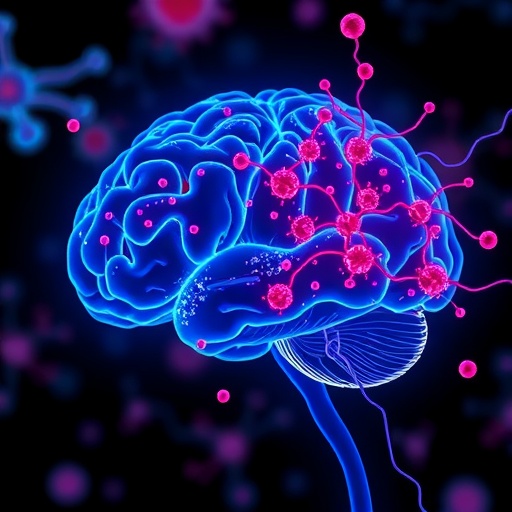
A molecule released to help the body fight infection can also influence how the brain works—and, under some conditions, may help push neural circuits toward dysfunction. A new review by Y. Lee, J. Ko and J.W. Um examines how cytokines, the immune system’s chemical messengers, transmit signals from peripheral tissues into the brain and reshape neural activity. Published in Experimental & Molecular Medicine, the article focuses on the biological links between inflammation and disorders that arise when neuronal circuits become imbalanced.
Cytokines are small proteins that coordinate immune responses. During infection or tissue damage, they can recruit immune cells, alter blood-vessel behavior and regulate the production of other inflammatory molecules. Although the brain was once considered largely isolated from immune activity, research over recent decades has shown that immune signals can reach and influence the central nervous system through several routes. Cytokines can act on cells lining blood vessels, pass through regions with specialized vascular properties, signal along nerves and stimulate immune-like cells already present within the brain.
This communication system is essential for survival. When a virus or bacterium invades the body, inflammatory signals can alter sleep, appetite, body temperature and motivation, helping redirect energy toward recovery. The same signals can also modify attention, pain sensitivity and emotional behavior. These short-term changes are often adaptive, but prolonged or excessive cytokine activity may become harmful. The review describes immune-to-brain communication as a dynamic process capable of changing the operation of neural networks rather than simply switching isolated neurons on or off.
One important target is microglia, the resident immune cell population of the brain. Microglia constantly monitor the neural environment and respond to molecular signs of injury or infection. Cytokines can change their state, prompting them to release additional signaling molecules, alter their interactions with neurons and influence the removal or remodeling of synapses. Synapses are the connection points through which neurons communicate, and their strength and number determine how information flows through a circuit. If inflammatory signaling remains active, normal synaptic maintenance may be disrupted.
Cytokines can also affect astrocytes, the abundant support cells that regulate neurotransmitters, ions and energy around neurons. By changing astrocyte function, inflammation may disturb the chemical conditions required for precise neuronal signaling. At the same time, cytokines can influence the blood-brain barrier, a selective interface that controls movement between the bloodstream and brain tissue. Increased barrier permeability or altered transport activity may expose neural cells to a different immune environment, potentially amplifying inflammatory signals inside the brain.
The consequences may be particularly significant in neural circuits responsible for mood, cognition, reward, movement and sensory processing. Inflammatory mediators can influence neurotransmitter systems such as glutamate, gamma-aminobutyric acid, dopamine and serotonin, each of which contributes to communication between neuronal populations. Cytokine signaling may also affect ion channels, intracellular pathways and the expression of genes that control neuronal excitability. These effects provide a biological explanation for why systemic inflammation can be accompanied by fatigue, concentration problems, mood changes or altered pain responses.
The review also highlights the importance of timing and location. A brief cytokine response may produce temporary changes that disappear once the immune threat is resolved. By contrast, chronic inflammation, repeated immune activation or an impaired ability to shut down inflammatory pathways may lead to persistent circuit remodeling. During development and aging, when neural networks are undergoing major changes, immune signals may have especially pronounced effects. The outcome is likely to depend on the cytokine involved, the cells receiving the signal, the brain region affected and the existing condition of the neural circuit.
These mechanisms are relevant to a broad range of neurological and psychiatric conditions in which inflammation and circuit dysfunction appear to intersect. They may help explain why immune activation is associated with cognitive decline, depressive symptoms, chronic pain, seizures and other disorders. However, the relationship is not simple: cytokines can be protective in one context and damaging in another. Blocking inflammation indiscriminately could interfere with tissue repair or antimicrobial defense, making it important to distinguish harmful signaling from the immune activity required for normal protection.
By bringing together evidence from immunology, neuroscience and molecular biology, Lee, Ko and Um present immune-to-brain signaling as a potential framework for understanding neural circuit disorders. The review points toward therapeutic strategies that target specific cytokines, receptors, cellular responses or communication routes rather than suppressing the entire immune system. Future research will need to determine which inflammatory signals drive particular circuit abnormalities, how these changes can be measured in patients and whether restoring immune balance can improve brain function. The central message is increasingly clear: the brain does not operate apart from the immune system, and the molecular conversation between them may be one of the keys to understanding—and eventually treating—disorders of neural circuitry.
Subject of Research: Cytokine-mediated immune-to-brain signaling and its role in neural circuit disorders
Article Title: Cytokine-mediated immune-to-brain signaling in neural circuit disorders
Article References: Lee, Y., Ko, J. & Um, J.W. Cytokine-mediated immune-to-brain signaling in neural circuit disorders. Exp Mol Med (2026). https://doi.org/10.1038/s12276-026-01796-y
Image Credits: AI Generated
DOI: 10.1038/s12276-026-01796-y
Keywords: Cytokines, neuroinflammation, immune-to-brain signaling, neural circuits, microglia, astrocytes, blood-brain barrier, synaptic dysfunction, neurological disorders, psychiatric disorders
Tags: blood-brain barrier and cytokine signalingcytokine immune signaling in brain functioncytokine impact on sleep and behaviorcytokine-driven neural circuit dysfunctioncytokines and neuroimmune communication pathwaysimmune molecules affecting neuronal balanceimmune responses and mental healthimmune system influence on brain activityinflammation-related neurological disordersneuroimmune interactions in brain healthneuroinflammation and neural circuit disruptionperipheral-to-central immune signaling mechanisms