• HOME
  • NEWS
  • EXPLORE
    • CAREER
      • Companies
      • Jobs
    • EVENTS
    • iGEM
      • News
      • Team
    • PHOTOS
    • VIDEO
    • WIKI
  • BLOG
  • COMMUNITY
    • FACEBOOK
    • INSTAGRAM
    • TWITTER
Monday, May 18, 2026
BIOENGINEER.ORG
No Result
View All Result
  • Login
  • HOME
  • NEWS
  • EXPLORE
    • CAREER
      • Companies
      • Jobs
        • Lecturer
        • PhD Studentship
        • Postdoc
        • Research Assistant
    • EVENTS
    • iGEM
      • News
      • Team
    • PHOTOS
    • VIDEO
    • WIKI
  • BLOG
  • COMMUNITY
    • FACEBOOK
    • INSTAGRAM
    • TWITTER
  • HOME
  • NEWS
  • EXPLORE
    • CAREER
      • Companies
      • Jobs
        • Lecturer
        • PhD Studentship
        • Postdoc
        • Research Assistant
    • EVENTS
    • iGEM
      • News
      • Team
    • PHOTOS
    • VIDEO
    • WIKI
  • BLOG
  • COMMUNITY
    • FACEBOOK
    • INSTAGRAM
    • TWITTER
No Result
View All Result
Bioengineer.org
No Result
View All Result
Home NEWS Science News Biology

How breast cancer cells sneak past local immune defenses

Bioengineer by Bioengineer
July 15, 2020
in Biology
Reading Time: 2 mins read
0
IMAGE
Share on FacebookShare on TwitterShare on LinkedinShare on RedditShare on Telegram

IMAGE

Credit: Xue-Yan He, Egeblad lab, CSHL.

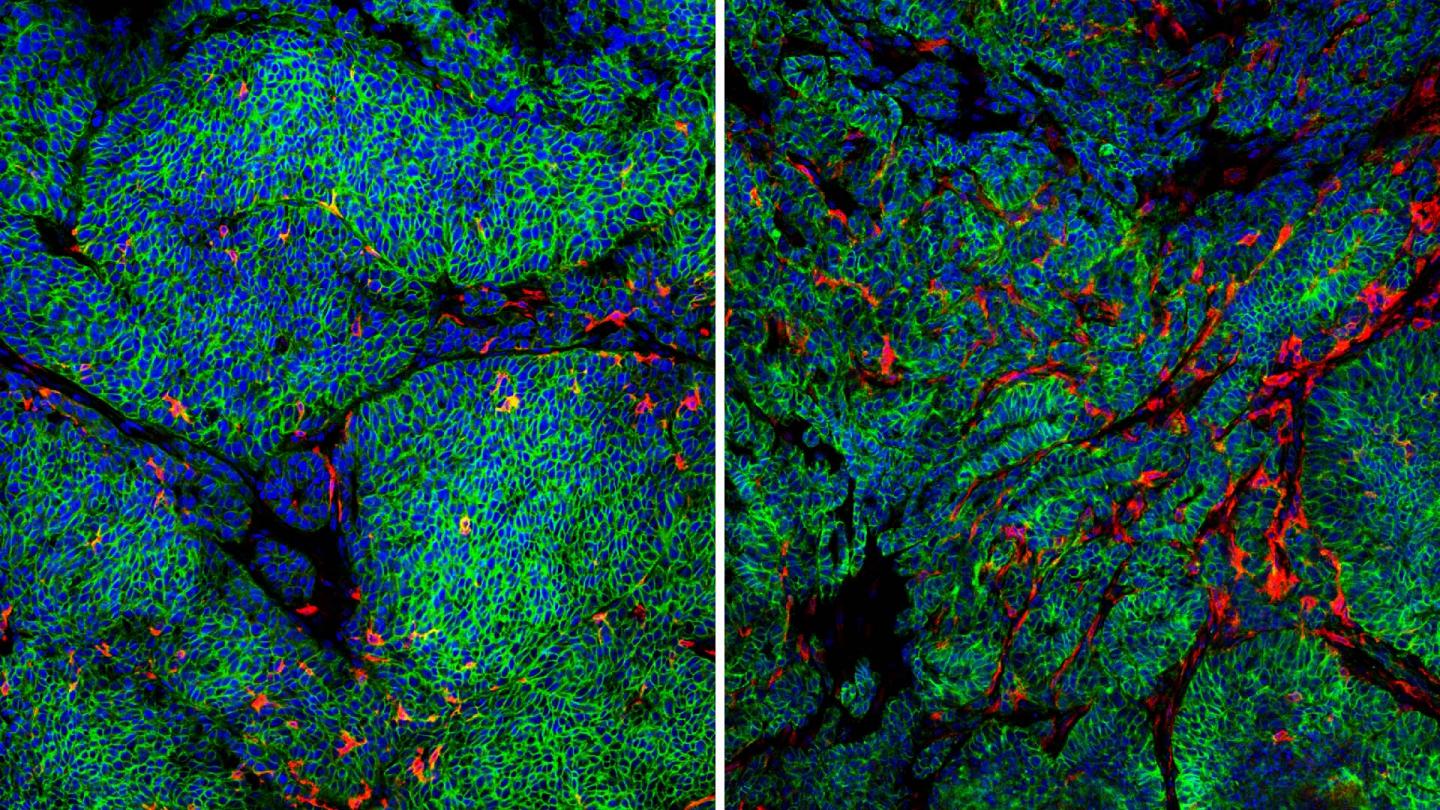
Cold Spring Harbor Laboratory (CSHL) Associate Professor Mikala Egeblad and her colleagues describe a newly understood way by which breast cancer cells sabotage a key player in the body’s immune system. That key player provides local immune surveillance by activating killer T-cells, but if it cannot mature and do its job, breast cancer cells can escape detection from the immune system, resulting in unnoticed and unhindered growth.

The key players in question are known as cross-presenting dendritic cells. These cells are important because they initiate and coordinate local immune responses by showing pieces of cancer cells to so-called killer T-cells. The killer T-cells can then detect and destroy the cancer cells.

The scientists found breast cancer cells use a protein on their surface, a so-called cell surface receptor called CCR2, in an unexpected way. It disrupts cross-presenting dendritic cell maturation. This was a surprise because CCR2 has a totally different function in immune cells, which use the receptor to guide themselves to areas of inflammation. However, when CCR2 receptors appear on the surface of tumor cells, they suppress the secretion of a signal that dendritic cells need to mature. The researchers are keen to learn more precisely how cancer cells use CCR2 to suppress those key proteins, but this new research finding is already helpful because CCR2 itself can be targeted. In 2012, the Egeblad lab revealed how blocking CCR2 on immune cells can improve the ability of drugs to penetrate tumors. Now, CCR2-blocking drugs are being tested in the clinic as a cancer treatment. These latest findings suggest that blocking CCR2 activity can also help the body’s own immune response to fight cancer. Postdoctoral researcher Miriam Fein adds:

“This delves into something that no one was really considering when blocking CCR2. It opens up new ideas to build even better therapies or use existing drugs in different ways.”

###

Media Contact
Sara Roncero-Menendez
[email protected]

Related Journal Article

http://dx.doi.org/10.1084/jem.20181551

Tags: BiologyBreast CancercancerGeneticsMedicine/Health
Share13Tweet8Share2ShareShareShare2

Related Posts

Breakthrough Cancer Treatment Effective Across All Organ Types — Biology

Breakthrough Cancer Treatment Effective Across All Organ Types

May 18, 2026
Butyrate Alleviates Temporomandibular Joint Pain via Epigenetic Mechanisms — Biology

Butyrate Alleviates Temporomandibular Joint Pain via Epigenetic Mechanisms

May 18, 2026

How Hibernation Impacts Visual Processing in Squirrels’ Brains

May 18, 2026

PKU Researchers Pioneer First-in-Class Drug Candidate Targeting Cholestatic Itch

May 18, 2026
Please login to join discussion

POPULAR NEWS

  • Research Indicates Potential Connection Between Prenatal Medication Exposure and Elevated Autism Risk

    845 shares
    Share 338 Tweet 211
  • New Study Reveals Plants Can Detect the Sound of Rain

    731 shares
    Share 292 Tweet 182
  • Salmonella Haem Blocks Macrophages, Boosts Infection

    62 shares
    Share 25 Tweet 16
  • Breastmilk Balances E. coli and Beneficial Bacteria in Infant Gut Microbiomes

    58 shares
    Share 23 Tweet 15

About

We bring you the latest biotechnology news from best research centers and universities around the world. Check our website.

Follow us

Recent News

Immune Checkpoint Regulation in Cancer Therapy and Evasion

Antibiotics Ineffective for Wheezing Episodes in Young Children in Emergency Care, Study Finds

Evaluating a Family-Based Healthy Weight Program for Childhood Obesity in Primary Care Clinics Across Louisiana and Tennessee

Subscribe to Blog via Email

Enter your email address to subscribe to this blog and receive notifications of new posts by email.

Join 82 other subscribers
  • Contact Us

Bioengineer.org © Copyright 2023 All Rights Reserved.

Welcome Back!

Login to your account below

Forgotten Password?

Retrieve your password

Please enter your username or email address to reset your password.

Log In
No Result
View All Result
  • Homepages
    • Home Page 1
    • Home Page 2
  • News
  • National
  • Business
  • Health
  • Lifestyle
  • Science

Bioengineer.org © Copyright 2023 All Rights Reserved.