
Credit: (c) 2018 Mary Ann Liebert, Inc., publishers
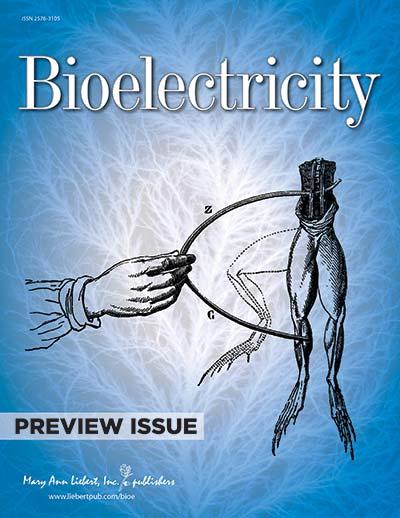
New Rochelle, NY, October 11, 2018– Pulsed electric fields are helping fight cancer, whether by inducing tumor cell death or by stimulating the immune system. A comprehensive overview of this developing field is published in the preview issue of Bioelectricity, a peer-reviewed journal from Mary Ann Liebert, Inc., publishers. The full-text article is available free on the Bioelectricity website at https://www.liebertpub.com/doi/full/10.1089/bioe.2018.0001.
Richard Nuccitelli, PhD, of Pulse Biosciences, Hayward, CA, discusses the different ways bioelectricity is being used to treat tumors in the article "Application of Pulsed Electric Fields to Cancer Therapy." Dr. Nuccitelli provides a clearly written description of the three main types of pulses and their uses. Pulses in the millisecond domain are typically used to facilitate the uptake of nucleic acids, such as plasmids, by cells. These can therefore be used to deliver genes encoding cancer-fighting proteins into tumor cells. Pulses in the microsecond domain allow small molecules, such as drugs, to cross the cell membrane significantly increasing the efficiency of the treatment. The very short pulses, in the nanosecond domain, can create millions of small pores in the cell membrane that by themselves affect cell signaling and cell function. This excellent review introduces readers to one of the most advanced of the many applications of bioelectricity to human health.
"The development and testing of pulsed electric field technology perfectly illustrate how research in bioelectricity leads to transformative biomedical approaches," says Dany Spencer Adams, Editor-in-Chief of Bioelectricity, from Tufts University, Medford, MA.
###
About the Journal
Bioelectricity is the only peer-reviewed journal dedicated to the study of the natural electricity within living organisms and how to harness this phenomenon to treat and cure disease. Led by Editor-in-Chief Dany Spencer Adams, Tufts University, Medford, MA, the Journal will publish groundbreaking multidisciplinary research and advances documenting this next step in the evolution of how we study life. For complete information, please visit the Bioelectricity website.
About the Publisher
Mary Ann Liebert, Inc., publishers is a privately held, fully integrated media company known for establishing authoritative peer-reviewed journals in many promising areas of science and biomedical research, including Stem Cells and Development, Tissue Engineering, and The CRISPR Journal.Its biotechnology trade magazine, GEN (Genetic Engineering & Biotechnology News), was the first in its field and is today the industry's most widely read publication worldwide. A complete list of the firm's 80 journals, newsmagazines, and books is available on the Mary Ann Liebert, Inc., publishers website.
Media Contact
Kathryn Ryan
[email protected]
914-740-2250
@LiebertPub
http://www.liebertpub.com
Original Source
https://home.liebertpub.com/news/how-are-pulsed-electric-fields-being-used-in-cancer-therapy/2448 http://dx.doi.org/10.1089/bioe.2018.0001