• HOME
  • NEWS
  • EXPLORE
    • CAREER
      • Companies
      • Jobs
    • EVENTS
    • iGEM
      • News
      • Team
    • PHOTOS
    • VIDEO
    • WIKI
  • BLOG
  • COMMUNITY
    • FACEBOOK
    • INSTAGRAM
    • TWITTER
Tuesday, October 6, 2026
BIOENGINEER.ORG
No Result
View All Result
  • Login
  • HOME
  • NEWS
  • EXPLORE
    • CAREER
      • Companies
      • Jobs
        • Lecturer
        • PhD Studentship
        • Postdoc
        • Research Assistant
    • EVENTS
    • iGEM
      • News
      • Team
    • PHOTOS
    • VIDEO
    • WIKI
  • BLOG
  • COMMUNITY
    • FACEBOOK
    • INSTAGRAM
    • TWITTER
No Result
View All Result
Bioengineer.org
No Result
View All Result
Home NEWS Science News Health

How a common drug causes liver failure

Bioengineer by Bioengineer
October 12, 2018
in Health
Reading Time: 2 mins read
0
Share on FacebookShare on TwitterShare on LinkedinShare on RedditShare on Telegram
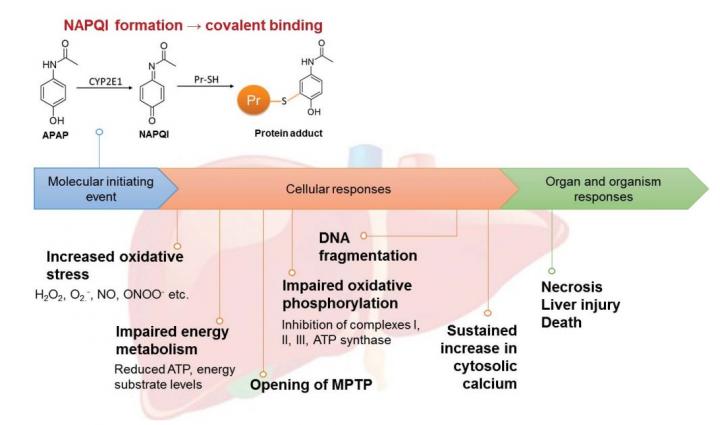
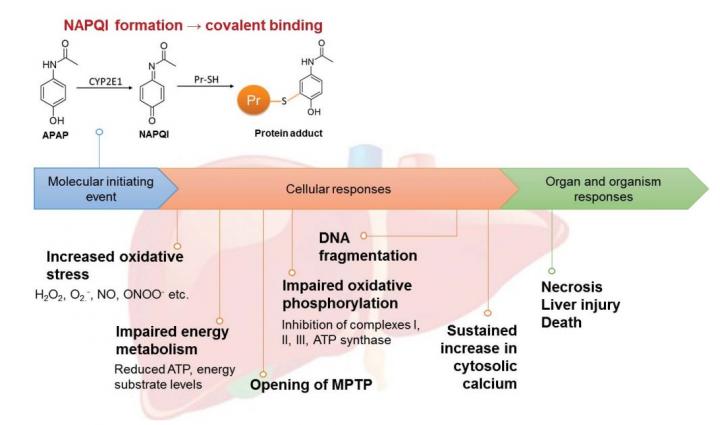
IMAGE

Credit: Chan et al., Molecular & Cellular Proteomics 2018

Acetaminophen is a common pain reliever found in every pharmacy. However, it is also the No. 1 cause of acute liver failure in the United States. In the liver, acetaminophen is converted into a new compound that covalently binds to proteins at an amino acid called cysteine. These covalent binding events are known to contribute to the toxicity of acetaminophen, but they cannot fully account for its role in liver failure. The compound is known to impair the activity of mitochondria, the cell's energy supplier, but does not bind directly to some of the enzymes in mitochondria whose activity it affects. Now researchers have found a new way that the breakdown product affects proteins in the liver.

James Chun Yip Chan and colleagues at the National University of Singapore examined glutathionylation, a post-translational modification made to cysteine residues, in response to acetaminophen toxicity. In a study published in the journal Molecular & Cellular Proteomics, the researchers reported a new proteomic approach to isolate and identify glutathionylated proteins and applied it in cells treated with acetaminophen. They found that an acetaminophen breakdown product can cause glutathionylation, suggesting a new mechanism for the damage the drug causes.

Usually, glutathione is added to cysteine residues to protect them from damage by oxygen under stressful conditions. Chan and colleagues showed that acetaminophen and its breakdown product activate glutathionylation in a dose-dependent way. The modification affects proteins involved in mitochondrial fuel uptake and energy production, leading to metabolic dysfunction and other effects linked to acetaminophen toxicity. This research helps explain the drug's toxicity at high doses, especially among enzymes that are impaired by acetaminophen treatment without binding directly to the drug or its metabolites. The findings may also apply to other drugs with similar structures.

###

DOI: 10.1074/mcp.RA118.000875

Other authors on the study included Alex Cheow Khoon Soh, Dorinda Yan Qin Kioh, Jianguo Li, Chandra Verma, Siew Kwan Koh, Roger Wilmer Beuerman, Lei Zhou and Eric Chun Yong Chan.

Kerri Beth Slaughter contributed to this research summary.

Molecular & Cellular Proteomics (MCP) showcases research into proteomes, large-scale sets of proteins from different organisms or biological contexts. The journal publishes work that describes the structural and functional properties of proteins and their expression, particularly with respect to developmental time courses. Emphasis is placed on determining how the presence or absence of proteins affect biological responses, and how the interaction of proteins with their cellular partners influences their functions. For more information about MCP, visit http://www.mcponline.org.

Media Contact

Laurel Oldach
[email protected]
240-283-6648
@asbmb

http://www.asbmb.org

Related Journal Article

http://dx.doi.org/10.1074/mcp.RA118.000875

Share12Tweet8Share2ShareShareShare2

Related Posts

Smartwatch Sleep Apnea Detection Shows Promise but Faces Clinical Hurdles

Smartwatch Sleep Apnea Detection Shows Promise but Faces Clinical Hurdles

October 6, 2026
When Friends Roll the Dice: Social Networks Drive Teen Gambling, Italian Study Finds

When Friends Roll the Dice: Social Networks Drive Teen Gambling, Italian Study Finds

October 6, 2026

Community Health Workers Emerge as a Powerful Antidote to Racism in Hospital Care

October 6, 2026

Horse Kick Leaves Horseshoe Bruise That Revealed Hidden Jejunal Perforation

October 6, 2026
Please login to join discussion

POPULAR NEWS

  • Alloys That Shrink Their Own Grains: New PIX Mechanism Refines Metals With Heat Alone

    Alloys That Shrink Their Own Grains: New PIX Mechanism Refines Metals With Heat Alone

    29 shares
    Share 12 Tweet 7
  • Endurance Exercise Reshapes the Liver in Males and Females Through Distinct Molecular Routes

    29 shares
    Share 12 Tweet 7
  • Single Transcription Factor PU.1 Rapidly Converts Fibroblasts into Macrophage-Lineage Cells

    29 shares
    Share 12 Tweet 7
  • New Scale Measures How Ready Nurse Educators Really Are for the AI Era

    29 shares
    Share 12 Tweet 7

About

We bring you the latest biotechnology news from best research centers and universities around the world. Check our website.

Follow us

Recent News

Alloys That Shrink Their Own Grains: New PIX Mechanism Refines Metals With Heat Alone

Endurance Exercise Reshapes the Liver in Males and Females Through Distinct Molecular Routes

Single Transcription Factor PU.1 Rapidly Converts Fibroblasts into Macrophage-Lineage Cells

Subscribe to Blog via Email

Success! An email was just sent to confirm your subscription. Please find the email now and click 'Confirm' to start subscribing.

Join 85 other subscribers
  • Contact Us

Bioengineer.org © Copyright 2023 All Rights Reserved.

Welcome Back!

Login to your account below

Forgotten Password?

Retrieve your password

Please enter your username or email address to reset your password.

Log In
No Result
View All Result
  • Homepages
    • Home Page 1
    • Home Page 2
  • News
  • National
  • Business
  • Health
  • Lifestyle
  • Science

Bioengineer.org © Copyright 2023 All Rights Reserved.