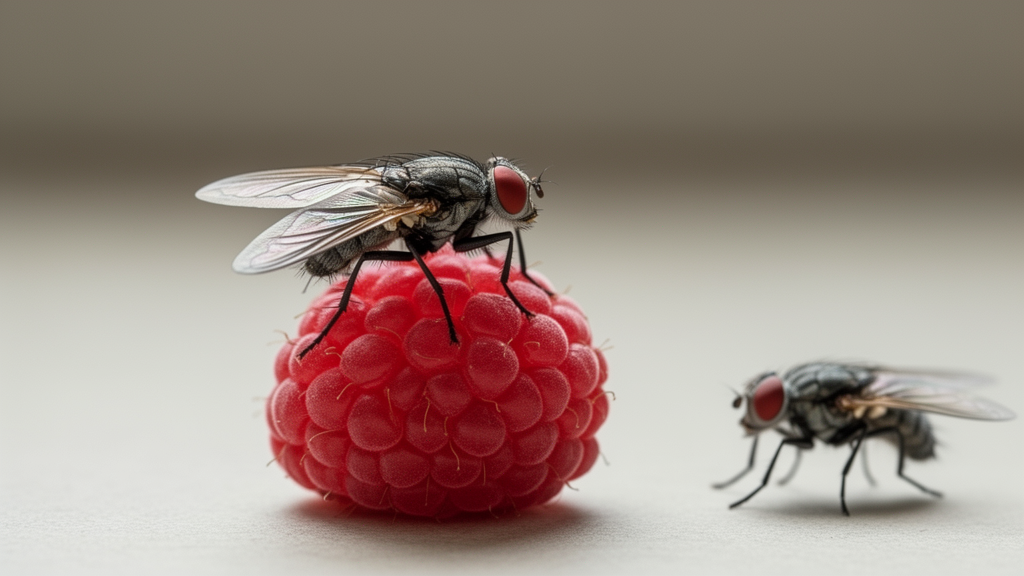
Host–parasite coevolution is expected to drive strong selection for resistance in hosts and infectivity in pathogens, a process that should steadily erode genetic variation in these traits. Yet natural populations often retain extensive genetic variation in resistance and infectivity. A new study combining evolutionary modelling with large-scale infection experiments offers an explanation: much of this variation is hidden inside host–virus interactions, where it is effectively invisible to directional selection.
Researchers, including Aleksei Belyi, Yiyang Du, Alastair J. Wilson, Ben Longdon and Francis M. Jiggins, studied the fruit fly Drosophila melanogaster and its vertically transmitted sigma virus. Their coevolutionary simulations showed that coevolution typically erodes additive genetic variance in host and pathogen fitness — the component of variation that responds predictably to selection — and instead concentrates variance in genotype-by-genotype interaction terms.
The experimental work bore this out. Across 90 host–virus genotype combinations, the key fitness-related traits of transmission, viral load and virulence were governed overwhelmingly by specific host–virus pairings rather than by the average effects of host or virus genotypes on their own. In other words, no host resistance allele and no viral genotype consistently conferred higher fitness across all genetic backgrounds.
Interactions also tended to be sex-specific, further restricting the amount of heritable fitness variation available to selection. Because the genetic variance sits in the interaction term rather than in additive differences among hosts or viruses, it remains ‘cryptic’ — masked from the directional selection that would otherwise deplete it. Negative frequency-dependent selection arising from these genotype-by-genotype interactions can help maintain this variation by preventing any single genotype from holding a permanent advantage.
The authors conclude that coevolution can substantially mask heritable variation by making fitness context-dependent. This cryptic reservoir may be revealed when ecological or evolutionary conditions shift, or when coevolution itself changes the direction of selection. The findings highlight the need to account for genotype-specific interactions when forecasting how populations will evolve in response to pathogens.
Subject of Research: Host–virus genotype interactions concealing additive genetic variation in a Drosophila–sigma virus system
Article Title: Host–virus interactions dominate fitness and conceal additive genetic variation
Article References: Belyi, A., Du, Y., Wilson, A. J., Longdon, B., & Jiggins, F. M. (2026). Host–virus interactions dominate fitness and conceal additive genetic variation. PLOS Biology, 24(10), e3003836. https://doi.org/10.1371/journal.pbio.3003836
Image Credits: AI Generated
DOI: 10.1371/journal.pbio.3003836
Keywords: Drosophila melanogaster, sigma virus, host-pathogen coevolution, genotype-by-genotype interactions, additive genetic variance, cryptic genetic variation, virulence, viral load, vertical transmission, negative frequency-dependent selection, evolutionary genetics, Host
News Source: Kristina Jarvis. (October 23, 2026). Host–virus genetic interactions mask heritable fitness variation in flies. Scienmag.