• HOME
  • NEWS
  • EXPLORE
    • CAREER
      • Companies
      • Jobs
    • EVENTS
    • iGEM
      • News
      • Team
    • PHOTOS
    • VIDEO
    • WIKI
  • BLOG
  • COMMUNITY
    • FACEBOOK
    • INSTAGRAM
    • TWITTER
Monday, June 8, 2026
BIOENGINEER.ORG
No Result
View All Result
  • Login
  • HOME
  • NEWS
  • EXPLORE
    • CAREER
      • Companies
      • Jobs
        • Lecturer
        • PhD Studentship
        • Postdoc
        • Research Assistant
    • EVENTS
    • iGEM
      • News
      • Team
    • PHOTOS
    • VIDEO
    • WIKI
  • BLOG
  • COMMUNITY
    • FACEBOOK
    • INSTAGRAM
    • TWITTER
  • HOME
  • NEWS
  • EXPLORE
    • CAREER
      • Companies
      • Jobs
        • Lecturer
        • PhD Studentship
        • Postdoc
        • Research Assistant
    • EVENTS
    • iGEM
      • News
      • Team
    • PHOTOS
    • VIDEO
    • WIKI
  • BLOG
  • COMMUNITY
    • FACEBOOK
    • INSTAGRAM
    • TWITTER
No Result
View All Result
Bioengineer.org
No Result
View All Result
Home NEWS Science News Biology

HKUST researchers unlock cancer-causing mechanism of E. coli toxin with synthetic biology approach

Bioengineer by Bioengineer
September 17, 2019
in Biology
Reading Time: 2 mins read
0
IMAGE
Share on FacebookShare on TwitterShare on LinkedinShare on RedditShare on Telegram

IMAGE

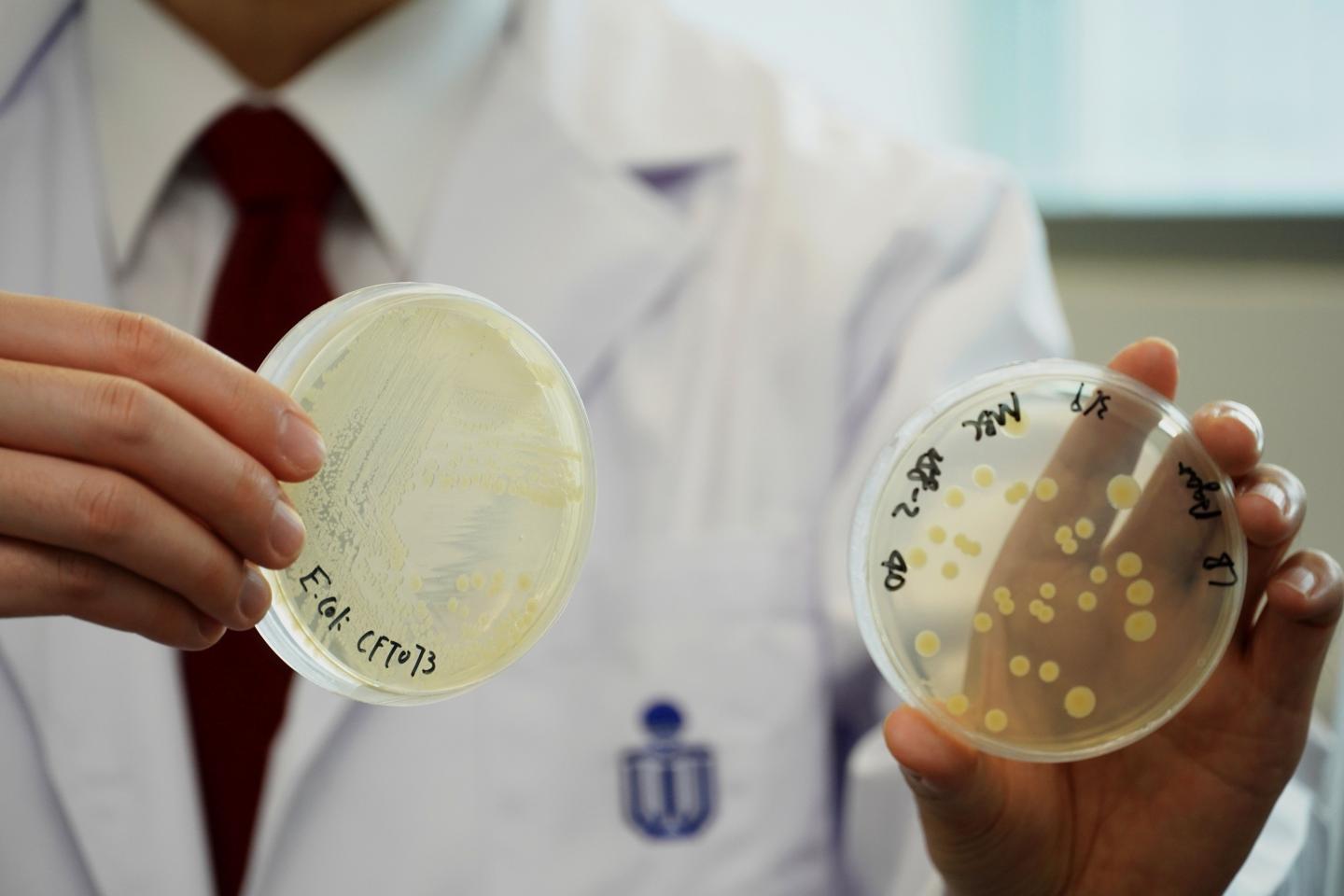
Credit: The Hong Kong University of Science and Technology

While human gut microbes like E. coli help digest food and regulate our immune system, they also contain toxins that could arrest cell cycle and eventually cause cell death. Scientists have long known that colibactin – a genotoxin produced by E. coli, can induce DNA double-strand breaks in eukaryotic cells and increase the risk of colorectal cancer in human. However, how colibactin causes DNA damage had remained a mystery as reconstructing colibactin metabolites is extremely difficult due to the compound’s instability, low titer and complexity of its biosynthetic pathway.

Now, a research team led by Prof. Qian Peiyuan, Chair Professor of HKUST’s Department of Ocean Science and Division of Life Science, have unearthed the missing link using a novel biosynthetic method. The team not only succeeded in cloning the colibactin gene cluster, but also found a way to mass produce the genes for testing and validation. After repeated assays of various sets of colibactin precursors, the team eventually identified colibactin-645 as the culprit of the DNA double-strand breaks, and uncovered colibactin metabolite’s biosynthetic pathway as well as its mechanism of causing DNA damage.

Prof. Qian said, “Although a few colibactin metabolites have been reported to damage DNA via DNA crosslinking activity, the genotoxic colibactin that possesses DNA double-strands directly is yet-to-be-identified. Our research has confirmed colibactin-645 exerts direct DNA double-strand breaks, that unearthed the missing link that correlates colibactin to its health effects on human beings.”

LI Zhongrui, a researcher of the team, said the restructuring of colibactin’s molecular scaffold provides a model for designing and synthesizing potent DNA cleaving agents – such as synthetic restriction “enzymes” or chemotherapeutic agents.

###

In collaboration with University of California at Berkeley and Scripps Institution of Oceanography of University of California, San Diego, the research findings were recently published in the prestigious scientific journal Nature Chemistry and the early findings on colibactin were published in another scientific journal Nature Chemical Biology.

*According to the statistics of World Cancer Research Fund 2018: https://www.wcrf.org/dietandcancer/cancer-trends/colorectal-cancer-statistics

Media Contact
Lindy Wong
[email protected]

Original Source

https://www.nature.com/articles/s41557-019-0317-7

Related Journal Article

http://dx.doi.org/10.1038/s41557-019-0317-7

Tags: BiochemistryBiologyCell Biology
Share13Tweet8Share2ShareShareShare2

Related Posts

Groundbreaking Photos Confirm Survival of Elusive Cozumel Dwarf Fox After 20 Years — Biology

Groundbreaking Photos Confirm Survival of Elusive Cozumel Dwarf Fox After 20 Years

June 8, 2026
Study Finds Horses Exhibit No Behavioral Changes When Petted in Children’s Zoo Environment — Biology

Study Finds Horses Exhibit No Behavioral Changes When Petted in Children’s Zoo Environment

June 8, 2026

New Study Reveals the Role of Insects in Our Ancestors’ Diet

June 5, 2026

RNA-Protein Self-Replication Systems Show Path Toward Evolutionary Extinction

June 5, 2026
Please login to join discussion

POPULAR NEWS

  • ESMO 2025: mRNA COVID Vaccines Enhance Efficacy of Cancer Immunotherapy

    323 shares
    Share 129 Tweet 81
  • Multi-Hospital Study Reveals Long Covid Burden Is Twice as High as Current Estimates

    89 shares
    Share 35 Tweet 22
  • Saying Goodbye to PGY-6: Pediatric Fellowship Realities

    83 shares
    Share 33 Tweet 21
  • Common Food Preservatives Associated with Elevated Blood Pressure and Increased Heart Disease Risk

    58 shares
    Share 23 Tweet 15

About

We bring you the latest biotechnology news from best research centers and universities around the world. Check our website.

Follow us

Recent News

Thermally Elongated Nozzles Enable Micro-Scale Multimaterial Printing

Cutting-Edge Laboratory in Kenya Addresses Vital Wildlife Health Needs

Safeguarding Heart Health Amid Rising Temperature Extremes

Subscribe to Blog via Email

Enter your email address to subscribe to this blog and receive notifications of new posts by email.

Join 82 other subscribers
  • Contact Us

Bioengineer.org © Copyright 2023 All Rights Reserved.

Welcome Back!

Login to your account below

Forgotten Password?

Retrieve your password

Please enter your username or email address to reset your password.

Log In
No Result
View All Result
  • Homepages
    • Home Page 1
    • Home Page 2
  • News
  • National
  • Business
  • Health
  • Lifestyle
  • Science

Bioengineer.org © Copyright 2023 All Rights Reserved.