• HOME
  • NEWS
  • EXPLORE
    • CAREER
      • Companies
      • Jobs
    • EVENTS
    • iGEM
      • News
      • Team
    • PHOTOS
    • VIDEO
    • WIKI
  • BLOG
  • COMMUNITY
    • FACEBOOK
    • INSTAGRAM
    • TWITTER
Wednesday, May 27, 2026
BIOENGINEER.ORG
No Result
View All Result
  • Login
  • HOME
  • NEWS
  • EXPLORE
    • CAREER
      • Companies
      • Jobs
        • Lecturer
        • PhD Studentship
        • Postdoc
        • Research Assistant
    • EVENTS
    • iGEM
      • News
      • Team
    • PHOTOS
    • VIDEO
    • WIKI
  • BLOG
  • COMMUNITY
    • FACEBOOK
    • INSTAGRAM
    • TWITTER
  • HOME
  • NEWS
  • EXPLORE
    • CAREER
      • Companies
      • Jobs
        • Lecturer
        • PhD Studentship
        • Postdoc
        • Research Assistant
    • EVENTS
    • iGEM
      • News
      • Team
    • PHOTOS
    • VIDEO
    • WIKI
  • BLOG
  • COMMUNITY
    • FACEBOOK
    • INSTAGRAM
    • TWITTER
No Result
View All Result
Bioengineer.org
No Result
View All Result
Home NEWS Science News Health

HKBU scholars in world-first breakthrough for difficult-to-treat breast cancer

Bioengineer by Bioengineer
August 29, 2018
in Health
Reading Time: 2 mins read
0
Share on FacebookShare on TwitterShare on LinkedinShare on RedditShare on Telegram
IMAGE

Credit: HKBU

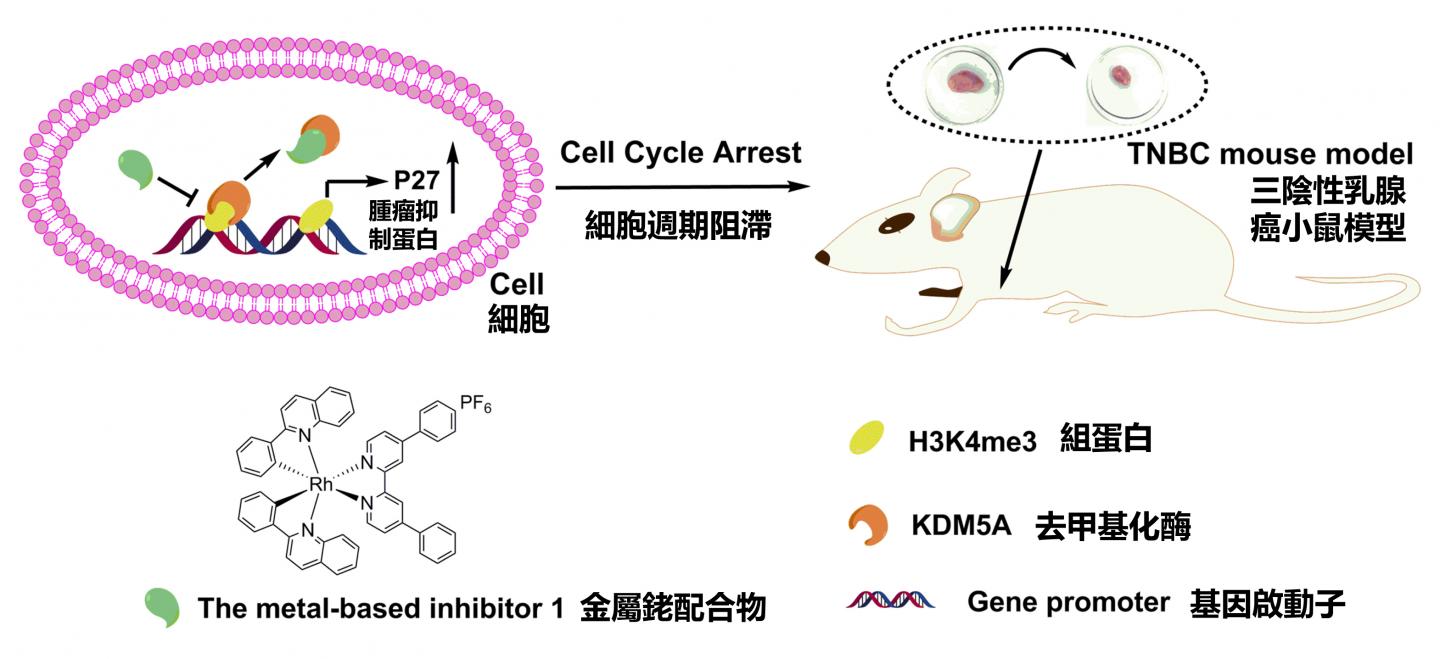
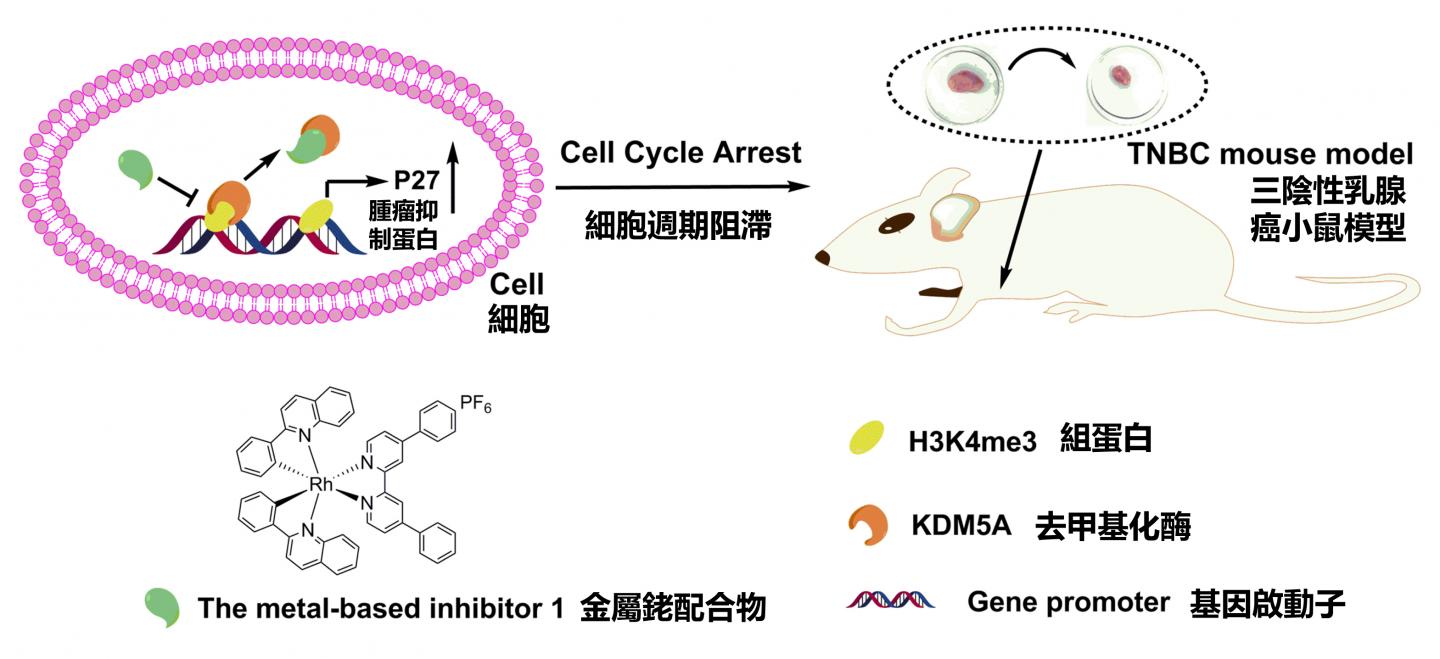
Chemists at Hong Kong Baptist University (HKBU) have discovered the use of a metal compound that inhibits the enzyme closely associated with triple-negative breast cancer (TNBC), one of the most difficult forms of breast cancer to treat. The metal compound is found to inhibit the TNBC tumours with less toxicity in mice, thus their work has further unmasked the role of the enzyme, lysine-specific demythylase 5A (KDM5A), in TNBC. The reported compound shows tremendous potential for the development of drugs for TNBC therapy. The results of this study were published in the leading chemistry journal Angewandte Chemie International Edition.

The team was led by Dr Edmond Ma Dik-lung, Associate Professor of HKBU's Department of Chemistry. The team developed the compound using a metal named rhodium as a direct, potent and selective inhibitor of KDM5A, in other words the compound can effectively target KDM5A which is a key limitation of existing KDM5A inhibitors.

Dr Edmond Ma said that KDM5A is overexpressed in breast cancer and other human cancers, including brain, lung and gastric cancers, thus promoting carcinogenesis and drug resistance. Up to now, only a few KDM5A inhibitors have been reported, but most of them cannot effectively detect KDM5A, limiting their ability to inhibit it.

He said, "The compound acts by disrupting the interaction between KDM5A and trimethylated histone H3, a protein that regulates the folding of DNA. This leads to the accumulation of methylated marks on histone H3, which in turn increases the expression of p27, a protein that suppresses tumour growth. The compound was found to be capable of suppressing cells' growth process in TNBC cell lines, and also showed potent anti-tumour activity against TNBC in an in vivo mouse model. Importantly, the new compound was less toxic in vivo compared with two well-known clinical anti-cancer drugs, cisplatin and doxorubicin."

Dr Ma said, "The traditional TNBC treatments are limited by drug resistance and serious side effects, including organ damage. Therefore, there is an urgent need to develop new targeted approaches for the treatment of TNBC. We therefore believe that our metal compound shows great promise for the development of targeted drugs for TNBC therapy."

The research project, entitled "Selective inhibition of lysine-specific demethylase 5A (KDM5A) using a rhodium complex for triple-negative breast cancer therapy", was led by Dr Ma together with Professor Leung Chung-hang of the Institute of Chinese Medical Sciences, University of Macau. Other collaborators in the project included researchers from the Macau University of Science and Technology, the City University of Hong Kong, and Jiangsu Normal University, China.

###

Media Contact

HKBU
[email protected]

http://www.hkbu.edu.hk

Original Source

https://cpro.hkbu.edu.hk/en/press_release/detail/81/ http://dx.doi.org/10.1002/anie.201807305

Share12Tweet7Share2ShareShareShare1

Related Posts

Birth Certificates Underreport NICU Admissions, Especially Vulnerable

May 27, 2026

How Does Caffeine Affect Our Sleep?

May 27, 2026

Harnessing Machine Learning to Bridge Drug Safety Research Gaps in Pregnancy

May 27, 2026

Children’s Hospital Colorado Pioneers Nationwide Prenatal Treatment for Cystic Fibrosis

May 27, 2026
Please login to join discussion

POPULAR NEWS

  • ESMO 2025: mRNA COVID Vaccines Enhance Efficacy of Cancer Immunotherapy

    318 shares
    Share 127 Tweet 80
  • New Study Reveals Plants Can Detect the Sound of Rain

    735 shares
    Share 293 Tweet 183
  • Common Food Preservatives Associated with Elevated Blood Pressure and Increased Heart Disease Risk

    56 shares
    Share 22 Tweet 14
  • AI-Powered Atlas Uncovers Extensive Whole-Body Damage Linked to Obesity

    53 shares
    Share 21 Tweet 13

About

We bring you the latest biotechnology news from best research centers and universities around the world. Check our website.

Follow us

Recent News

Urolithin A Reduces Inflammation, Strengthens Gut Barrier

Birth Certificates Underreport NICU Admissions, Especially Vulnerable

Breakthrough Discovery: Natural Molecule Shows Promise in Outsmarting Melanoma

Subscribe to Blog via Email

Enter your email address to subscribe to this blog and receive notifications of new posts by email.

Join 82 other subscribers
  • Contact Us

Bioengineer.org © Copyright 2023 All Rights Reserved.

Welcome Back!

Login to your account below

Forgotten Password?

Retrieve your password

Please enter your username or email address to reset your password.

Log In
No Result
View All Result
  • Homepages
    • Home Page 1
    • Home Page 2
  • News
  • National
  • Business
  • Health
  • Lifestyle
  • Science

Bioengineer.org © Copyright 2023 All Rights Reserved.