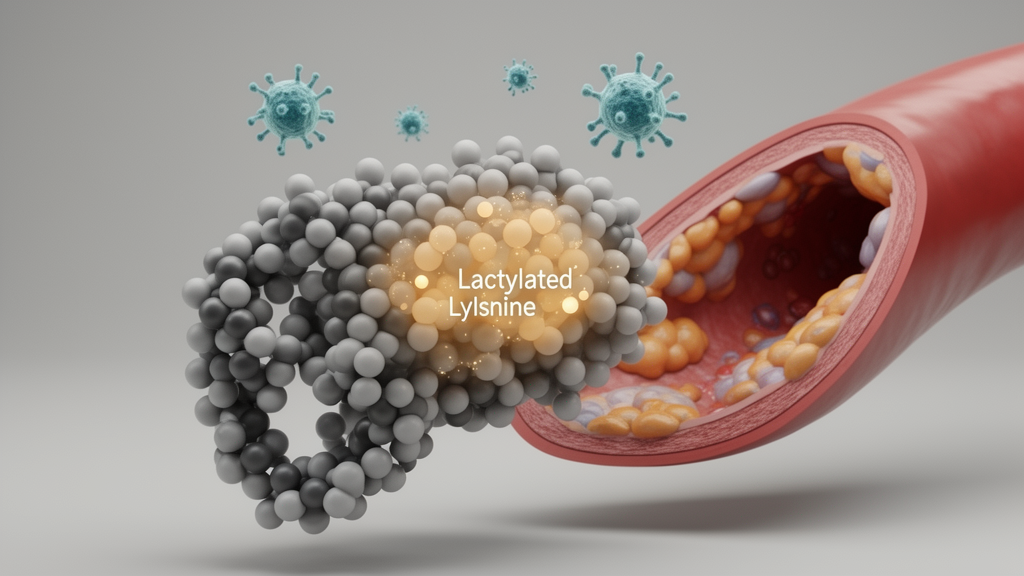
Researchers from a team led by Weixiong Jian have proposed a new mechanistic framework linking metabolic reprogramming to persistent inflammatory risk in atherosclerosis. Published in Clinical Epigenetics, the study advances a hypothesis that histone lactylation, specifically H3K18 lactylation (H3K18la), functions as an epigenetic memory code in innate immune cells. This mechanism, termed “context-dependent lactylation memory,” suggests that transient glycolytic signals are converted into persistent transcriptional responsiveness, potentially explaining why cardiovascular events persist despite optimal lipid-lowering therapy.
The central premise of the hypothesis is that the lactate-p300-H3K18la axis encodes innate immune memory. The authors argue that this axis allows metabolic signals to influence chromatin states, creating a poised state that sustains innate immune hyperresponsiveness.
The hypothesis integrates evidence from three converging domains to support this model. First, it relies on the observed persistence of lactylation at trained immune loci. Second, it incorporates findings from recent BCG vaccination studies that demonstrated the requirement of H3K18la for trained immunity. Third, it considers the specific microenvironment of the atherosclerotic plaque, which is characterized by hypoxia and glycolysis.
According to the proposed cascade, cardiovascular risk factors stabilize HIF-1α, which drives glycolytic reprogramming. This reprogramming leads to sustained lactate production within the plaque microenvironment. The generated lactate is then converted into lactyl-CoA, which serves as a substrate for p300 and CBP. These enzymes mediate the deposition of H3K18la at immune gene regulatory elements, effectively bookmarking the chromatin to maintain a state of heightened inflammatory readiness.
The study emphasizes that this mechanism provides a potential explanation for residual inflammatory risk. Residual risk refers to the observation that patients continue to experience cardiovascular events even when their lipid levels are optimally managed.
However, the authors caution that the framework is constrained by the context-dependent duality of lactylation. The outcome of histone lactylation is not universally pro-inflammatory; rather, it is determined by the specific cell type, the lysine site modified, and the direction of metabolic flux. These factors jointly determine whether the modification drives pro-inflammatory or reparative outcomes.
The paper delineates testable predictions that define a roadmap for empirical validation or refutation of the lactate-lactylation memory hypothesis in human coronary heart disease.
Subject of Research: Epigenetic mechanisms of innate immune memory in atherosclerosis
Article Title: Histone lactylation encodes innate immune memory in atherosclerosis: a hypothesis of epigenetic bookmarking for residual inflammatory risk
Article References: Yang, H., Zhang, Y., Yu, Y., Zhu, J., Wang, L., & Jian, W. (2026). Histone lactylation encodes innate immune memory in atherosclerosis: a hypothesis of epigenetic bookmarking for residual inflammatory risk. Clinical Epigenetics, 18(1), Article 207. https://doi.org/10.1186/s13148-026-02224-8
Image Credits: AI Generated
DOI: 10.1186/s13148-026-02224-8
Keywords: histone lactylation, atherosclerosis, innate immune memory, epigenetics, metabolic reprogramming, H3K18la, residual inflammatory risk, glycolysis, lactate, p300, Clinical Epigenetics, Histone
News Source: Ophelia Keating. (November 9, 2026). Histone Lactylation Hypothesis Links Immune Memory to Atherosclerosis. Scienmag.