• HOME
  • NEWS
  • EXPLORE
    • CAREER
      • Companies
      • Jobs
    • EVENTS
    • iGEM
      • News
      • Team
    • PHOTOS
    • VIDEO
    • WIKI
  • BLOG
  • COMMUNITY
    • FACEBOOK
    • INSTAGRAM
    • TWITTER
Friday, May 15, 2026
BIOENGINEER.ORG
No Result
View All Result
  • Login
  • HOME
  • NEWS
  • EXPLORE
    • CAREER
      • Companies
      • Jobs
        • Lecturer
        • PhD Studentship
        • Postdoc
        • Research Assistant
    • EVENTS
    • iGEM
      • News
      • Team
    • PHOTOS
    • VIDEO
    • WIKI
  • BLOG
  • COMMUNITY
    • FACEBOOK
    • INSTAGRAM
    • TWITTER
  • HOME
  • NEWS
  • EXPLORE
    • CAREER
      • Companies
      • Jobs
        • Lecturer
        • PhD Studentship
        • Postdoc
        • Research Assistant
    • EVENTS
    • iGEM
      • News
      • Team
    • PHOTOS
    • VIDEO
    • WIKI
  • BLOG
  • COMMUNITY
    • FACEBOOK
    • INSTAGRAM
    • TWITTER
No Result
View All Result
Bioengineer.org
No Result
View All Result
Home NEWS Science News Biology

Highlands of diversity: Another new chameleon from the Bale region, Ethiopia

Bioengineer by Bioengineer
March 23, 2021
in Biology
Reading Time: 2 mins read
0
IMAGE
Share on FacebookShare on TwitterShare on LinkedinShare on RedditShare on Telegram

IMAGE

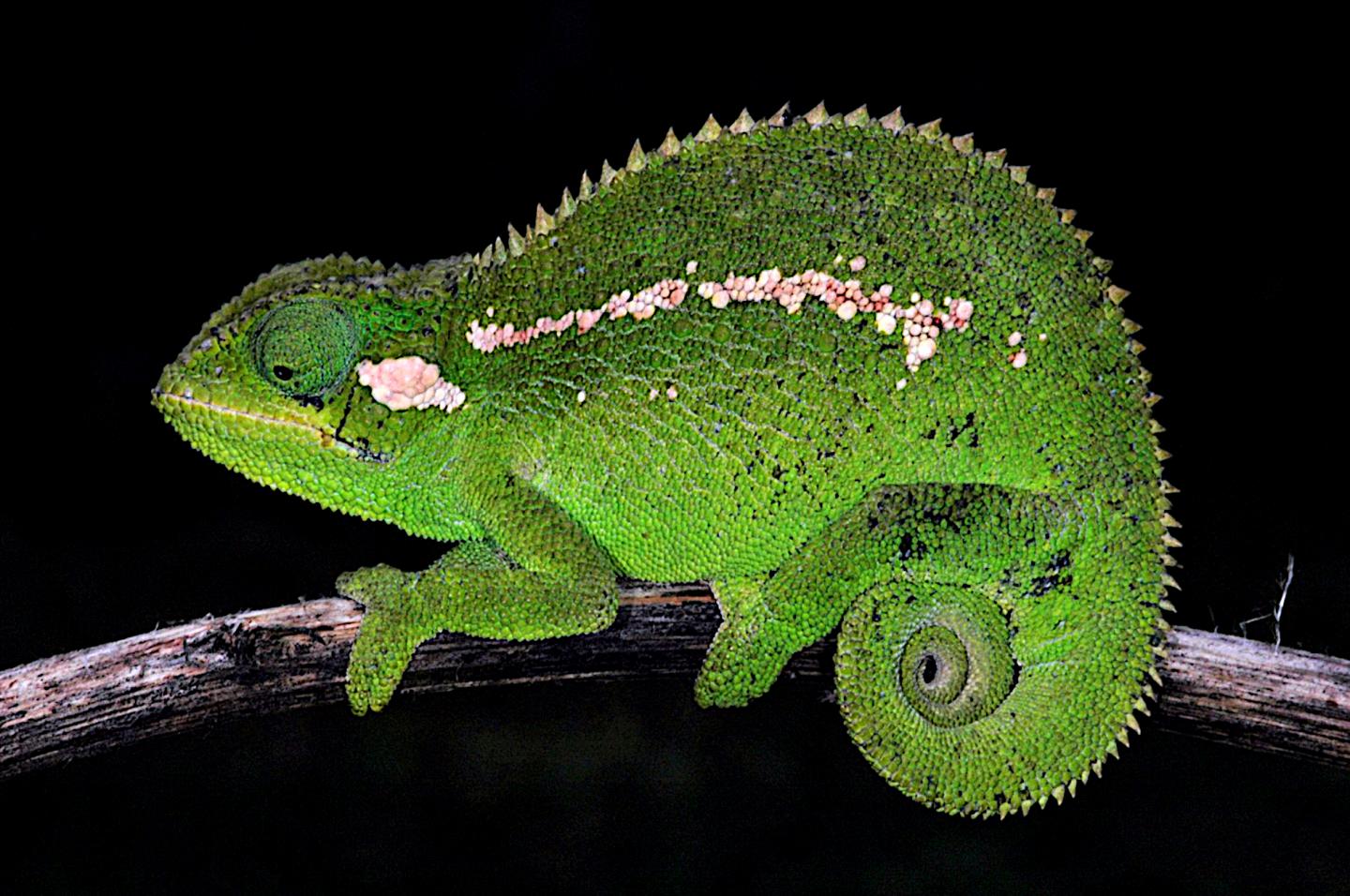
Credit: Koppetsch et al.

The Bale Mountains in south-central Ethiopia are considered to be one of the most unique centers of endemism, with an extraordinary number of plants and animals that can only be found there. Numerous species are already known from this Afromontane high-elevation plateau, making it a biodiversity hotspot, but ongoing research continues to reveal the presence of so far unknown and undescribed organisms.

Zoologists Thore Koppetsch and Benjamin Wipfler of the Research Museum Alexander Koenig in Bonn, Germany, and Petr Nečas from the Czech Republic, describe one such species: a new small-sized chameleon living on the edge of the forest. Their findings were published in the open-access, peer-reviewed life science journal Zoosystematics and Evolution.

There were already two species of the chameleon genus Trioceros known to be restricted to the Bale region when Thore Koppetsch and his colleagues discovered another unique representative of this group from the northern slopes of the Bale Mountains. Interestingly, this new chameleon is considered to be part of a species complex of the wide-spread Ethiopian Chameleon Trioceros affinis. Previous studies have indicated divergence between its different populations across the Ethiopian Highlands – with some of them separated by the northern extension of the Great Rift Valley, which also shaped the evolution of early humans.

The new chameleon, Trioceros wolfgangboehmei, has a special name. It honours the scientific work of Wolfgang Böhme, senior herpetologist at the Zoological Research Museum Alexander Koenig in Bonn, and his passion for chameleons and other reptiles.

Apart from its biogeographical patterns, the new species also has a characteristic appearance, displaying enlarged spiny scales on its back and tail that form a prominent crest. It usually lives on small trees and bushes at an altitude of above 2,500 m above sea level.

“Given the variation in colour patterns and morphology between different populations of these chameleons in Ethiopia, it is likely that these groups still bear a higher hidden diversity than expected, which might be revealed by further ongoing investigations” Thore Koppetsch notes. Furthermore, the research team urges for sustainable preservation and conservation of its habitat to mitigate the impact of human activity.

###

Original source:

Koppetsch T, Nečas P, Wipfler B (2021) A new chameleon of the Trioceros affinis species complex (Squamata, Chamaeleonidae) from Ethiopia. Zoosystematics and Evolution 97 (1): 161-179. https://doi.org/10.3897/zse.97.57297

Media Contact
Thore Koppetsch
[email protected]

Related Journal Article

http://dx.doi.org/10.3897/zse.97.57297

Tags: BiodiversityBiologyZoology/Veterinary Science
Share13Tweet8Share2ShareShareShare2

Related Posts

New Astrobiology Special Collection Highlights Emerging Evidence Supporting Land-Based Origins of Life — Biology

New Astrobiology Special Collection Highlights Emerging Evidence Supporting Land-Based Origins of Life

May 14, 2026
Revolutionizing Textiles: Engineered Protein Fibers Pave the Way for Sustainable, Recyclable Fabrics — Biology

Revolutionizing Textiles: Engineered Protein Fibers Pave the Way for Sustainable, Recyclable Fabrics

May 14, 2026

URI Master’s Student Emilio Pedroza Lopez Awarded Prestigious NSF Graduate Research Fellowship

May 14, 2026

Enhancing Disease Surveillance Through SARS-CoV-2 Diversity Analysis in Wastewater

May 14, 2026
Please login to join discussion

POPULAR NEWS

  • Research Indicates Potential Connection Between Prenatal Medication Exposure and Elevated Autism Risk

    842 shares
    Share 337 Tweet 211
  • New Study Reveals Plants Can Detect the Sound of Rain

    729 shares
    Share 291 Tweet 182
  • Salmonella Haem Blocks Macrophages, Boosts Infection

    62 shares
    Share 25 Tweet 16
  • Breastmilk Balances E. coli and Beneficial Bacteria in Infant Gut Microbiomes

    58 shares
    Share 23 Tweet 15

About

We bring you the latest biotechnology news from best research centers and universities around the world. Check our website.

Follow us

Recent News

Unraveling and Harnessing Tuberculosis Superspreading for Better Disease Control

Illuminating the Secrets of Cell-to-Cell Communication

Transitional Urology: Navigating Comprehensive Care Processes

Subscribe to Blog via Email

Enter your email address to subscribe to this blog and receive notifications of new posts by email.

Join 82 other subscribers
  • Contact Us

Bioengineer.org © Copyright 2023 All Rights Reserved.

Welcome Back!

Login to your account below

Forgotten Password?

Retrieve your password

Please enter your username or email address to reset your password.

Log In
No Result
View All Result
  • Homepages
    • Home Page 1
    • Home Page 2
  • News
  • National
  • Business
  • Health
  • Lifestyle
  • Science

Bioengineer.org © Copyright 2023 All Rights Reserved.