


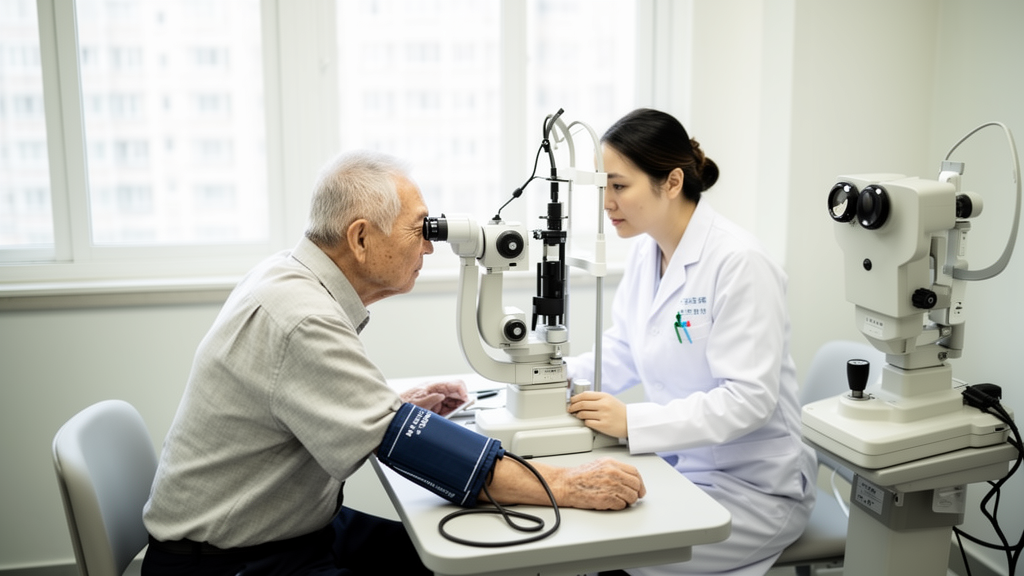
Higher mean ocular perfusion pressure, a calculated measure of the blood pressure driving circulation through the eye, is associated with proliferative diabetic retinopathy, according to a retrospective cross-sectional study of patients with type 2 diabetes in northern China. The finding, published in Frontiers in Endocrinology, suggests that this hemodynamic measure may offer information about retinopathy severity beyond standard blood pressure readings alone.
The research team, led by Fei Gao and colleagues at Tianjin Medical University Eye Hospital, analyzed data from 1,323 participants. Of these, 1,119 patients came from the Beichen Eye Study and 204 were identified from electronic medical records at the Tianjin Medical University Eye Hospital.
Mean ocular perfusion pressure, abbreviated MOPP, is not measured directly. The researchers calculated it from three routine clinical measurements: systolic blood pressure, diastolic blood pressure, and intraocular pressure. Pulse pressure, the difference between systolic and diastolic values, was also computed. The formula used was MOPP equals two-thirds of the sum of diastolic blood pressure plus one-third of pulse pressure, minus intraocular pressure. The authors describe MOPP as a measure that may provide complementary hemodynamic information in relation to diabetic retinopathy severity.
With proliferative diabetic retinopathy as the reference category, the analysis showed that higher MOPP was associated with proliferative disease relative to both no retinopathy and non-proliferative disease. Specifically, each unit increase in MOPP was associated with lower odds of belonging to the proliferative group compared with the no-retinopathy group, with an odds ratio of 0.92 and a 95 percent confidence interval of 0.89 to 0.95. The comparison between proliferative and non-proliferative disease yielded a similar pattern, with an odds ratio of 0.94 and a 95 percent confidence interval of 0.91 to 0.98.
Systolic blood pressure and pulse pressure showed similar patterns in their respective adjusted models and in analyses that divided participants into tertiles. Because the models were adjusted, the associations for these blood pressure measures and for MOPP were each estimated independently of the other variables included in the statistical models.
The team also carried out exploratory analyses of possible nonlinear relationships. These analyses found evidence of nonlinear associations for pulse pressure, with a P value of 0.046 from a likelihood test, and for intraocular pressure, with a P value below 0.001. No such evidence of nonlinearity emerged for systolic blood pressure or for MOPP, whose associations appeared consistent across the observed range.
The study’s design carries important limitations. As a retrospective cross-sectional analysis, it captures a snapshot in time and cannot establish that blood pressure or perfusion pressure changes cause retinopathy to progress or regress. The participants were drawn from a northern Chinese population and from a single hospital’s records alongside a regional eye study, so the findings may not generalize to other populations.
Within those constraints, the authors conclude that higher MOPP was associated with proliferative diabetic retinopathy relative to both no retinopathy and non-proliferative disease, and they suggest that MOPP may provide complementary hemodynamic information in relation to diabetic retinopathy severity.
The study was received in June 2026 and accepted in October 2026. The authors emphasize that their claims are solely those of the research team and do not necessarily represent those of their affiliated organizations or the publisher.
Subject of Research: The association between mean ocular perfusion pressure and proliferative diabetic retinopathy in patients with type 2 diabetes in northern China.
Article Title: Association between mean ocular perfusion pressure and proliferative diabetic retinopathy in a northern Chinese population
Article References: Gao, F., Bo, H., Pazo, E. E., Hu, L., Chen, C., Shi, Y., Zhu, X., Li, X., & Liu, J. (2026). Association between mean ocular perfusion pressure and proliferative diabetic retinopathy in a northern Chinese population. Frontiers in Endocrinology, 17, Article 1921927. https://doi.org/10.3389/fendo.2026.1921927
Image Credits: AI Generated
DOI: 10.3389/fendo.2026.1921927
Keywords: mean ocular perfusion pressure, proliferative diabetic retinopathy, diabetic retinopathy, type 2 diabetes, blood pressure, pulse pressure, intraocular pressure, systolic blood pressure, retrospective cross-sectional study, northern China, retina, hemodynamics
News Source: Ophelia Keating. (October 29, 2026). Higher Ocular Perfusion Pressure Linked to Proliferative Diabetic Retinopathy in Northern China. Scienmag.



