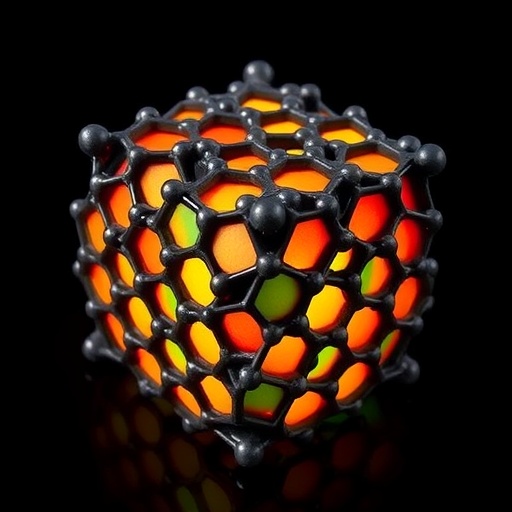
In the rapidly evolving landscape of electronics and protective technologies, managing heat dissipation effectively has become a critical challenge. Modern electronic devices demand materials that not only dissipate heat efficiently but also maintain structural integrity under mechanical stress. Graphene, celebrated for its exceptional thermal conductivity, has long been a material of great promise in this arena. Yet, despite its intrinsic properties, utilizing graphene in bulk polymer composites has proven difficult. Typically, polymer matrices dilute the thermal pathways due to the high polymer content, severely limiting performance. On the other hand, pure graphene papers tend to suffer from fragile mechanical strength and are prone to delamination, hampering their real-world applications.
A recent groundbreaking study, published in the journal Advanced Nanocomposites, presents a novel approach to tackle this longstanding trade-off between mechanical robustness and thermal performance. Researchers from Zhejiang University, China, have conceptualized and experimentally validated an innovative fabrication strategy termed inverse phase enhancement (IPE). This method fundamentally rethinks the role of polymers in graphene composites, leveraging a tiny fraction of polymer resin not as a bulk matrix but as a reinforcing filler. This design cleverly secures the graphene layers while preserving their superior heat conduction channels.
The conventional mindset has always revolved around increasing polymer content to enhance the toughness of graphene-based composites. However, this study’s lead author, Kaiwen Li, explains the limitations of this approach: “Adding large amounts of polymer disrupts the continuity of graphene’s crystalline structure, rating down thermal conductivity even as it enhances mechanical strength.” This conundrum led Li and his multidisciplinary team to reverse the paradigm—minimizing polymer presence while maximizing structural interlocking at the interfaces of graphene sheets.
Their inverse phase enhancement strategy uses approximately 5.9% polymer resin, strategically infiltrated into the voids between tightly stacked graphene layers. This polymer acts much like a 2D mortise-and-tenon joint, an architectural technique that interlocks components to resist sliding and delamination. By filling these microscopic voids, the resin arrests crack propagation that would otherwise propagate catastrophically if the graphene layers slipped past one another. Crucially, this secures mechanical integrity without compromising the long-range order needed for effective phononic heat transport.
Experimental results reported in the study appear remarkable. The tensile strength of the graphene papers surged by 117%, reaching an impressive 63.3 MPa, a level that can withstand significant mechanical stress. More striking is the in-plane thermal conductivity achieved when these papers are scaled into bulk laminate composites—the researchers recorded a value of approximately 802 W/m·K. This figure outperforms traditional polymer composites by nearly an order of magnitude, showcasing a material paradigm that simultaneously excels at mechanical durability and thermal management.
The implications of this advancement are broad and impactful. High thermal conductivity with robust mechanical strength makes these graphene composites prime candidates for advanced thermal management in high-power electronics, which increasingly generate critical heat loads requiring efficient removal to maintain performance and reliability. Additionally, the excellent mechanical toughness positions these composites as candidates for next-generation protective gear with impact resistance, specifically thermal armor where heat dissipation is as important as structural resilience.
Co-corresponding author Zhen Xu emphasized how this development reconciles a major materials science challenge, stating, “Our approach dismantles the well-accepted trade-off that has hindered practical graphene composites for years. We now have a material that can deliver both extremes—unmatched thermal conductivity and mechanical toughness—in a scalable format suitable for industrial application.” This breakthrough heralds a new era in polymer composite design where inverse structural engineering offers a route to unlock graphene’s full potential.
The underlying physics of this approach also inspire new lines of inquiry in materials science. The ability to maintain highly ordered graphene crystalline domains while introducing polymer resin at targeted interfaces represents a synergy between mechanical reinforcement and phonon channel preservation. Traditional filler methods inadvertently scatter phonons, leading to thermal resistance. In contrast, the inverse phase enhancement method minimizes interface defects and voids that typically act as phonon scattering centers, thus optimizing thermal transport pathways.
Significantly, this strategy opens the door for the utilization of graphene assemblies in other composite types or even hybrid materials where balancing conductivity and mechanical strength is crucial. As the research community delves deeper into this architectural philosophy, similar inverse phase enhancements might be discoverable across other two-dimensional materials and polymer systems, broadening application horizons from flexible electronics to aerospace-grade heat shields.
Furthermore, the team’s experimental validation of the concept involved comprehensive characterization of mechanical and thermal properties, supporting the reproducibility and scalability of their method. Testing under various mechanical loads ensured that the polymer filler effectively hindered crack propagation, while thermal conductivity measurements confirmed the preservation of graphene’s intrinsic heat transfer capabilities. Such robust experimental backing is crucial for real-world transition from laboratory proofs of concept to commercial products.
This innovation also speaks to the synergy between polymer chemistry and nanomaterial assembly, exemplifying how minimal but precise molecular engineering can have an outsized impact on macroscopic materials properties. The polymer used, though minimal in volume, is chemically tailored to interact optimally with graphene surfaces, further maximizing interfacial adhesion and mechanical interlocking, a nuance that distinguishes this work from previous filler strategies.
Looking forward, this new framework for graphene composite fabrication hints at exciting possibilities in electronics cooling solutions, wearable thermal regulation devices, and protective coatings in diverse environments. The technology could drastically improve the lifespan, efficiency, and safety of devices where heat dissipation is a critical bottleneck, marking a significant advance for materials science and applied engineering alike.
This work was supported by several prestigious funding bodies in China, highlighting the national interest and global relevance of breakthroughs in advanced materials. With concerted efforts on the horizon to scale these composites for industrial applications, this inverse phase enhancement strategy may soon redefine standards in thermal management materials worldwide, setting a new benchmark that harmonizes mechanical strength with unparalleled thermal conductivity.
Subject of Research: Not applicable
Article Title: Strong graphene bulk composites with high thermal conductivity over 800 W/m·K
Web References: http://dx.doi.org/10.1016/j.adna.2025.10.002
Image Credits: Zhen Xu
Keywords
Materials Science, Molecular Physics, Nanotechnology, Polymer Chemistry, Graphene Composites, Thermal Conductivity, Mechanical Strength, Polymer Reinforcement, Heat Dissipation, Advanced Nanocomposites
Tags: advanced nanocomposite materialsbulk graphene composite innovationselectronic device cooling materialsgraphene layer stabilization techniquesgraphene polymer composite fabricationgraphene thermal management solutionsheat dissipation in electronicshigh-strength graphene compositesinverse phase enhancement methodmechanical robustness in compositespolymer resin as reinforcing fillersuperior thermal conductivity materials