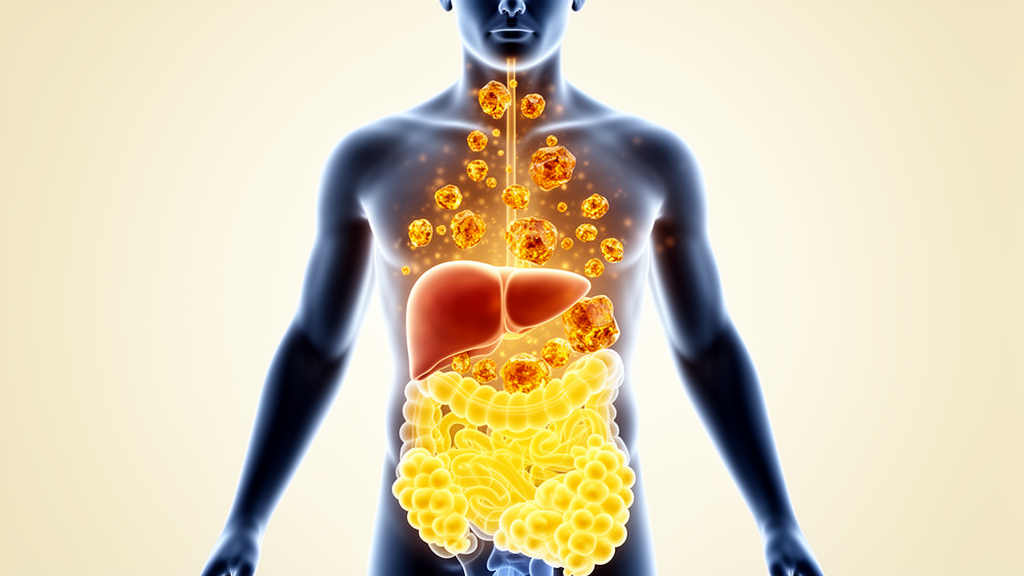
People with central obesity who carry higher levels of urate in their blood also tend to carry more fat deep inside the abdomen and more fat in the liver, according to a post-hoc analysis published in BMC Rheumatology on 15 October 2026. The study, drawn from baseline data in the Habitual Diet vs. Avocado randomized controlled trial, suggests that serum urate may track closely with two fat deposits that are strongly tied to metabolic disease, even though hyperuricemia is not formally counted as part of the metabolic syndrome.
The analysis, led by John FitzGerald with Jieping Yang, David Elashoff and Zhaoping Li, used data from a single study site of the multi-center trial. At enrollment, participants provided blood samples, completed questionnaires and underwent abdominal magnetic resonance imaging, which allowed the researchers to measure visceral adipose tissue, the fat wrapped around internal organs, and hepatic fat deposition, the accumulation of fat within the liver itself.
The baseline cohort comprised 223 subjects, most of them female at 80 percent, with a mean age of 46 years and a mean body mass index of 33, and 65 percent were classified as obese. About a quarter of the participants had high serum urate, defined as a level above 360 micromoles per liter, a threshold commonly used to flag hyperuricemia.
Across the cohort, serum urate was strongly correlated with visceral adipose tissue deposits, with a correlation coefficient of 0.31 and a p-value below 0.0001. The correlation with hepatic fat deposition was also significant, at 0.23 with a p-value of 0.0005. These correlations indicate that, in this group, higher urate levels tended to appear alongside greater fat accumulation in both locations.
Participants whose serum urate exceeded 360 micromoles per liter were more likely to be male, to have obesity defined as a body mass index above 30, to have morbid obesity with a body mass index above 40, and to have greater amounts of visceral adipose tissue. The sex difference is notable given that the cohort was overwhelmingly female, suggesting that within this population, men with central adiposity were disproportionately represented among those with elevated urate.
The link with liver fat was particularly striking. More than two-thirds of subjects with hyperuricemia, 71 percent, had elevated hepatic fat deposition, defined as more than 5 percent liver fat, compared with 41 percent of subjects whose serum urate was in the normal range. The difference was statistically significant, with a p-value below 0.0001.
The researchers then used generalized linear models, both linear and logistic, to test whether these associations held after accounting for other potential metabolic confounders. When body mass index and other covariates were included, the association between visceral adipose tissue and serum urate was attenuated, which the authors suggest may occur through mediating factors associated with those covariates. In other words, once overall body size was taken into account, the apparent link between urate and abdominal fat weakened.
The association with liver fat, however, proved more robust. A serum urate level above 360 micromoles per liter remained strongly associated with hepatic fat deposition above 5 percent, with an odds ratio of 3.0 and a p-value of 0.005, after adjusting for body mass index and other confounders. That means participants with elevated urate had roughly three times the odds of significant liver fat compared with those whose urate was normal, independent of the other measured factors.
To explore how urate fits with other metabolic measures, the team also used principal component analyses to evaluate how well serum urate aligned with the other metabolic variables in the dataset. The authors conclude that, for this cohort of subjects with known central adiposity, higher serum urate levels were associated with greater deposits of visceral fat, strengthening the case for a connection between urate above 360 micromoles per liter and the metabolic syndrome, and that elevated urate was also associated with a higher proportion of hepatic fat.
Important caveats apply. Because this was a post-hoc, cross-sectional analysis, causation and directionality cannot be assumed; it is not possible to say from these data whether high urate contributes to fat deposition, whether fat deposition raises urate, or whether both reflect some shared underlying process. The findings also come from a single study site within a trial of people with central obesity, so they may not generalize to other populations. The parent Habitual Diet vs. Avocado trial was registered with ClinicalTrials.gov under protocol NCT03528031, and the analysis used only baseline measurements, before any dietary intervention began.
Subject of Research: The association between serum urate, visceral adipose tissue and hepatic fat deposition in adults with central obesity
Article Title: The association between visceral adipose tissue, serum urate, and hepatic fat deposition: a post-hoc analysis from the Habitual Diet vs. Avocado randomized control trial
Article References: FitzGerald, J., Yang, J., Elashoff, D., & Li, Z. (2026). The association between visceral adipose tissue, serum urate, and hepatic fat deposition: a post-hoc analysis from the Habitual Diet vs. Avocado randomized control trial. BMC Rheumatology. https://doi.org/10.1186/s41927-026-00700-5
Image Credits: AI Generated
DOI: 10.1186/s41927-026-00700-5
Keywords: serum urate, hyperuricemia, visceral adipose tissue, hepatic fat deposition, metabolic syndrome, obesity, MRI, cross-sectional analysis, BMC Rheumatology, Habitual Diet vs. Avocado trial, liver fat, central adiposity
News Source: Daisy Hatcher. (October 28, 2026). High serum urate linked to visceral and liver fat in obesity study. Scienmag.