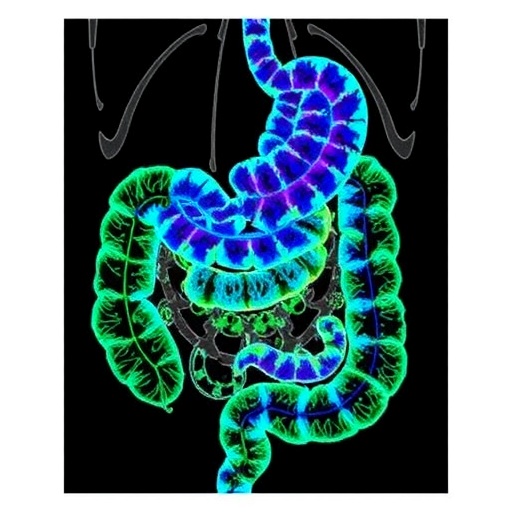
In an extraordinary leap forward for microbiome research, scientists have unveiled a pioneering method that maps the spatial relationships between host tissues and their gut microbiomes at an unprecedented level of detail. This breakthrough, published in Nature Microbiology, sheds new light on the complex biogeography that governs microbial communities residing within the gastrointestinal tract, offering transformative potential for our understanding of human health and disease.
The microbial population within the gut is a bustling metropolis, composed of countless bacterial species interacting with each other and the host’s own cells. Until now, much of microbiome research has been limited by our inability to accurately chart these intricate communities in situ, meaning within their native physical context. The revolutionary technique developed by Ntekas, Takayasu, McKellar, and their colleagues leverages cutting-edge spatial transcriptomics to fill this critical knowledge gap.
Spatial transcriptomics is an emerging technology that combines high-throughput RNA sequencing with precise localization information, enabling researchers to visualize where specific genes are expressed within tissue sections. Applying this to the gut ecosystem allows scientists not only to identify which microbial species are present but also to pinpoint their exact position relative to the host tissue architecture. This dual insight is pivotal, as microbial functions and host responses are often highly localized phenomena.
What makes this advancement especially compelling is its resolution and depth. Previous approaches to microbiome mapping either sacrificed spatial context for molecular detail or vice versa. The hybrid platform presented seamlessly integrates complex gene expression data with precise spatial mapping, achieving an unprecedented granularity. This fine-scale mapping illuminates the spatial crosstalk between microbes and host cells, permitting a multidimensional view that could revolutionize therapeutic strategies targeting the microbiome.
The implications for human health are profound. Many gastrointestinal disorders — from inflammatory bowel disease to colorectal cancer — are influenced by dysbiosis, or imbalance in the microbial ecosystem. By dissecting the precise spatial distribution of microbial consortia and their transcriptional activity within affected tissues, clinicians may soon be able to diagnose disease states more accurately and tailor interventions with greater precision.
Moreover, this platform can unravel microbial biogeography in a way that correlates spatial patterns with functional outcomes. For instance, it can elucidate the niches certain bacteria occupy and how these niches affect metabolic pathways or immune responses. Such insights pave the way for next-generation probiotics that target specific gut regions or manipulate microbial interactions at a cellular resolution, rather than broadly altering the gut community.
The research team employed this methodology on murine gut samples, revealing complex stratifications of microbial populations across different gut segments and tissue layers. Their analyses highlighted specific gene expression signatures associated with microbial proximity to intestinal epithelial cells and immune structures, suggesting tightly regulated host-microbe dialogues that vary spatially and functionally.
Furthermore, the study underscores the dynamic interplay between host gene expression and microbial colonization. They observed that certain host transcripts were enriched in areas densely colonized by beneficial bacteria, hinting at localized host responses that may foster symbiosis or ward off pathogenic invasion. These localized interactions provide clues as to how the host shapes its microbial inhabitants and vice versa.
Importantly, the technique is adaptable beyond murine models and has the potential to be applied directly to human tissues. This will enable unprecedented exploration of human gut microbiome architecture in health and disease, revolutionizing personalized medicine approaches and microbiome-targeted therapies. The ability to spatially map microbiomes opens a new front for biomarker discovery, particularly in early-stage disease where microbial biogeography might act as a sentinel indicator.
On a technical front, the integration of transcriptomics with spatial barcoding and advanced imaging protocols ensures that data collected is both comprehensive and precise. This multi-omic melding circumvents previous limitations imposed by bulk sequencing or isolated imaging, uniting them into a cohesive analytic framework that captures the essence of the gut environment in situ.
This spatial resolution is not merely academic; it allows for the untangling of microbe-microbe and microbe-host relationships that define functional networks within the gut ecosystem. Understanding these interactions is fundamental to deciphering how microbial communities establish resilience or conversely, how they become disrupted in disease states.
The approach also promises cross-disciplinary benefits, informing immunology, microbiology, gastroenterology, and systems biology alike. By producing spatially-resolved transcriptomic atlases of the gut, researchers can query cellular and microbial heterogeneity, unlocking novel insights into tissue-specific immune regulation and microbial ecology.
By illuminating the subtle distinctions between microbial niches and the host milieu, this method may reveal why certain bacteria thrive in specific gut regions or why others trigger localized inflammation. This spatial intelligence uncovers functional territories and interaction hotspots that are otherwise obscured in pooled analyses, enabling more targeted interventions at the microenvironment level.
In an era where the microbiome is increasingly recognized as a vital organ-like entity, capable of influencing not only gut health but systemic physiology, this methodology is timely and critical. Precision mapping of microbiome biogeography bridges a major gap between observational microbiology and mechanistic understanding, catalyzing a new wave of research that could redefine human health paradigms.
Looking forward, the technology offers exciting prospects for integrative studies combining spatial transcriptomics with metabolomics, proteomics, and microbial culturing. Such multidimensional datasets will deepen our comprehension of gut ecosystems and expedite the translation of microbiome science into effective clinical therapies.
The team’s innovative work encapsulates a milestone in spatial biology, marking a pivotal stride towards unraveling the spatial complexity of the gut microbiome. It exemplifies how technological convergence can unlock biological mysteries, driving forward the frontiers of microbiome research with clear implications for therapeutic innovation and personalized healthcare.
In summary, this landmark study not only captures the elaborate topography of microbial life within the gut but also deciphers the host’s transcriptomic landscape in tandem, revealing a sophisticated narrative of cohabitation and interaction. With this spatial transcriptomics framework, the future of microbiome science promises deeper mechanistic insights and transformative impacts on medicine and human well-being.
Subject of Research: Spatial transcriptomics applied to mapping host–gut microbiome biogeography at high resolution.
Article Title: Spatial transcriptomics maps host–gut microbiome biogeography at high resolution.
Article References:
Ntekas, I., Takayasu, L., McKellar, D.W. et al. Spatial transcriptomics maps host–gut microbiome biogeography at high resolution. Nat Microbiol (2026). https://doi.org/10.1038/s41564-026-02286-7
Image Credits: AI Generated
DOI: https://doi.org/10.1038/s41564-026-02286-7
Tags: advanced microbiome sequencing techniquesgut microbial biogeographygut microbial ecosystem visualizationgut microbiome spatial mappinggut tissue and microbiome relationshiphigh-resolution gut microbiome analysishost-microbiome interactionsmicrobial community localizationmicrobiome mapping technologyspatial gene expression in gutspatial transcriptomics in microbiome researchspatially resolved microbiome studies