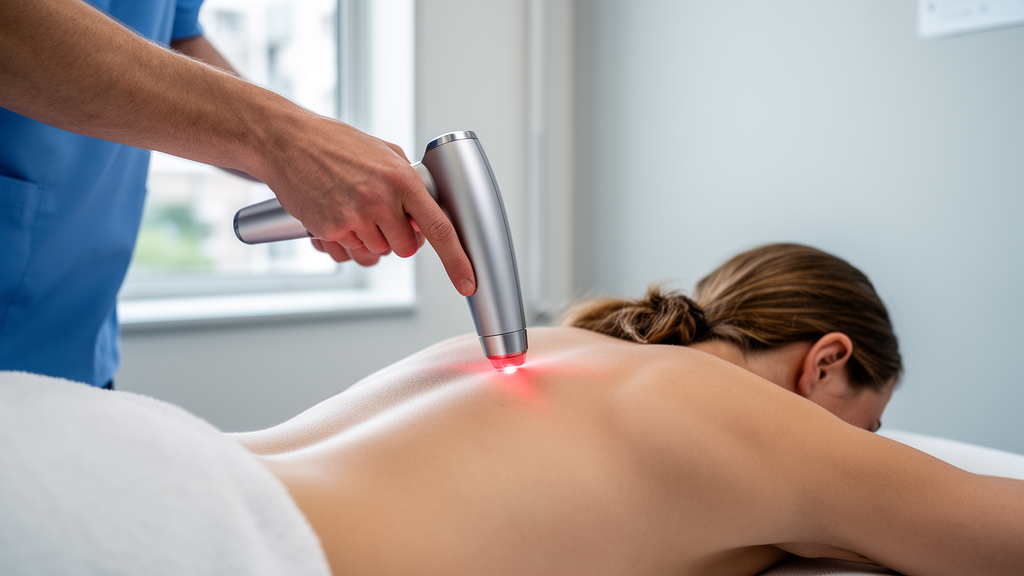
For more than five decades, photobiomodulation therapy has promised to heal tissue with nothing but light. Yet the field has been haunted by a persistent paradox: dazzling results in shallow tissues, repeated failure in deeper ones. A sweeping systematic review and meta-analysis published in Frontiers in Integrative Neuroscience now argues that the missing ingredient was never the biology but the physics—specifically, raw optical power. Analyzing 105 controlled clinical trials involving 2,710 patients treated with Class IV high-intensity laser therapy (HILT) and 2,925 controls, the authors conclude that lasers delivering roughly one hundred times the power of conventional low-level laser therapy (LLLT) can push therapeutic doses of light deep enough to treat the knee, spine, shoulder, and beyond, with large and durable pain-relieving effects and no serious adverse events.
The story begins in 1967, when Endre Mester noticed that low-power red light unexpectedly stimulated hair growth in shaved mice. By the early 1970s, the Mesters had treated more than a thousand patients with chronic, non-healing leg ulcers using a 10-milliwatt helium–neon laser, achieving complete recovery in over 81 percent. Those successes cemented a paradigm: photobiomodulation works, but only at low power. Guidelines eventually endorsed LLLT for oral mucositis, diabetic foot ulcers, and other superficial conditions. The trouble, the new analysis explains, is biophysical. Light below 500 milliwatts simply cannot deliver therapeutic irradiance beyond roughly two centimeters of tissue—far too shallow for arthritic knees, herniated discs, or torn rotator cuffs.
The key variable is power density, or irradiance, measured in watts per square centimeter. Because spot size sets irradiance, the same laser can be surgical when tightly focused and therapeutic when defocused. A 15-watt laser with a 7-square-centimeter spot can maintain an active power density of about 50 milliwatts per square centimeter at three centimeters of depth, and an 80-watt device can theoretically reach tissues 15 centimeters down. Crucially, therapeutic HILT operates at wavelengths of 800 to 1,064 nanometers, which water barely absorbs, so the light stimulates cellular activity without burning, cutting, or carbonizing tissue—a painless, nondestructive process entirely unlike surgical lasers.
To test whether that extra power translates into extra benefit, the researchers followed PRISMA and Cochrane guidelines, screening 4,536 records down to 105 trials published between 2018 and 2026, with the protocol registered on PROSPERO. They classified interventions as effective when effect sizes exceeded Cohen’s d of 0.8, a conventional threshold for a large effect. The results were striking. Pain fell in every randomized trial targeting the knee (27 studies), spine and neuromuscular conditions (20), shoulder and arm (20), and wounds (2), with more than 90 percent of calculable effects landing in the large range. The pooled standardized mean difference for pain at end of treatment was −1.09, and the benefit did not fade: at less than three months’ follow-up the effect was −1.18, and at three months or longer it remained −1.01.
Regional analyses sharpened the picture. Knee osteoarthritis, the most-studied diagnosis, showed a pooled effect of −1.26 across 21 trials, with the largest effects clustering at the highest power densities—three of the top four effect sizes used 52.5 watts per square centimeter, reaching Cohen’s d values between 2.9 and 4.6. Shoulder and arm conditions fared best of all, with a pooled effect of −1.55 and a single subacromial impingement trial posting the largest effect size in the entire analysis, d = 6.0. Spine studies pooled to −1.22 across conditions from cervical spondylosis to fibromyalgia. Beyond pain, function improved in 84 percent of trials measuring it, range of motion in roughly 96 percent, and quality of life in 85 percent.
Perhaps the most compelling evidence came from head-to-head comparisons. In all 13 randomized trials that directly pitted HILT against LLLT, the high-power approach won, with statistically significant superiority in 12. In knee osteoarthritis, HILT protocols delivering 4 to 12 watts and kilojoule-level doses at 1,064 nanometers consistently beat sub-watt LLLT regimens, with effect sizes around 1.3 to 1.7 where calculable. The authors argue this convergence of parameter contrast with outcome magnitude demonstrates that adequate power is not a technical footnote but the determining factor in whether photobiomodulation can reach and modulate deep articular tissue at all.
Even more provocative are the structural findings. Three studies documented statistically significant increases in femoral cartilage thickness after HILT, with the strongest trial showing a large effect for medial cartilage that grew further at six-week follow-up—consistent with sustained tissue regeneration rather than transient swelling. One trial reported reduced rotator cuff tear size, another measured enlargement of the lumbar spinal canal in disc herniation patients, and nerve conduction improved in carpal tunnel syndrome. Single trials hint at even broader reach: reduced troponin I elevation after coronary intervention, improved working memory and prefrontal connectivity in mild cognitive impairment, increased lumbar bone mineral density sustained a year after treatment, weight loss with improved lung function in obesity, and near-elimination of pain plus reduced adhesions in endometriosis.
Safety, the parameter that has long made clinicians wary of Class IV devices, emerged as a genuine strength. Across all 105 trials, no serious adverse events were reported among 2,710 treated patients. Only 15 participants—about 0.55 percent—experienced any treatment-related event, all mild and self-limiting, most commonly transient skin redness that resolved within 72 hours. The GRADE assessment rated the certainty of evidence for the absence of serious harm as high. The authors contrast this with opioids and nonsteroidal anti-inflammatory drugs, the pharmacologic mainstays of chronic musculoskeletal pain, which carry well-documented risks of dependence, gastrointestinal bleeding, and organ toxicity, and which do nothing to stimulate tissue repair.
The review is not without caveats. Heterogeneity between studies was high, blinding of treating personnel was often inadequate, spot sizes were frequently unreported—obscuring true power-density calculations—and most trials were small, single-center studies conducted in Turkey, Egypt, and Iran. A disclosed financial conflict of interest, with one co-author affiliated with a laser manufacturer, is acknowledged and mitigated by a prospectively registered protocol and independent screening. Moreover, no controlled trial has yet tested devices above 30 watts, even though 80-watt systems are in clinical use, and nearly all trials relied on the 1,064-nanometer wavelength.
Those limitations aside, the analysis arrives at a pragmatic conclusion: Class III and Class IV lasers are complementary tools, not rivals. Low-level therapy remains appropriate for superficial indications within about two centimeters, while high-intensity therapy should be preferred whenever deeper penetration and robust energy delivery are needed. The authors propose evidence-informed starting protocols—12 to 52.5 watts per square centimeter delivered daily for at least two weeks for knee and spine conditions, for example—and call for photon-based dosing metrics, such as the Einstein unit of one mole of photons, to standardize dose reporting across devices. If larger multicenter trials confirm these findings, high-intensity laser therapy may finally earn the guideline recognition and insurance coverage that its shallow-tissue cousin has enjoyed for years, offering millions of chronic pain patients a drug-free, surgery-free alternative grounded in a simple physical truth: sometimes, to heal with light, you need more of it.
Subject of Research: Efficacy and safety of high-intensity Class IV laser photobiomodulation for deep-tissue musculoskeletal and neurological conditions
Article Title: The importance of power in photobiomodulation: a systematic review and meta-analysis of high-intensity laser therapy
Article References: Penberthy, W. T., & Vorwaller, C. E. (2026). The importance of power in photobiomodulation: a systematic review and meta-analysis of high-intensity laser therapy. Frontiers in Integrative Neuroscience, 20, Article 1914223. https://doi.org/10.3389/fnint.2026.1914223
Image Credits: AI Generated
DOI: 10.3389/fnint.2026.1914223
Keywords: photobiomodulation, high-intensity laser therapy, LLLT, chronic pain, knee osteoarthritis, meta-analysis, power density, Class IV laser, musculoskeletal, pain management, cartilage regeneration, laser safety
News Source: Ophelia Keating. (October 15, 2026). High-Power Lasers Outshine Low-Level Therapy for Deep-Tissue Pain, Landmark Review Finds. Scienmag.