Chronic high-altitude exposure was associated with higher α-synuclein levels in peripheral blood and brain tissue and with more severe Parkinson’s disease-related pathology in a mouse model, according to a study combining population surveys, clinical comparisons and animal experiments. In humans, the findings were observational and did not establish that high-altitude exposure causes Parkinson’s disease; in A53T transgenic mice, six months of exposure produced more severe motor deficits, elevated brain α-synuclein and pronounced loss of dopaminergic neurons than exposure at low altitude. The researchers began with a cross-sectional survey of middle-aged and elderly residents living at high altitude.
The crude prevalence of Parkinson’s disease tended to be higher in this population than the national average, providing a population-level signal rather than evidence of a change in prevalence over time. Researchers measured plasma and erythrocyte-associated α-synuclein, and a subset of patients underwent transcranial sonography to assess relationships between erythrocyte indices and the echogenicity of the substantia nigra. Both high-altitude mice and high-altitude humans exhibited higher peripheral α-synuclein levels than their low-altitude counterparts.
In the human samples, erythrocyte indices correlated positively with α-synuclein levels. However, after α-synuclein measurements were normalized to erythrocyte count and hemoglobin, erythrocyte-associated α-synuclein did not differ between high- and low-altitude controls. The investigators proposed that chronic exposure may produce a hypoxia-induced expansion of the erythrocyte pool and a greater overall circulating α-synuclein burden without increasing the amount of α-synuclein per erythrocyte.
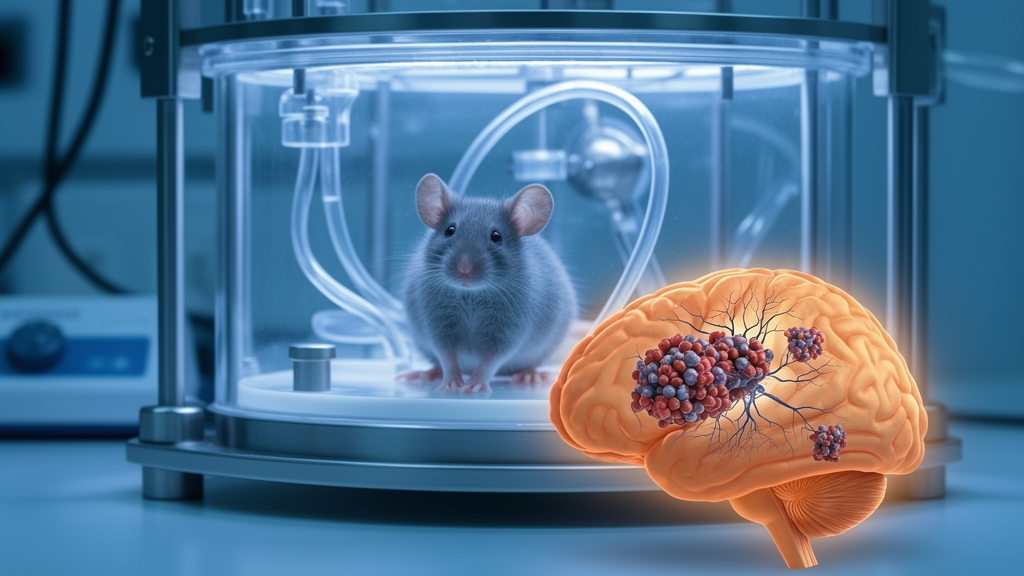
Thus, the unadjusted human measurements reflected both erythrocyte indices and the total α-synuclein burden rather than demonstrating a clear difference in α-synuclein within individual red blood cells. The animal experiments supplied mechanistic findings that could not be obtained from the cross-sectional human data. Following six months of high-altitude exposure, A53T transgenic mice displayed more severe motor deficits, increased brain α-synuclein levels and pronounced dopaminergic neuron loss compared with low-altitude mice of the same model.
Omics analyses of brain tissue found enrichment of pathways related to interleukin-17, sphingosine-1-phosphate signaling and oxidative stress in the high-altitude group. The authors interpreted these findings as suggesting blood-brain barrier disruption and impaired α-synuclein clearance under hypoxic conditions, although pathway enrichment alone does not demonstrate which mechanism produced the observed pathological changes. A separate experiment tested whether material carried by human erythrocyte-derived extracellular vesicles could reach the brain.
Intravenously injected vesicles entered the brains of wild-type mice, establishing that this transfer occurred under the experimental conditions without determining how much it contributed to the larger pathological effects associated with high altitude. Taken together, the study links chronic high-altitude exposure with peripheral and central α-synuclein accumulation and aggravated neuropathology in a mouse model. The human results remain limited by their observational design, the adjusted control comparison did not show a difference in erythrocyte-associated α-synuclein per cell, and animal findings cannot establish that high-altitude exposure causes Parkinson’s disease or that changing exposure would prevent it.
Subject of Research: Effects of chronic high-altitude exposure on α-synuclein accumulation and Parkinson’s disease-related pathology
Article Title: High-altitude environments elevate central and peripheral α-synuclein levels and accelerate PD-related pathology
Article References: Sun, H.-L., Fan, D.-Y., Xie, J.-H., Du, Q., Zeng, R.-J., Hu, J.-N., Liang, J., Zhu, L., Wang, X., Wang, H.-X., Zhao, Q., Zhang, R., Wang, Y.-J., Zhao, H.-D., & Jin, W.-S. (2026). High-altitude environments elevate central and peripheral α-synuclein levels and accelerate PD-related pathology. Journal of Translational Medicine. https://doi.org/10.1186/s12967-026-09103-z
Image Credits: AI Generated
DOI: 10.1186/s12967-026-09103-z
Keywords: high altitude, α-synuclein, Parkinson’s disease, hypoxia, erythrocytes, transgenic mice, dopaminergic neurons, blood-brain barrier, oxidative stress, extracellular vesicles, High-altitude, environments
News Source: Cassandra Pierce. (October 21, 2026). High-altitude exposure linked to α-synuclein burden and mouse pathology. Scienmag.