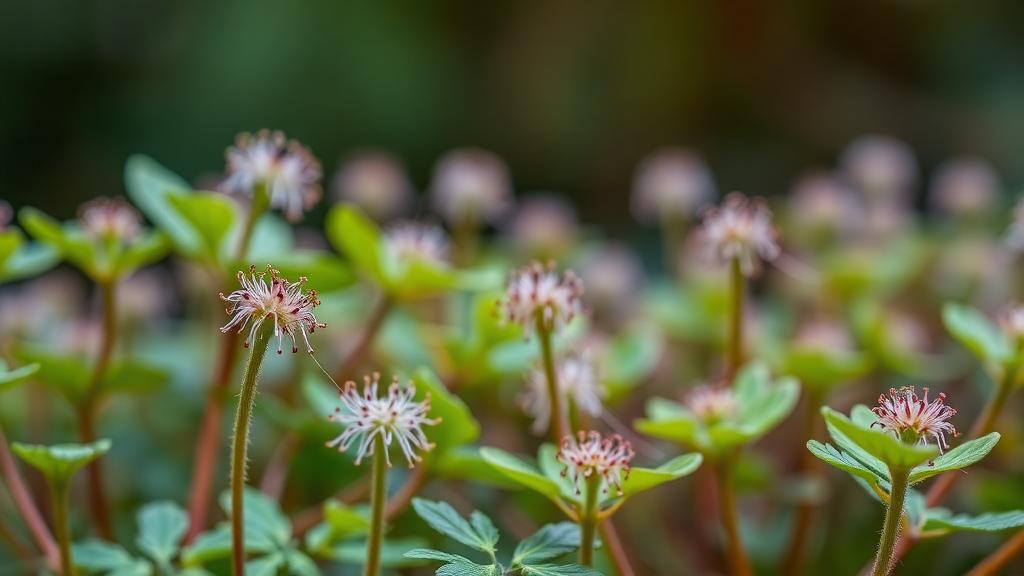
Deep in the selenium-rich soils of central China grows an unassuming plant with an extraordinary talent: Cardamine hupingshanensis, a member of the mustard family that can pull toxic quantities of selenium from the ground and stash it in its tissues without dying. Scientists have long wondered how this hyperaccumulator manages the feat, and a new study published in Plant and Soil suggests the answer may not lie in the plant alone. By combining a field survey with two controlled pot experiments, researchers have identified a stable, native core microbiome that travels with the plant across the entire soil–plant continuum, and its members appear to be linked to the very process of selenium accumulation.
The concept of a core microbiome has become central to modern plant science. Just as humans carry consistent communities of gut bacteria that shape health, plants host recurring assemblages of microbes in the soil immediately surrounding their roots, on the root surface itself, and inside their tissues. These communities are not random collections; they are selected by the host and by environmental filters. Yet for many unusual plants, especially those thriving in chemically extreme environments, the identity of these constant microbial partners remains unknown. That gap is precisely what the team, led by Zihua Zhang and Linxi Yuan of Xi’an Jiaotong-Liverpool University together with colleagues at the Guangxi Academy of Agricultural Sciences and the University of Liverpool, set out to close.
Their strategy was deliberately comprehensive. Rather than sampling a single site or a single growth stage, the researchers integrated three separate experiments: a field survey capturing the plant in its natural habitat and two pot experiments that allowed them to manipulate conditions, including the addition of selenium to the soil. Across all three, they characterized bacterial communities using amplicon sequencing of the 16S ribosomal RNA gene, the standard molecular fingerprinting method for bacteria, and then searched for taxa that appeared consistently across compartments, sites, and growth stages. The logic is straightforward: microbes that persist everywhere the plant grows, regardless of soil variation, are likely to matter functionally rather than being incidental passengers.
The search converged on two bacterial orders: Micrococcales and Rhizobiales. These two lineages formed the native core microbiome of C. hupingshanensis, present across the soil–plant continuum from bulk soil through the rhizosphere, the rhizoplane, and into internal plant tissues. The finding is notable because core microbiomes are often defined more narrowly, for example within roots alone or within a single site. Demonstrating a core that spans the whole continuum suggests a stable, co-evolved partnership between the hyperaccumulator and its bacterial entourage, one that survives transplantation into pots and the altered conditions of greenhouse cultivation.
Intriguingly, the two core orders showed distinct spatial preferences. Amplicon sequence variants belonging to Micrococcales became relatively more abundant in the rhizoplane, the thin layer of soil and microbial cells adhering directly to the root surface, where the plant and microbe are in the most intimate contact. Core variants from Rhizobiales, by contrast, peaked in the rhizosphere, the zone of soil influenced by root exudates. This compartmentalization hints at a division of labor: different microbial partners may occupy different niches along the root, potentially performing complementary functions related to nutrient transformation, stress alleviation, or the chemical processing of selenium before it crosses the root membrane.
Beyond taxonomy, the team examined the architecture of the microbial community as a network, identifying keystone taxa, the highly connected species whose removal would disproportionately destabilize the whole system. Within the subset of the native core microbiome, keystone roles were dominated by members of the phyla Proteobacteria and Firmicutes. The core taxa also made a noticeable contribution to microbial stability across different plant growth stages, meaning that as the plant matured and its root architecture and exudation patterns changed, the core community helped hold the broader ecosystem of root-associated microbes together. Stability of this kind is increasingly recognized as a hallmark of beneficial microbiomes, in both plants and animals.
The most provocative result, however, concerns selenium itself. The researchers found that core taxa in the rhizosphere were significantly associated with selenium concentrations in that soil compartment, suggesting a measurable relationship between the presence of these microbes and the chemistry that governs how much selenium is available for the plant to take up. Selenium in soils exists in multiple chemical forms, ranging from poorly soluble elemental particles to soluble selenate and selenite ions that plant roots can absorb via sulfur transporters. Microbes are known to interconvert these forms, oxidizing, reducing, or methylating selenium depending on the species involved. A rhizosphere community enriched in selenium-active bacteria could therefore shift the local speciation of the element in ways that favor hyperaccumulation.
Adding weight to this interpretation, the pot experiments showed that supplying soil with selenium significantly increased the diversity of the native core microbiome. In other words, the element that defines the plant’s ecological niche also appears to shape its microbial partnership, enriching the community precisely where selenium chemistry matters most. This feedback loop, in which the plant and its microbes jointly engineer a selenium-processing rhizosphere, offers a new mechanistic window into how hyperaccumulation might have evolved. Rather than being a purely plant-borne trait, selenium hyperconcentration in C. hupingshanensis may be a genuinely collaborative achievement, refined over evolutionary time in the seleniferous soils of Enshi and neighboring regions.
The implications extend well beyond one unusual mustard. Selenium is an essential micronutrient for humans, with an estimated one in seven people worldwide consuming less than adequate amounts, yet the margin between deficiency and toxicity is narrow. Understanding how hyperaccumulator plants and their core microbes mobilize, transform, and concentrate selenium could inform biofortification strategies, in which crops are engineered or managed to accumulate nutritional selenium in edible tissues. It could also aid phytoremediation, the use of plants to clean selenium-contaminated soils from mining and agricultural runoff, where microbial partners that enhance uptake or volatilize the element into harmless forms would be valuable allies. Previous work on other hyperaccumulators, including cadmium-accumulating Noccaea caerulescens and arsenic-tolerant Pteris vittata, has similarly revealed core endophytic communities with metal-processing capabilities, suggesting a general principle waiting to be exploited.
The study also carries a methodological message for microbiome science. By defining the core across three experiments, multiple compartments, and successive growth stages, the researchers filtered out the noise that plagues single-site surveys, where transient microbes often masquerade as important players. The identification of Proteobacteria and Firmicutes as keystone phyla, and of Micrococcales and Rhizobiales as the taxonomic backbone, provides concrete targets for the next phase of research: isolating these organisms, reconstructing synthetic communities, and testing directly whether they enhance selenium uptake under controlled conditions. If those experiments succeed, the invisible partners of a Chinese cliff-dwelling cress could become tools for building more nutritious crops and cleaner soils, a reminder that some of a plant’s most remarkable abilities are shared with the microscopic life it carries.
Subject of Research: The native core microbiome of the selenium hyperaccumulator Cardamine hupingshanensis across the soil–plant continuum
Article Title: A native core microbiome across the soil–plant continuum of the selenium hyperaccumulator Cardamine hupingshanensis
Article References: Zhang, Z., Yuan, L., Zhang, L., Liao, Q., Xing, Y., Pan, L., Liu, Y., & Paterson, S. (2026). A native core microbiome across the soil–plant continuum of the selenium hyperaccumulator Cardamine hupingshanensis. Plant and Soil. https://doi.org/10.1007/s11104-026-09174-3
Image Credits: AI Generated
DOI: 10.1007/s11104-026-09174-3
Keywords: selenium hyperaccumulator, core microbiome, Cardamine hupingshanensis, rhizosphere, rhizoplane, Micrococcales, Rhizobiales, Proteobacteria, Firmicutes, keystone taxa, plant–soil interactions, phytoremediation
News Source: Morgan Morrow. (October 7, 2026). Hidden Microbial Partners May Drive Selenium Superpowers in Chinese Plant. Scienmag.