High on the Qinghai-Tibetan Plateau, where rivers run icy cold through gravel beds more than three thousand meters above sea level, scientists have identified a fish that has been hiding in plain sight for more than a century. A population long classified as the naked carp Schizopygopsis malacanthus in the Yalong River turns out to be a distinct species, now formally described as Schizopygopsis yalongensis in the journal Zoosystematics and Evolution. The discovery, made through a combination of genetic sequencing, computed tomography, and painstaking anatomical comparison, adds a new branch to the tree of life in one of the world’s most extreme freshwater environments and raises fresh concerns about how little we know about the biodiversity of high-altitude river systems.
The story begins with a taxonomic puzzle that has lingered since the nineteenth century. Schizopygopsis, a genus of highly specialized schizothoracine carps described by Steindachner in 1866, comprises scale-less, barbel-less fish with inferior mouths and sharp horny layers on their lower jaws, adaptations suited to scraping food from rocky riverbeds. Different authorities have recognized anywhere from nine to twelve species and subspecies, and the boundaries between them have been contested for decades. Schizopygopsis malacanthus, described by Herzenstein in 1891 from the Tongtian River headwaters of the Jinsha River, was thought to range widely across the upper Jinsha and Yalong Rivers, with populations in the two drainages treated merely as geographic variants of a single, broadly distributed species.
That assumption has now collapsed under the weight of integrative evidence. A research team from the Northwest Institute of Plateau Biology at the Chinese Academy of Sciences collected 41 specimens from the Yalong River and 20 from the Jinsha River system between 2021 and 2023, along with 29 samples of the coexisting species Herzensteinia microcephalus, which some classifications have historically placed within Schizopygopsis itself. The specimens were euthanized with MS222, preserved in 95 percent ethanol, and deposited as voucher specimens, providing a permanent physical record that other researchers can re-examine.
The morphological analysis went well beyond traditional external measurements. The team recorded seventeen body dimensions with digital callipers, counted the inner and outer gill rakers on the first gill arch, and used micro-computed tomography to count and image vertebrae non-destructively. Principal component analysis of the body proportions showed something intriguing: by overall body shape alone, the Yalong River fish and the Jinsha River fish were essentially indistinguishable, their measurements overlapping almost completely. If the researchers had stopped there, the case for a new species would have been weak. But the feeding apparatus told a very different story.
The Yalong fish carries 15 to 21 outer gill rakers and 25 to 39 inner gill rakers on its first gill arch, noticeably denser filters than those of its Jinsha River relative. More striking still are the pharyngeal teeth, the grinding structures that cyprinid fish use to process food. In the Yalong population, the pharyngeal bone is hooked and the teeth terminate in oblique-truncated tips with shovel-shaped grinding surfaces, whereas the Jinsha River fish has hooked teeth with concave grinding surfaces. These are not trivial differences. Pharyngeal tooth morphology is a cornerstone character in cyprinid taxonomy, and tooth shape tracks diet: hooked, grasping teeth typically belong to omnivores handling varied food items, while shovel-shaped teeth appear in fish that crush benthic invertebrates scraped from the river bottom.
The molecular evidence sealed the case. The team sequenced the mitochondrial cytochrome b gene, a 1,140-base-pair workhorse of fish phylogenetics, from all 75 newly collected specimens, generating 46 haplotypes, and combined these with GenBank sequences from seven other Schizopygopsis species plus five outgroup species. Genetic distances between the Yalong population and other Schizopygopsis species ranged from 2.03 to 6.16 percent, averaging 4.15 percent. The distance between the Yalong fish and S. malacanthus proper was 3.605 percent, which is larger than the distances separating several pairs of species that taxonomists already treat as fully valid, such as S. kessleri and S. pylzovi, which differ by a mere 0.132 percent. Genetic differentiation measured by Fst reached 0.5276 between the two populations, a level indicating profoundly restricted gene flow.
Perhaps the most surprising result came from the phylogenetic trees themselves. Both maximum likelihood and Bayesian inference analyses produced identical topologies, and they showed that the Yalong fish does not form the closest sister relationship with S. malacanthus at all. Instead, the strongly supported monophyletic Yalong lineage groups with S. kialingensis from the Jialing River, a distant tributary of the Yangtze, and then clusters with S. kessleri, S. pylzovi, and H. microcephalus. Earlier studies had concluded the Yalong and Jinsha populations were sister lineages, but only because those analyses omitted most of the genus. When all ten recognized species were finally included, the true picture emerged. Species delimitation methods, the Bayesian Poisson tree processes model and the automatic partitioning algorithm ASAP, both independently confirmed the Yalong fish as a distinct species, with bPTP assigning a Bayesian support value of 0.84.
The geographic context explains how such a split could occur. The dramatic uplift of the Qinghai-Tibetan Plateau in the late Pliocene reorganized the region’s drainage systems, isolating the Tongtian and Yalong Rivers from one another. Cut off from gene flow, the ancestral fish in each basin followed independent evolutionary trajectories over millions of years. Natural selection then sculpted their feeding machinery along divergent paths, likely in response to different food resources in the two rivers, a hypothesis supported by previous findings that the two populations harbor distinct gut microbial communities at the phylum, class, and genus levels. The result is two fish that look like twins in body plan but differ fundamentally in the tools they use to eat.
The formal description rests on a holotype collected in July 2023 at Zhenqin Village in Chenduo County, Qinghai Province, at an altitude of 4,172 meters, with 40 paratypes ranging from 65 to 196 millimeters in standard length. The species name yalongensis honors the Yalong River, its only known home. There, the fish inhabits cold streams with beds of sand, gravel, and pebbles, sharing the water with Gymnodiptychus pachycheilus and several species of stone loaches in the genus Triplophysa. In life, the fish displays a yellowish-brown back and head, a white belly, and blackish-grey spots scattered across the back, head, and dorsal fin.
The discovery carries weight beyond taxonomy. Fish diversity in the Yalong River is reportedly lower than in other Jinsha tributaries, so finding a species that exists nowhere else underscores how incomplete our inventories of plateau biodiversity remain, and it suggests that other cryptic species may be waiting in the Qinghai-Tibetan Plateau’s river systems. It also has conservation implications: S. malacanthus is considered vulnerable because of its slow growth, low reproduction rate, and restricted distribution, and the new species likely shares those biological traits. The authors argue that S. yalongensis warrants the same level of protection. A fish that survived Pliocene mountain-building and millions of years of isolation in glacial meltwater now faces a far more recent threat, and recognizing its existence is the first step toward safeguarding it.
Subject of Research: Description of a new fish species, Schizopygopsis yalongensis, from the Yalong River on the Qinghai-Tibetan Plateau using integrative taxonomy
Article Title: A new species of Schizopygopsis Steindachner, 1866 ( Cypriniformes , Cyprinidae ) from the Yalong River on the Qinghai-Tibetan Plateau, China
Article References: Zhao, K., Liu, S., Chen, S., & Tian, F. (2026). A new species of Schizopygopsis Steindachner, 1866 (Cypriniformes, Cyprinidae) from the Yalong River on the Qinghai-Tibetan Plateau, China. Zoosystematics and Evolution, 102(1), 131-144. https://doi.org/10.3897/zse.102.173298
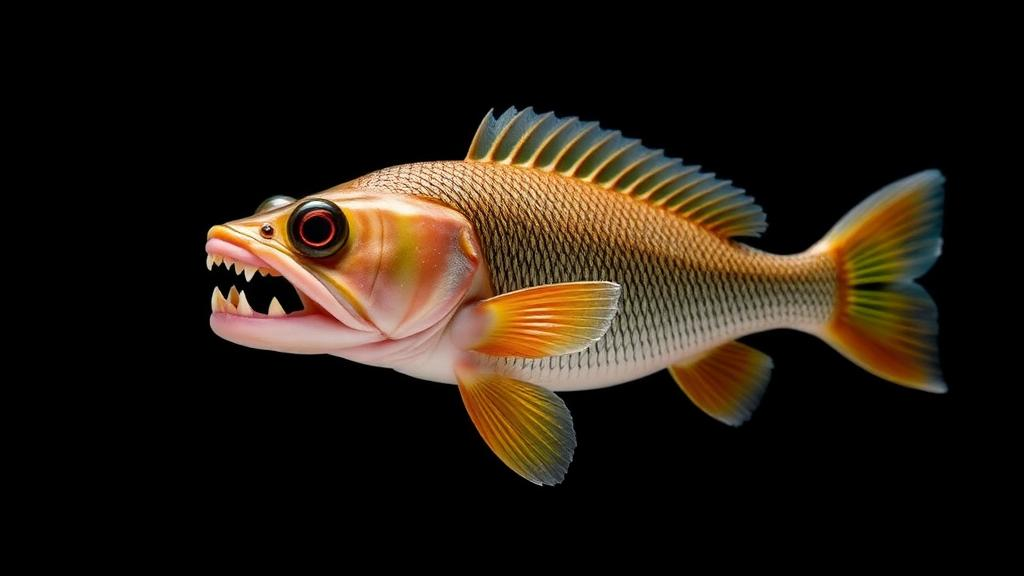
Image Credits: AI Generated
Keywords: Schizopygopsis yalongensis, new species, Qinghai-Tibetan Plateau, integrative taxonomy, cytochrome b, phylogenetics, pharyngeal teeth, Yalong River, cryptic species, Cyprinidae, species delimitation, conservation
News Source: Margaret Porter. (October 19, 2026). Hidden Fish of the Tibetan Plateau: New Species Revealed by DNA and Teeth. Scienmag.