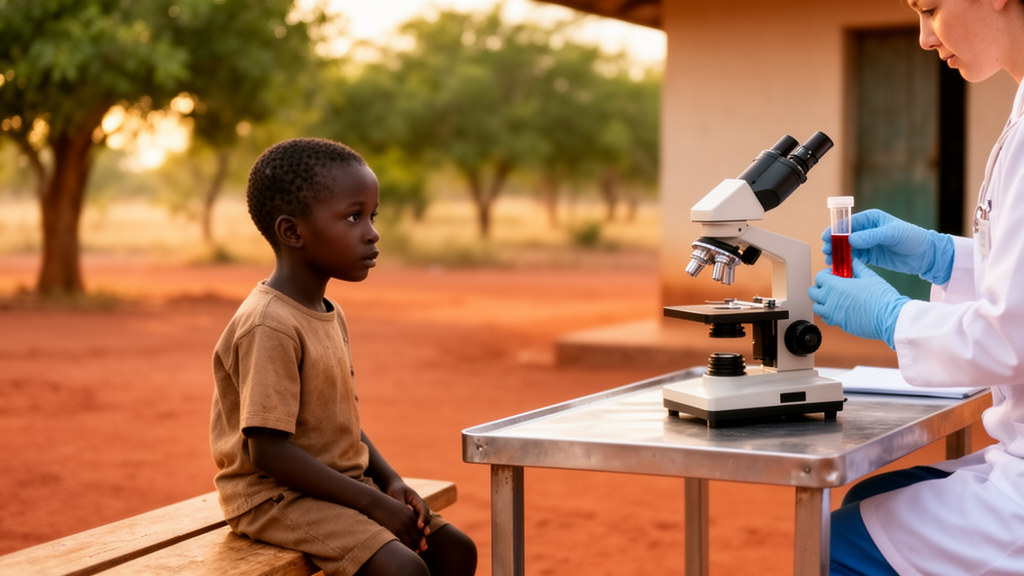
A microscopic worm that slips silently through the skin of barefoot children may be infecting far more youngsters across Africa than routine laboratory tests ever detect. A new systematic review and meta-analysis, published in PLOS Neglected Tropical Diseases, has pulled together decades of scattered survey data to deliver the most comprehensive estimate yet of Strongyloides stercoralis infection among African children, and the numbers point to a stubborn, undercounted public health problem hiding in plain sight.
The research team, led by Tadesse Hailu of Bahir Dar University in Ethiopia together with collaborators in Spain, Thailand, and Malaysia, screened 651 published records drawn from PubMed, Google Scholar, Scopus, and ScienceDirect. After applying strict eligibility criteria under the PRISMA reporting framework, they retained 27 studies covering 16,358 children under the age of fourteen across eight African countries. Pooling the results with a random-effects model, the researchers calculated an overall prevalence of 14 percent, with a 95 percent confidence interval stretching from 12.2 to 15.9 percent. Given that an estimated 613.9 million people worldwide carry the parasite, with more than three-quarters of infections concentrated in Southeast Asia, the Western Pacific, and Africa, the pediatric share of that burden is clearly substantial.
What makes the figure alarming is not its size alone but the strong evidence that it represents a floor rather than a ceiling. The review found that prevalence estimates swung dramatically depending on how investigators looked for the parasite. When teams relied on direct smear microscopy or formol-ether concentration, the two techniques that dominate routine helminth testing across the continent, reported prevalence sometimes collapsed to fractions of a percent. When researchers deployed more sensitive tools, such as agar plate culture, the Baermann concentration technique, or quantitative polymerase chain reaction, detection rates climbed steeply. The single highest pooled estimate, 36 percent, emerged when PCR was combined with culture and microscopy, a finding the authors describe as a signal that conventional diagnostics systematically miss a large fraction of true infections.
The biology of S. stercoralis explains why it is such a diagnostic escape artist. Unlike hookworms and other soil-transmitted helminths that shed eggs in generous numbers, this parasite produces larvae that exit the body in small, intermittent bursts. A single stool sample examined under a microscope may simply contain too few larvae to spot, particularly when the larval load is low or excretion is sporadic. Direct smears and concentration techniques, which perform adequately for eggs of other worms, were never designed to catch this pattern. The result is a parasite that can persist undetected in a child’s intestine for decades, quietly reproducing through an autoinfection cycle in which larvae re-enter the bloodstream from the gut itself.
That autoinfection ability is what transforms strongyloidiasis from a usually mild nuisance into a potential killer. In most children the infection causes little more than skin irritation at the site of larval penetration, a dry cough as larvae migrate through the lungs, and vague gastrointestinal complaints. But in people whose immune systems are compromised, by disease, malnutrition, or immunosuppressive therapy, the parasite can multiply unchecked, producing hyperinfection syndrome or disseminated strongyloidiasis, conditions that are frequently fatal if unrecognized. Because chronic infections can last a lifetime, a child infected today carries that risk into adulthood, making accurate pediatric mapping a long-term safety issue rather than a short-term one.
The geographic pattern uncovered by the meta-analysis adds another layer of concern. Côte d’Ivoire recorded the highest pooled prevalence at 27 percent, followed closely by Ethiopia at 26 percent and Tanzania at 17 percent. At the other end of the scale, São Tomé and Príncipe reported just 2 percent and Ghana 3 percent. The authors caution that these contrasts almost certainly reflect diagnostic practice as much as genuine epidemiology. Every one of the nine Nigerian studies included in the review, for example, used formol-ether concentration, direct smear microscopy, or a combination of the two, methods with very low sensitivity for this particular worm. Ethiopia, by contrast, contributed several studies built on intensive diagnostic work-ups, which helps explain why individual Ethiopian surveys reported prevalence as high as 48.5 percent.
Heterogeneity across the pooled studies was extreme, with an I-squared statistic of 100 percent, meaning virtually all of the observed variation among studies reflects real differences in methods, settings, and populations rather than sampling noise alone. Cochran’s Q test confirmed statistically significant differences between countries, between diagnostic approaches, and between data collection sites. Children sampled in school and clinic settings showed a pooled prevalence of 21 percent, compared with 17 percent in community-based samples, a pattern the authors attribute in part to the inclusion of non-school-attending children with higher exposure, alongside the protective effect of school-based deworming and health education programs.
Beyond the laboratory, the review situates the parasite firmly in the landscape of poverty and sanitation. Transmission thrives where open defecation persists, where footwear use is inconsistent, and where children’s frequent contact with contaminated soil provides the larvae their route of entry. Malnutrition, widespread among African children, and impaired immunity may both amplify susceptibility. Older children tend to accumulate more exposure through outdoor play and soil contact, while younger children face household-level risks, and the authors argue that these behavioral and environmental variables must be weighed when designing surveillance and control strategies aligned with World Health Organization recommendations.
The study is not without limitations, and the authors are candid about them. The evidence base rests overwhelmingly on cross-sectional surveys, which capture a snapshot rather than the dynamics of infection. Methodological heterogeneity in study design, geography, and diagnostics was considerable, only English-language publications were included, grey literature may have been missed, and the 27 studies were distributed unevenly across a continent of 54 countries, leaving vast areas effectively unmapped. Publication bias, checked with a funnel plot, showed no clear signal, offering some reassurance that the pooled estimate is not inflated by selective reporting, but the certainty of the evidence remains limited by the observational nature of the underlying data.
Even with those caveats, the message for policymakers is difficult to ignore. Strongyloidiasis remains one of the most neglected of the neglected tropical diseases, absent from most routine deworming campaigns because it is invisible to the standard tests those campaigns rely on. The authors urge researchers to establish standardized diagnostic protocols for the parasite and call for implementation of the WHO guideline on preventive chemotherapy for strongyloidiasis, so that surveillance, diagnosis, and treatment in endemic African settings can finally catch up with the true scale of the problem. Until sensitive methods such as agar plate culture, Baermann concentration, and molecular testing move from research laboratories into routine practice, millions of infected children will continue to carry a treatable parasite that no one is counting, and no one is treating.
Subject of Research: Prevalence of Strongyloides stercoralis infection among African children assessed through systematic review and meta-analysis
Article Title: Prevalence of Strongyloides stercoralis infection among African children: A systematic review and meta-analysis
Article References: Hailu, T., Amor, A., Alemu, G., Tadesse, H., Nissapatorn, V., & Al-Mekhlafi, H. (2026). Prevalence of Strongyloides stercoralis infection among African children: A systematic review and meta-analysis. PLOS Neglected Tropical Diseases, 20(10), e0014759. https://doi.org/10.1371/journal.pntd.0014759
Image Credits: AI Generated
DOI: 10.1371/journal.pntd.0014759
Keywords: Strongyloides stercoralis, strongyloidiasis, neglected tropical diseases, soil-transmitted helminths, Africa, children, meta-analysis, diagnostics, PCR, public health, parasitology, WHO
News Source: Ophelia Keating. (October 8, 2026). Hidden Burden: Strongyloides Parasite Infects Far More African Children Than Tests Reveal. Scienmag.