

• HOME
  • NEWS
  • EXPLORE
    • CAREER
      • Companies
      • Jobs
    • EVENTS
    • iGEM
      • News
      • Team
    • PHOTOS
    • VIDEO
    • WIKI
  • BLOG
  • COMMUNITY
    • FACEBOOK
    • INSTAGRAM
    • TWITTER
Friday, October 30, 2026
BIOENGINEER.ORG
No Result
View All Result
  • Login
  • HOME
  • NEWS
  • EXPLORE
    • CAREER
      • Companies
      • Jobs
        • Lecturer
        • PhD Studentship
        • Postdoc
        • Research Assistant
    • EVENTS
    • iGEM
      • News
      • Team
    • PHOTOS
    • VIDEO
    • WIKI
  • BLOG
  • COMMUNITY
    • FACEBOOK
    • INSTAGRAM
    • TWITTER
No Result
View All Result
Bioengineer.org
No Result
View All Result
Home NEWS Science News Biology

Herbal formulas tied to distinct gut microbiota and metabolic shifts in lambs with coccidia

by
October 29, 2026
in Biology
Reading Time: 2 mins read
0
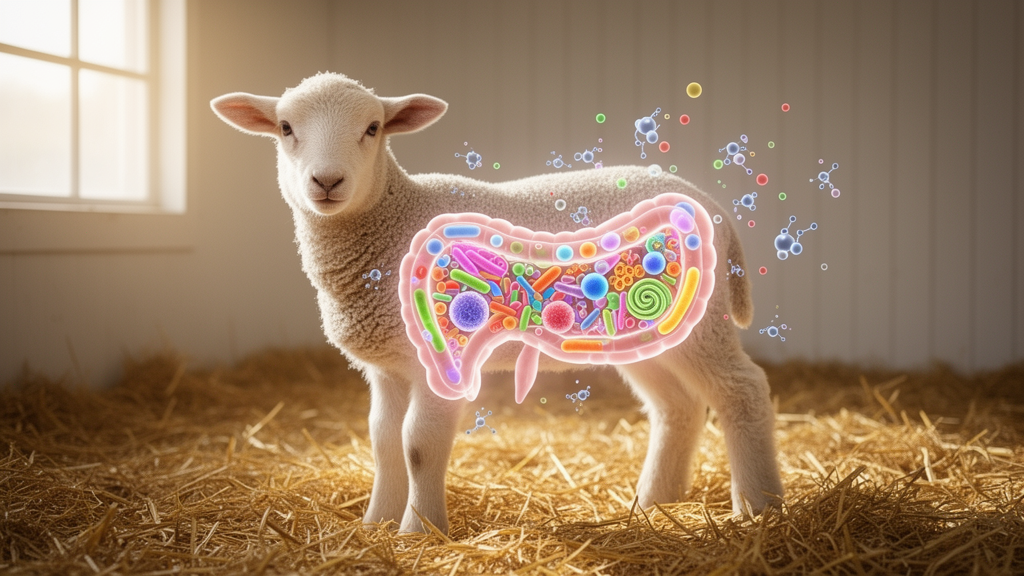
Herbal formulas tied to distinct gut microbiota and metabolic shifts in lambs with coccidia

Herbal formulas tied to distinct gut microbiota and metabolic shifts in lambs with coccidia

Share on FacebookShare on TwitterShare on LinkedinShare on RedditShare on Telegram

Researchers in China have developed two herbal formulas based on patterns of diarrhea-associated pathogens detected in lamb feces, and report that the two formulas were associated with distinct microbial and metabolic response profiles in naturally coccidia-positive lambs. The work, published in AMB Express, combined a field survey of 258 fecal samples from lambs across four regions of China with a 21-day trial in 24 naturally coccidia-positive lambs, plus 16S rRNA gene sequencing and untargeted metabolomics of fecal samples from four lambs per group.

Because the microbial and metabolic profiling used fecal samples from only four lambs per group, those findings come from a small number of animals, a limitation the authors themselves flag.

During the treatment period, PAR was associated with the clearest reduction in fecal oocyst shedding, measured as Eimeria oocysts per gram of feces (OPG). Growth-related outcomes, by contrast, did not differ significantly among the groups, so neither formula demonstrated a measurable advantage in promoting lamb growth over the trial period.

Beyond the oocyst counts, PAR showed distinct microbial and metabolic features. These involved the NK4A214 group of bacteria and metabolites related to steroids, amino acids, and bile acids that were associated with variation in OPG. MIX showed broader associations with inflammatory and antioxidant indicators, suggesting the two formulas engaged different physiological pathways in the treated animals.

These models identified inosine-associated relationships linking selected bacterial taxa with variation in the inflammatory marker IL-6 and the oxidative stress indicator MDA. The authors stress that these mediation signals are hypothesis-generating and require validation in larger cohorts before any causal interpretation is warranted.

The researchers concluded that berberine was more appropriately interpreted as a treatment-associated metabolic signal than as a microbiota-mediated metabolite, meaning its detection in the samples reflected the herbal treatment itself rather than production by the gut bacteria.

The authors conclude that PAR and MIX were associated with distinct phenotypic, microbial, and metabolic response profiles in naturally coccidia-positive lambs, and they position this pathogen-guided framework as a possible route toward microbiota-oriented botanical strategies for sustainable sheep production. They emphasize that the microbiota-metabolite patterns and exploratory mediation signals reported here should be regarded as preliminary and requiring confirmation in larger studies, and that the trial evaluated associations over a 21-day treatment period in a modest number of animals rather than establishing clinical efficacy.

Subject of Research: Pathogen-guided herbal formulas and their associations with gut microbiota, metabolites and coccidia shedding in lambs

Article Title: Pathogen-guided herbal formulas modulate lamb gut microbiota and metabolites

Article References: Chen, J., Lin, M., Ma, D., wajiha, W., Li, X., Liu, J., Yang, M., Li, S., & Jian, F. (2026). Pathogen-guided herbal formulas modulate lamb gut microbiota and metabolites. AMB Express. https://doi.org/10.1186/s13568-026-02118-1

Image Credits: AI Generated

DOI: 10.1186/s13568-026-02118-1

Keywords: lambs, gut microbiota, Eimeria, coccidiosis, herbal formulas, metabolomics, 16S rRNA sequencing, berberine, sheep production, diarrhea pathogens, China, traditional Chinese medicine

News Source: Morgan Morrow. (October 29, 2026). Herbal formulas tied to distinct gut microbiota and metabolic shifts in lambs with coccidia. Scienmag.


Tags: 16S rRNA sequencingberberineChinacoccidiosisdiarrhea pathogensEimeriagut microbiotaherbal formulaslambsMetabolomicssheep productiontraditional Chinese medicine
Share12Tweet7Share2ShareShareShare1

Related Posts

Microbial Sources and Stress Shape the Hidden Endophytes of an Invasive Plant

Microbial Sources and Stress Shape the Hidden Endophytes of an Invasive Plant

October 30, 2026
Firebreaks Leave Lasting Scars in Grasslands While Wildfire Heals Fast

Firebreaks Leave Lasting Scars in Grasslands While Wildfire Heals Fast

October 30, 2026

Hidden Peptides in Non-Coding RNAs Reshape Cardiovascular Biology

October 30, 2026

Phage K Holin’s C-Terminal Region Shapes Antibacterial Activity, Study Finds

October 30, 2026

POPULAR NEWS

  • Microbial Sources and Stress Shape the Hidden Endophytes of an Invasive Plant

    Microbial Sources and Stress Shape the Hidden Endophytes of an Invasive Plant

    29 shares
    Share 12 Tweet 7
  • Firebreaks Leave Lasting Scars in Grasslands While Wildfire Heals Fast

    29 shares
    Share 12 Tweet 7
  • ZNF207 shields glutamine transporter ASCT2 from degradation to fuel liver cancer growth

    29 shares
    Share 12 Tweet 7
  • Systematic review maps sustainability tensions in offshore wind development

    29 shares
    Share 12 Tweet 7

About

We bring you the latest biotechnology news from best research centers and universities around the world. Check our website.

Follow us

Recent News

Microbial Sources and Stress Shape the Hidden Endophytes of an Invasive Plant

Firebreaks Leave Lasting Scars in Grasslands While Wildfire Heals Fast

ZNF207 shields glutamine transporter ASCT2 from degradation to fuel liver cancer growth

Subscribe to Blog via Email

Enter your email address to subscribe to this blog and receive notifications of new posts by email.

Join 86 other subscribers
  • Contact Us

Bioengineer.org © Copyright 2023 All Rights Reserved.

Welcome Back!

Login to your account below

Forgotten Password?

Retrieve your password

Please enter your username or email address to reset your password.

Log In
No Result
View All Result
  • Homepages
    • Home Page 1
    • Home Page 2
  • News
  • National
  • Business
  • Health
  • Lifestyle
  • Science

Bioengineer.org © Copyright 2023 All Rights Reserved.
