Researchers help wildlife crime investigators disrupt poachers and animal traffickers in an effort to bring them to justice.
Credit: Credit: University of Portsmouth
As China upgrades pangolins to the highest protected status level, an alternative approach to using long standing forensic methods is helping wildlife crime investigators disrupt poachers and animal traffickers in an effort to bring them to justice.
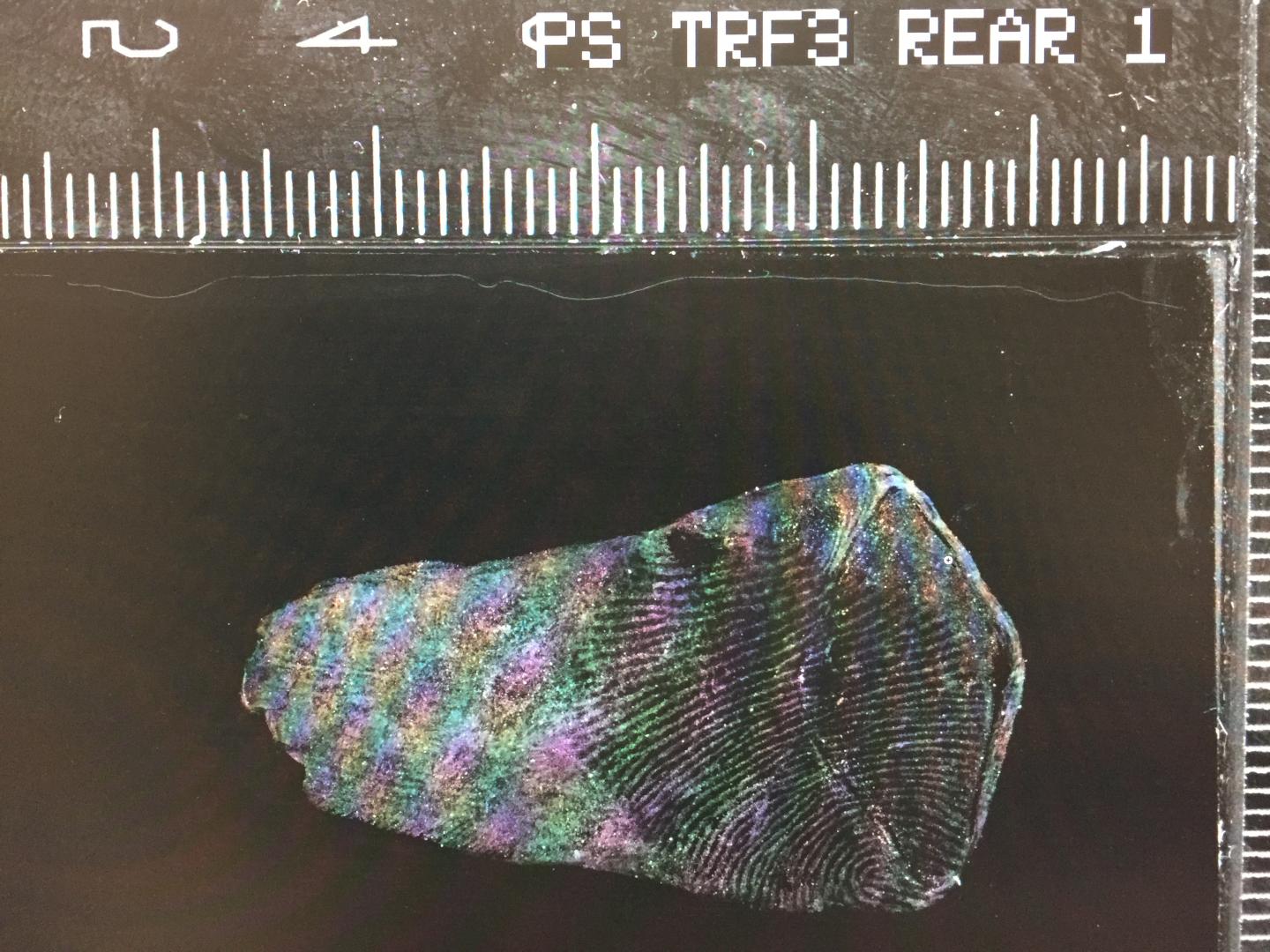
A team of scientists and experienced investigators from the University of Portsmouth have joined the battle to stop the pangolin becoming extinct, by adapting forensic fingerprinting techniques that lift finger-marks from the scales of these endangered animals.
Up to 2.7 million pangolins are poached every year (African Wildlife Foundation, 2019) making these unusual animals the most illegally trafficked mammals in the world. Also known as a ‘scaly anteater, it has recently been linked to the spread of COVID-19 due to being on sale in wildlife markets in China. Pangolin meat is considered a delicacy in China and Vietnam, while its scales are used in traditional Asian medicine* and traditional African bush medicine.
The University has created an International Wildlife Crime cross-discipline working group with the Zoological Society London and the Wildlife Conservation Society and through international collaboration with wildlife crime officers, they have produced a solution that works.
A study, published in the Forensic Science International Journal, sets out the success of a two- year project, led by the University in collaboration with crime officers in Benign, Kenya, Cameroon and India.
The new method uses gelatine lifters with a low-adhesive gelatine layer on one side, which are used universally by forensic practitioners for lifting footwear marks, finger-marks and trace materials off various objects in criminal investigations. Until now, it is believed they have never been used in wildlife crime.
The initial study proved the suitability of gelatine lifting for visualising finger-marks on pangolin scales. The gelatine lifter is easily applied to the scale, removed and scanned using a specialist scanning system. The finger-marks were then graded for the presence of ridge detail and 74 per cent of the gelatine lifts examined produced clear finger-mark detail.
Since this first trial (in 2018), the fingerprinting technique has been developed further. Training workshops and events in Africa and Asia have enabled wildlife officers to share experiences and develop the practice in their own environment, working together with researchers to hone the methods most suitable to their practice. This has resulted in law enforcement agencies being better placed to identify poachers and traffickers and then bring them to justice.
Dr Brian Chappell, Senior lecturer in Criminal Investigation at the University of Portsmouth, said: “We found that wildlife crime officers across Africa and Asia have extensive expertise and knowledge in relation to the wildlife, the crimes committed and the behaviour of the traffickers, but they had little experience of forensic methods and practice. There was a lack of suitable resources and forensic evidence was not used to its full potential. Complex technologies and intricate scientific methods were not suitable to the working environment of the wildlife enforcement officers, therefore easy to use, inexpensive methods were required.”
The research team of forensic experts, with assistance from DEFRA and the UK Border Force, worked with the wildlife crime enforcement officers to get a detailed understanding of their challenging working conditions and the harsh environments. to develop concepts that worked for them.
Dr Paul Smith, Director of the Forensic Innovation Centre at the University of Portsmouth, said: “The low-tack adhesive gelatine lifters have been used in crime scene and forensic practice for over 100 years, but we adapted bespoke packs and lifted evidence successfully off pangolin scales. This technique was easy to use, effective and suitable for practice.
“It equips the wildlife crime rangers and has the potential to be a deterrent to would-be traffickers, and a usable tool to help save the Pangolin.”
###
*China has recently announced its intention to remove pangolins from the official list of traditional Chinese medicine treatments.
Media Contact
Emma Gaisford
[email protected]
Related Journal Article
http://dx.