• HOME
  • NEWS
  • EXPLORE
    • CAREER
      • Companies
      • Jobs
    • EVENTS
    • iGEM
      • News
      • Team
    • PHOTOS
    • VIDEO
    • WIKI
  • BLOG
  • COMMUNITY
    • FACEBOOK
    • INSTAGRAM
    • TWITTER
Friday, September 25, 2026
BIOENGINEER.ORG
No Result
View All Result
  • Login
  • HOME
  • NEWS
  • EXPLORE
    • CAREER
      • Companies
      • Jobs
        • Lecturer
        • PhD Studentship
        • Postdoc
        • Research Assistant
    • EVENTS
    • iGEM
      • News
      • Team
    • PHOTOS
    • VIDEO
    • WIKI
  • BLOG
  • COMMUNITY
    • FACEBOOK
    • INSTAGRAM
    • TWITTER
  • HOME
  • NEWS
  • EXPLORE
    • CAREER
      • Companies
      • Jobs
        • Lecturer
        • PhD Studentship
        • Postdoc
        • Research Assistant
    • EVENTS
    • iGEM
      • News
      • Team
    • PHOTOS
    • VIDEO
    • WIKI
  • BLOG
  • COMMUNITY
    • FACEBOOK
    • INSTAGRAM
    • TWITTER
No Result
View All Result
Bioengineer.org
No Result
View All Result
Home NEWS Science News Biology

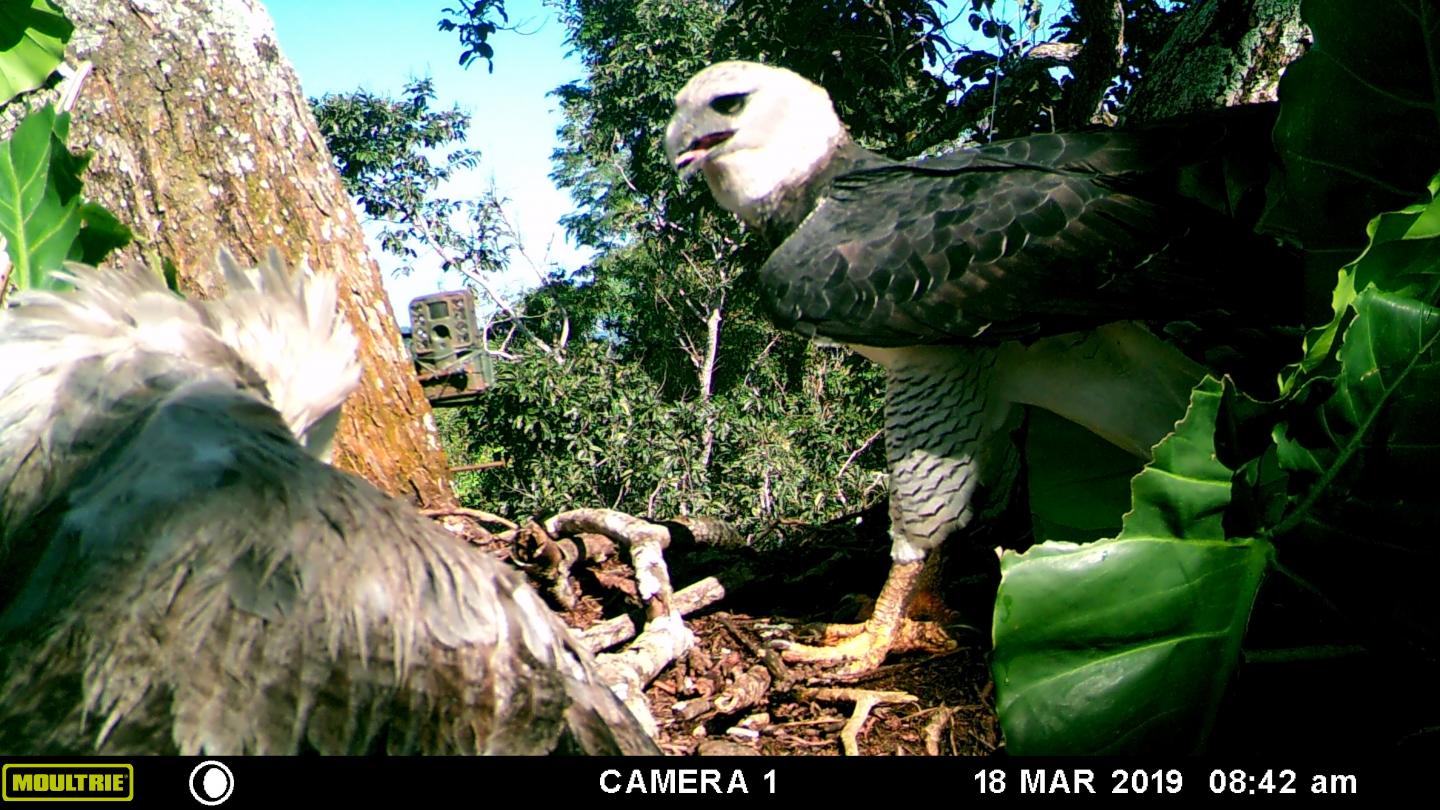
Harpy eagles could be under greater threat than previously thought

Bioengineer by Bioengineer
January 27, 2021
in Biology
Reading Time: 3 mins read
0
IMAGE
Share on FacebookShare on TwitterShare on LinkedinShare on RedditShare on Telegram

IMAGE

Credit: Everton Miranda/University of KwaZulu?Natal

Harpy eagles are considered by many to be among the planet’s most spectacular birds. They are also among its most elusive, generally avoiding areas disturbed by human activity – therefore already having vanished from portions of its range – and listed by the International Union for the Conservation of Nature (IUCN) as being ‘Near-Threatened’.

However, new research led by the University of Plymouth (UK) suggests estimates of the species’ current distribution are potentially overestimating range size.

Using a combination of physical sightings and environmental data, they developed a spatial modelling framework which aims to estimate current and past distributions based on the birds’ preferred habitat conditions.

The authors then used the model to estimate a current range size 11% smaller than that referenced by the IUCN, with high climatic moisture being the most important factor influencing distribution, followed by a minimum temperature of the warmest month of approximately 27°C.

Based on past and future climatic projections, the researchers showed that harpy eagle distribution will remain stable in the central Amazon, Guyana, eastern Colombia, and Panama, making these regions especially important for their conservation.

In order to ensure their future persistence, the authors suggest current and future conservation policies such as reducing deforestation and addressing issues of persecution should take such spatial models into account.

The research is published in the journal Ecology and Evolution, and involved an international collaboration of researchers from The Peregrine Fund (Ecuador, Panama, USA) and the University of KwaZulu-Natal (South Africa), based in Brazil.

Luke Sutton, a PhD student in the University of Plymouth’s School of Biological and Marine Sciences and lead author on the research, said: “Harpy eagles are difficult to observe and live at low population densities, so there has been limited research into what environmental factors influence their range limits. Our study shows that predicted future climate stability will be in core areas with extensive lowland tropical forest habitat. That means habitat loss as a result of deforestation is the greatest threat they face, and conservation plans need to take all of that into account.”

Senior author Dr Robert Puschendorf, Lecturer in Conservation Biology, added: “More than half of all global raptor species have declining populations. So understanding more about where they choose to live and why should be a critical factor when we are looking at how best to go about conserving raptor populations. The type of model we have presented here is lacking for many rare and threatened species, particularly in tropical regions, but can be a cost-effective and rapid way to direct conservation planning for threatened species.”

Harpy eagles are among the world’s largest and most powerful eagles and historically ranged across lowland tropical forests from Mexico in the north to Argentina in the south.

However, they became locally extinct in parts of Central America and Brazil during the 20th century. Currently there are multiple conservation programmes in place to better understand population dynamics and conserve rainforest habitat to help ensure its future survival.

###

Media Contact
Alan Williams
[email protected]

Original Source

https://www.plymouth.ac.uk/news/harpy-eagles-could-be-under-greater-threat-than-previously-thought

Related Journal Article

http://dx.doi.org/10.1002/ece3.7068

Tags: BiodiversityBiologyClimate ChangeClimate ScienceEcology/EnvironmentForestryTemperature-Dependent PhenomenaZoology/Veterinary Science
Share12Tweet8Share2ShareShareShare2

Related Posts

Cell Death Regulator BI-1 Emerges as Key Switch in Plant Immunity Against Oomycete Pathogens

Cell Death Regulator BI-1 Emerges as Key Switch in Plant Immunity Against Oomycete Pathogens

September 25, 2026
Chemists Turn to Eudesmol Isomers to Grade the World’s Priciest Wood

Chemists Turn to Eudesmol Isomers to Grade the World’s Priciest Wood

September 25, 2026

AI-Guided Modeling Uncovers Hidden Switches That Could Heat Up Cold Pancreatic Tumors

September 25, 2026

NAD+ Collapse Drives Senescent CD8+ T Cells That Worsen Ulcerative Colitis

September 25, 2026
Please login to join discussion

POPULAR NEWS

  • Damiana Plant Polysaccharides Extend Lifespan in Worms and Flies, Study Finds

    29 shares
    Share 12 Tweet 7
  • Forever Chemicals in Pregnancy Tied to Higher Gestational Diabetes Risk, Vitamin D May Blunt the Effect

    29 shares
    Share 12 Tweet 7
  • Mild Pepper Virus Turned Into a Powerful Gene Tool for Crop Scientists

    29 shares
    Share 12 Tweet 7
  • Metabolite Fingerprint in Seminal Plasma Could Explain Hidden Male Infertility

    29 shares
    Share 12 Tweet 7

About

We bring you the latest biotechnology news from best research centers and universities around the world. Check our website.

Follow us

Recent News

Damiana Plant Polysaccharides Extend Lifespan in Worms and Flies, Study Finds

Forever Chemicals in Pregnancy Tied to Higher Gestational Diabetes Risk, Vitamin D May Blunt the Effect

Mild Pepper Virus Turned Into a Powerful Gene Tool for Crop Scientists

Subscribe to Blog via Email

Enter your email address to subscribe to this blog and receive notifications of new posts by email.

Join 85 other subscribers
  • Contact Us

Bioengineer.org © Copyright 2023 All Rights Reserved.

Welcome Back!

Login to your account below

Forgotten Password?

Retrieve your password

Please enter your username or email address to reset your password.

Log In
No Result
View All Result
  • Homepages
    • Home Page 1
    • Home Page 2
  • News
  • National
  • Business
  • Health
  • Lifestyle
  • Science

Bioengineer.org © Copyright 2023 All Rights Reserved.