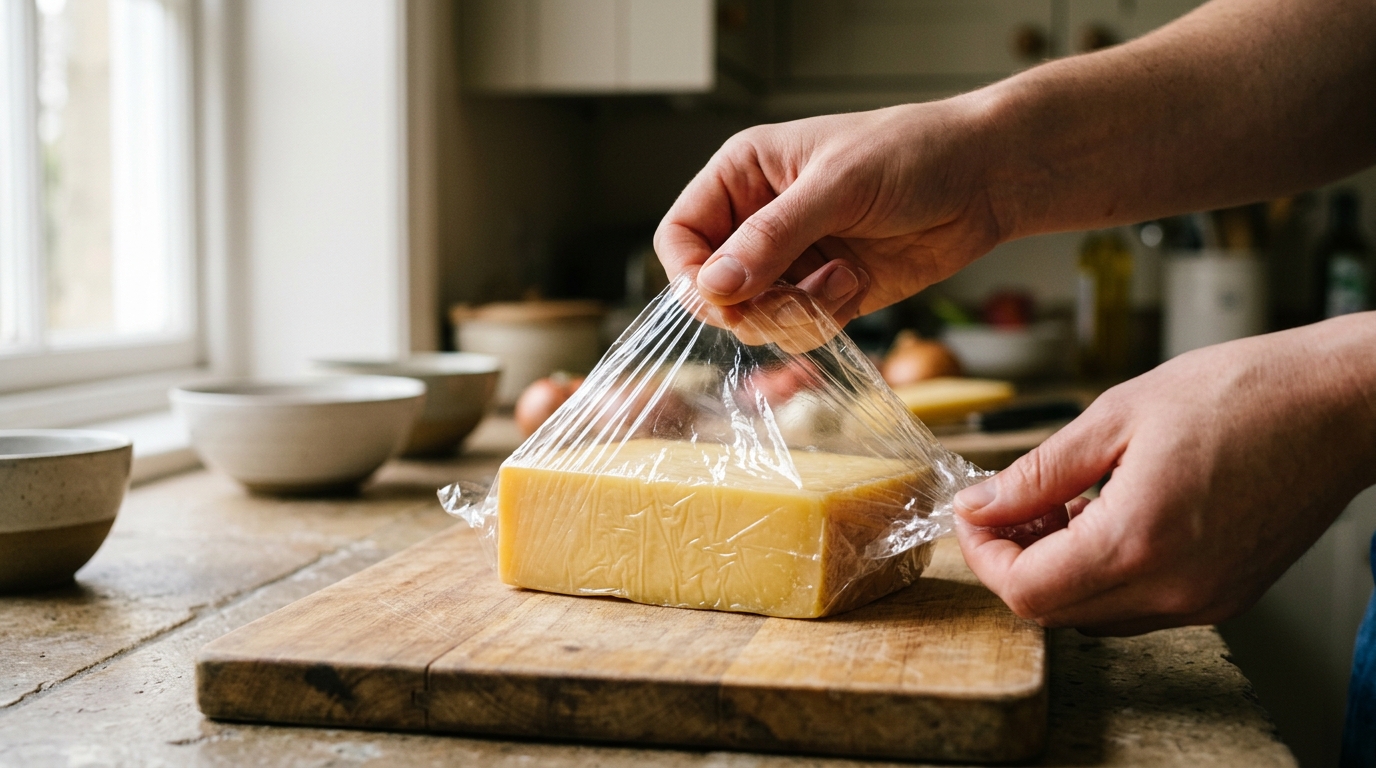
A cross-sectional investigation conducted among adult consumers in Jeddah, Saudi Arabia, demonstrates that practical food handling and storage behaviors are significantly associated with reduced dietary exposure to phthalates from packaged cheese, whereas theoretical knowledge about these chemical compounds is not. Synthetic plasticizers known as phthalates are widely used to impart flexibility and transparency to packaging polymers, yet because they are not chemically bound to the plastic matrix, they readily migrate into lipid-rich foodstuffs. The investigation evaluated six locally produced cheese varieties alongside consumer survey data, establishing that individuals who reported proactive plastic avoidance and careful storage routines exhibited significantly lower baseline exposure estimates, underscoring that behavioral execution rather than general awareness dictates dietary intake of packaging migrants.
Dietary intake constitutes a primary route of human exposure to plasticizers, particularly through high-fat dairy items such as cheese that facilitate the partitioning and solubilization of lipophilic chemical agents. In Saudi Arabia, national consumption assessments record average daily cheese intake exceeding forty grams per capita, with over one-third of the adult population consuming cheese on a daily basis. Despite widespread consumption and expanding international regulations governing food contact materials, comprehensive assessments examining individual-level behavioral predictors of phthalate intake within the region have remained scarce. The current study was structured to bridge this gap by quantifying contaminant concentrations across commercial cheeses, calculating individual estimated doses adjusted for body weight and intake frequency, and evaluating whether consumer knowledge and handling habits correlate with measured exposure profiles.
To evaluate chemical occurrence and temporal migration, investigators obtained six locally manufactured cheese types packaged in plastic from retail markets in Jeddah, including Cheddar, Mozzarella, Feta, processed cheese slices, Halloumi, and Kashkaval. Samples were preserved under controlled refrigeration at 5 °C across an experimental period of two months to replicate typical domestic and retail refrigeration environments, which generally operate between 4 °C and 8 °C. Phthalate concentrations were quantified at baseline retail purchase and following two months of refrigerated storage through indirect gas chromatography coupled with mass spectrometry. The chemical determinations focused on nine distinct phthalate esters, including di-2-ethylhexyl phthalate, di-n-butyl phthalate, butylbenzyl phthalate, diisononyl phthalate, diisodecyl phthalate, dimethyl phthalate, diethyl phthalate, di-n-octyl phthalate, and diisobutyl phthalate, alongside the related plasticizer di-(2-ethylhexyl) adipate.
The analytical protocol implemented Soxhlet extraction followed by saponification, with separation performed on an Agilent gas chromatograph and mass spectrometer using an apolar capillary column and helium carrier gas under pulsed splitless injection. Method accuracy was verified through spike recovery experiments achieving yields exceeding ninety percent, while compound identification relied on mass spectra comparison against reference libraries and authentic standards. To estimate consumer intake, researchers gathered dietary, behavioral, and sociodemographic information from a convenience sample of 386 adult respondents aged 18 to 59 years through a validated online instrument administered between April and August 2023. Ethical approval was granted by the Research Ethics Committee of King Abdulaziz University, and daily intake was modeled according to standardized international exposure assessment equations incorporating food concentration, daily contact rate, exposure frequency, and individual body weight.
Participant evaluations measured both factual comprehension of phthalates and reported everyday plastic utilization behaviors. The knowledge assessment featured sixteen factual statements covering the non-covalent nature of plasticizer binding, conditions accelerating migration such as elevated temperature, lipid content, and contact duration, and documented health endpoints involving endocrine disruption, metabolic dysfunction, and organ toxicity. Total knowledge scores ranged from zero to thirty-two, categorizing participants into poor and good knowledge cohorts based on a sixteen-point threshold. Concurrently, an eleven-item behavioral questionnaire scored practices from eleven to fifty-five, documenting how frequently respondents utilized plastic wraps, containers, and utensils, checked packaging resin codes, and transferred store-bought cheeses into glass or non-plastic storage vessels upon purchase.
Baseline chemical and survey analyses revealed that mean total phthalate exposure did not differ significantly between respondents possessing poor knowledge, who recorded an average intake of 4.01 ± 4.41 micrograms per kilogram of body weight per day, and those demonstrating good knowledge, who recorded 4.60 ± 5.60 micrograms per kilogram per day. This lack of statistically meaningful divergence persisted across sociodemographic subgroups, indicating that theoretical familiarity with chemical hazards does not inherently translate into protective dietary practices. The highest subgroup baseline mean exposure appeared among participants with primary or secondary education in the good knowledge group at 6.25 ± 9.10 micrograms per kilogram per day, while the lowest was observed among individuals aged 18 to 29 years at 2.94 ± 2.20 micrograms per kilogram per day.
In marked contrast to knowledge scores, everyday plastic handling and cheese storage practices were significantly linked to baseline dietary contamination levels. Participants categorized in the poor practice tier experienced an average baseline phthalate exposure of 4.38 ± 5.06 micrograms per kilogram of body weight per day, compared to a significantly reduced exposure of 3.33 ± 3.50 micrograms per kilogram per day among individuals demonstrating good practices, yielding a statistically significant difference with a p-value of 0.041. When examining demographic subdivisions, the lowest baseline exposure was documented among young adults aged 18 to 29 years reporting good practices, averaging 1.36 ± 1.08 micrograms per kilogram per day, whereas participants with primary or secondary education within the poor practice category exhibited the highest subgroup mean at 5.48 ± 7.41 micrograms per kilogram per day.
Extended storage under refrigeration emerged as an influential physical driver of overall chemical migration into the food matrix. Following two months of dark storage at 5 °C, mean phthalate levels rose across all consumer groupings, with total exposure reaching 6.68 ± 7.43 micrograms per kilogram of body weight per day among participants with poor handling practices and 5.15 ± 5.68 micrograms per kilogram per day among those adhering to good practices. The highest observed group exposure following storage was recorded among respondents with primary or secondary education in the good knowledge tier, reaching 9.55 ± 13.1 micrograms per kilogram per day. Although individuals practicing safer plastic storage continued to show numerically lower chemical exposure following the two-month period, the categorical difference between good and poor practice groups ceased to be statistically significant, indicating that continuous leaching from commercial plastic wraps during prolonged storage can eventually overpower initial consumer precautions.
Multivariate linear regression modeling confirmed the independent associations of demographic and behavioral variables with total phthalate exposure while controlling for potential confounders. At baseline, the total practice score maintained a statistically significant negative association with exposure, exhibiting a regression coefficient of negative 0.008 with a p-value of 0.018, confirming that higher behavioral compliance scores predicted lower chemical intake. This significant protective relationship persisted after two months of refrigerated storage, with the practice coefficient strengthening to negative 0.013 and a p-value of 0.003. Conversely, total knowledge scores failed to achieve statistical significance in either baseline or follow-up multivariate regressions, reinforcing that actionable habits, rather than cognitive recognition of environmental risks, dictate exposure variation.
The regression analyses also highlighted gender and age as influential demographic predictors of chemical intake. Male participants demonstrated significantly lower phthalate exposure compared to female participants both at baseline, with a coefficient of negative 0.121 and a p-value of 0.027, and after two months of storage, with a coefficient of negative 0.139 and a p-value of 0.039. Furthermore, while age categories did not achieve statistical significance in the adjusted baseline multivariate model, age emerged as an independent predictor following the two-month storage period, with adults aged 30 to 39 years and 40 to 49 years displaying significantly higher exposure levels compared to the younger reference cohort, recording coefficients of 0.193 and 0.211, respectively. Other recorded characteristics, including nationality, monthly income, educational attainment, and baseline health status, did not show significant associations with estimated phthalate intake.
Interpreting these outcomes, the study authors emphasize that awareness-raising campaigns alone are unlikely to achieve meaningful reductions in dietary plasticizer contamination without practical behavioral guidance and structural packaging improvements. While general awareness provides a conceptual foundation, significant behavioral barriers often prevent consumers from translating toxicological literacy into daily grocery routines and kitchen management. The observed disparities across gender and middle-aged cohorts likely mirror broader domestic consumption habits, higher baseline intake of dairy products among women, and frequent usage of plastic containers during food handling. Public health interventions must therefore emphasize concrete household techniques, including prompt transfer of fatty foods into non-plastic containers such as glass, alongside industrial regulatory standards that limit the migration of synthetic plasticizers from commercial packaging films.
The authors contextualized these conclusions within several methodological constraints inherent to the study design. Because the research employed a cross-sectional framework, the observed statistical associations between self-reported behaviors, sociodemographic parameters, and estimated intake cannot confirm direct causal mechanisms. Furthermore, behavioral and dietary data gathered through an online questionnaire distributed via social networks relied on convenience sampling and self-reporting, introducing potential susceptibility to recall inaccuracies and social desirability biases. Finally, exposure calculations were restricted exclusively to locally manufactured packaged cheeses, omitting potential chemical contributions from imported dairy items, alternative food groups, personal care products, and wider environmental pathways that collectively contribute to total cumulative human phthalate burdens.
Subject of Research: Dietary exposure to phthalates from packaged cheese and the predictive influence of consumer handling practices and sociodemographic factors
Article Title: Public knowledge and safe food handling practices related to packaged cheese in Saudi Arabia
Article References: Aljehany, B. M. (2026). Public knowledge and safe food handling practices related to packaged cheese in Saudi Arabia. Food Production, Processing and Nutrition, 8(1), Article 46. https://doi.org/10.1186/s43014-026-00390-z
Image Credits: AI Generated
DOI: 10.1186/s43014-026-00390-z
Keywords: phthalates, packaged cheese, food safety, dietary exposure, Saudi Arabia, chemical migration, gas chromatography-mass spectrometry, plasticizers, food contact materials, consumer practices, endocrine disruptors, cross-sectional study, refrigerated storage, safe food handling, King Abdulaziz University, environmental health
News Source: Daisy Hatcher. (November 17, 2026). Handling Practices Rather Than Phthalate Knowledge Predict Chemical Exposure From Packaged Cheese. Scienmag.