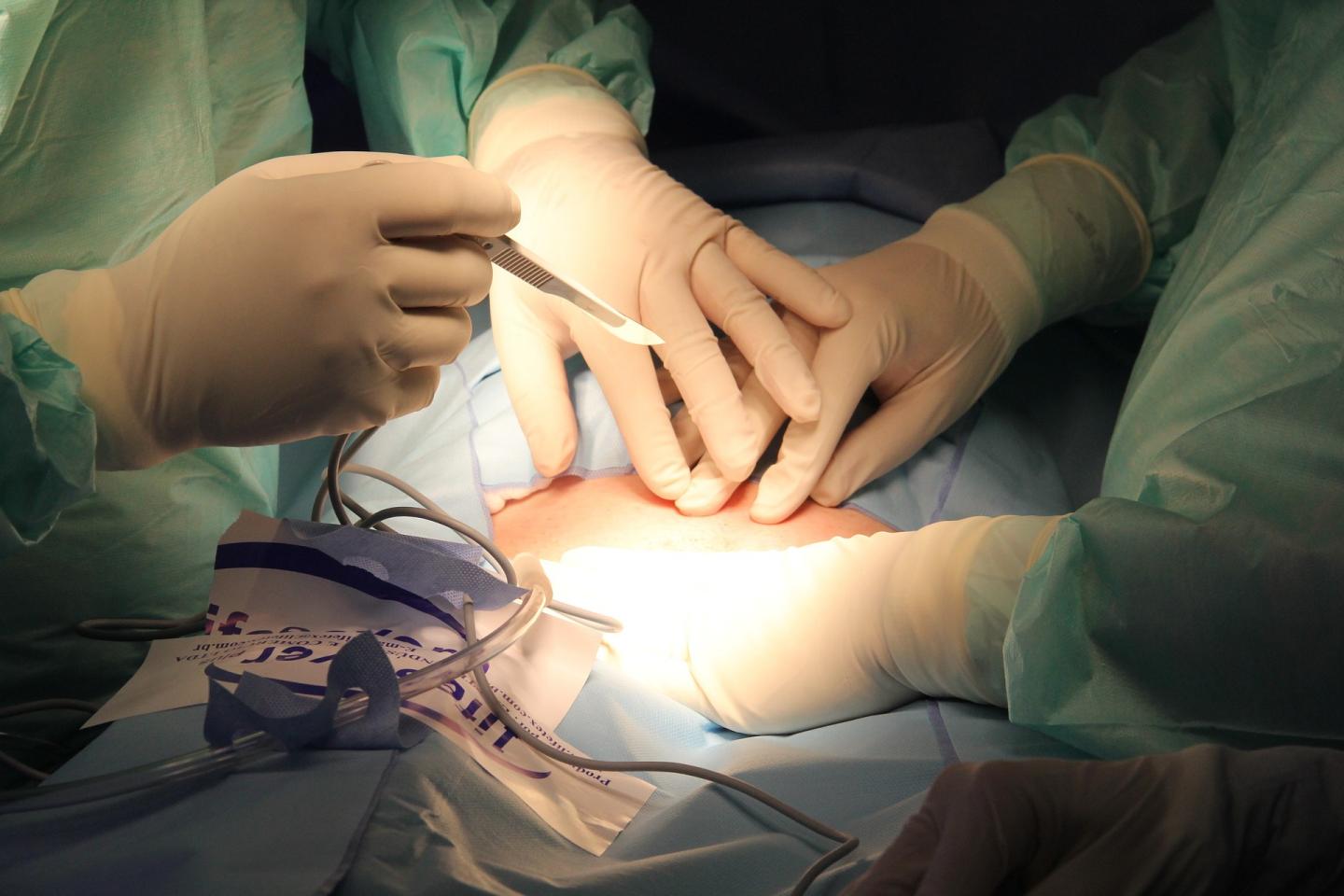
Credit: deborabalves (Pixabay)
Surgeons could dramatically reduce the risk of infection after an operation by simply changing the antiseptic they use.
New analysis by the University of Leeds and the University of Bern of more than 14,000 operations has found that using alcoholic chlorhexidine gluconate (CHG) halves the risk of infection in certain types of surgery when compared to the more commonly used povidone-iodine (PVI).
Infection after surgery could result in a range of issues including readmission to hospital and possibly further surgery.
Switching antiseptics to help tackle infections would be a simple process for healthcare providers, and could be rolled out globally, according to the new research, published in the Annals of Surgery.
Lead author Ryckie Wade, Clinical Research Fellow at Leeds’ School of Medicine said: “Infection is the most common and costly complication of surgery.
“Even though the risk of infection in these types of surgery is low (about 3%), anything we can change to reduce this risk is very important.
“Our findings suggest that the number of infections may be halved if surgeons used a different skin cleaning agent before surgery.”
The team reviewed 17 existing studies, comparing infection complications of five different antiseptics used in 14,593 operations.
The initial research was carried out in North America, Europe, Asia, South America, and Australasia on patients who had undergone a range of surgical procedures including orthopaedic, cardiac, plastic and burn reconstruction surgery, cranial neurosurgery, open inguinal hernia repair and neurosurgery.
Using a statistical technique called network meta-analysis, the team showed that CHG was safe and twice as effective in preventing infection after “clean” surgery on adults compared to PVI (alcoholic or aqueous), which has been widely used as an antiseptic since its discovery in 1955.
Clean surgery is defined as a procedure outside the respiratory, urogenital and digestive system where there is no inflammation or infection and where the wound is not caused by a trauma.
Mr Wade said he hoped the new findings would lead to a change in healthcare practice: “This research should be of benefit to all healthcare professionals around the world who perform any type of invasive procedure on a ‘clean site’.”
###
The findings of the research team support similar recommendations by the World Health Organisation, the United States and European Centres for Disease Control and Prevention, and the National Institute for Health and Care Excellence.
Further information
The research paper, The Comparative Efficacy of Chlorhexidine Gluconate and Povidone-iodine Antiseptics for the Prevention of Infection in Clean Surgery, is published in Annals of Surgery.
Picture credit: deborabalves/Pixabay
For further details, contact University of Leeds press officer Lauren Ballinger at [email protected]
University of Leeds
The University of Leeds is one of the largest higher education institutions in the UK, with more than 38,000 students from more than 150 different countries, and a member of the Russell Group of research-intensive universities. The University plays a significant role in the Turing, Rosalind Franklin and Royce Institutes.
We are a top ten university for research and impact power in the UK, according to the 2014 Research Excellence Framework, and are in the top 100 of the QS World University Rankings 2021.
The University was awarded a Gold rating by the Government’s Teaching Excellence Framework in 2017, recognising its ‘consistently outstanding’ teaching and learning provision. Twenty-six of our academics have been awarded National Teaching Fellowships – more than any other institution in England, Northern Ireland and Wales – reflecting the excellence of our teaching. http://www.
Media Contact
Lauren Ballinger
[email protected]
Related Journal Article
http://dx.