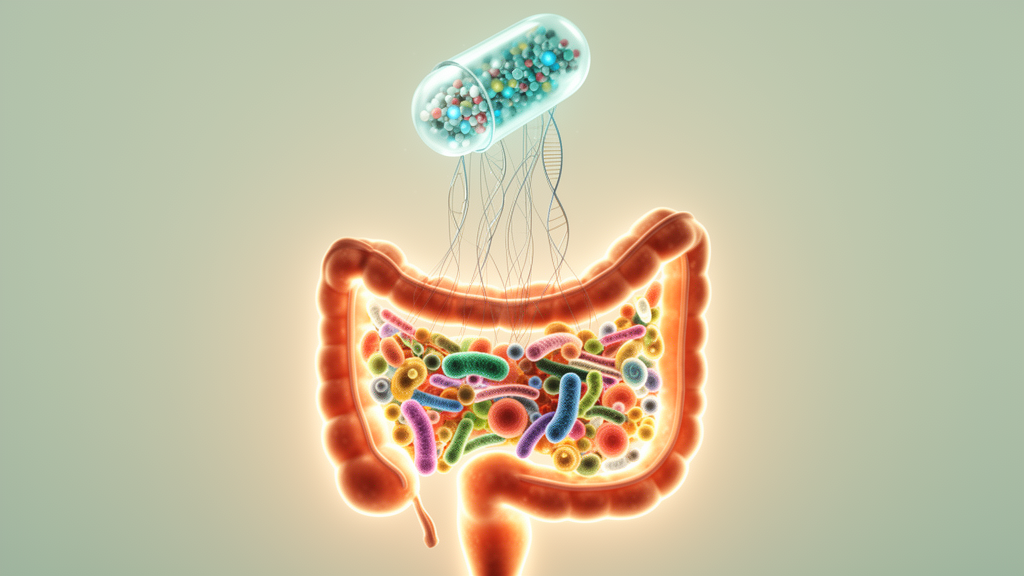
Researchers have built a computational score that combines gut microbiota, microbial metabolites and host gene activity into a single measure for patients with rheumatoid arthritis, and they report that the score separates patients into two biologically distinct groups and flags who is likely to respond to two major biologic therapies. The analyses were based on public transcriptomic datasets and computational modelling rather than prospective clinical validation, so the findings are best understood as a data-driven framework awaiting testing in larger, prospective, multicentre cohorts rather than a validated diagnostic ready for the clinic.
The motivation lies in a long-standing problem in rheumatoid arthritis care. The disease is a systemic autoimmune condition in which synovial inflammation and hyperplasia drive irreversible destruction of cartilage and bone. Biological and targeted synthetic disease-modifying antirheumatic drugs have improved prognoses, but responses vary markedly between individuals, particularly for anti-TNF inhibitors and rituximab. Reliable biomarkers for molecular subtyping and treatment response prediction remain elusive, and most existing biomarkers, according to the authors, focus on single dimensions rather than integrating the gut microecological status of a patient with host immune and metabolic characteristics.
The gut–joint axis supplied the conceptual backbone. Accumulating evidence suggests that the gut microbiota is linked to the onset and progression of rheumatoid arthritis through dysbiosis, immune regulation and compromised gut permeability. Beyond direct immune effects, gut microbes release metabolites such as short-chain fatty acids and tryptophan derivatives that act as signalling molecules, travelling through the circulatory system to influence host immune homeostasis and joint inflammation. The authors frame this microbiota–metabolite–host gene cascade as a bridge connecting environmental factors with host immune responses, and they argue that prior studies have rarely integrated all three layers into one functional framework.
To construct the score, the team integrated three bulk transcriptomic datasets of patients with rheumatoid arthritis and healthy controls (GSE12021, GSE55235 and GSE55457) for differential expression analysis, and used two independent datasets (GSE37107 and GSE15258) to test predictions of rituximab and anti-TNF response. Differentially expressed genes were identified with the limma package at an adjusted P value below 0.05 and an absolute log2 fold change above 1. These genes were intersected with a set of host genes annotated in the gutMGene database as related to gut microbiota and metabolites. The intersection yielded seven hub genes: FOS, JUN, IDO1, PEMT, EGFR, ABCC4 and FADS3.
Expression patterns across the datasets were striking. Compared with healthy controls, FOS, JUN, PEMT, EGFR and FADS3 were significantly lower in the rheumatoid arthritis group, whereas IDO1 and ABCC4 were significantly greater, at P below 0.05. A chord diagram of correlations among the seven genes showed FOS and JUN strongly positively correlated, hinting at synergistic function. When the researchers queried the gutMGene database for direct interactions, only three of the seven genes—JUN, FOS and EGFR—showed significant associations with both gut microbiota and metabolites, and these formed the core of an interaction network connecting them to bacterial taxa including Citrobacter, Clostridium and Faecalibacterium, and to metabolites including propionate, p-cresol sulfate, indoxyl sulfate and butyrate. The network contained both proinflammatory metabolites and opportunistic pathogens alongside beneficial short-chain fatty acid-producing bacteria.
The score itself, called the gut microbiota–metabolite–host score (GMS), was built by Z-score normalising the expression of the seven hub genes and applying principal component analysis, with the loading values of the first principal component serving as gene weights. Splitting the cohort at the median GMS produced two subtypes with clearly divergent biology. The high-score subtype showed enrichment of immune activation processes such as leukocyte and lymphocyte activation, T-cell activation and inflammatory responses, plus rheumatoid arthritis and Th17 cell differentiation pathways, and was therefore named the adaptive immune activation subtype. The low-score subtype instead showed TNF signalling, IL-17 signalling, FoxO signalling, regulation of lipolysis in adipocytes, responses to peptide and glucocorticoid hormones, fat cell differentiation, hypoxia, fibroblast proliferation and extracellular matrix organisation, and was named the inflammatory–metabolic composite subtype. A total of 713 differentially expressed genes separated the two groups, 404 upregulated and 309 downregulated in the high-score group.
Immune infiltration analysis with CIBERSORT added a cellular dimension. The high-score group had significantly greater abundance of M1 macrophages and activated CD4-positive memory T cells, and a marked reduction in resting NK cells and naive CD4-positive T cells. JUN, FOS and EGFR were positively correlated with proinflammatory populations enriched in the high-score group, including M1 macrophages and activated dendritic cells, and IDO1 showed a similar pattern, while ABCC4, FADS3 and PEMT correlated primarily with resting immune cell subsets such as resting dendritic cells and resting mast cells. In the single-cell dataset, FOS and JUN were widely expressed and particularly enriched in T cells and NK cells, whereas PEMT, FADS3 and ABCC4 showed more restricted expression. Cell–cell communication analysis indicated that monocytes and neutrophils acted as the primary senders of intercellular signals, particularly towards T cells and B cells.
The clinically oriented result concerns treatment prediction. In the validation datasets, the GMS was significantly greater in responders than in nonresponders for both anti-TNF therapy (p = 0.0092) and rituximab (p = 0.043), suggesting that patients with an elevated score are more likely to benefit from these interventions. In receiver operating characteristic analysis, individual genes performed well—JUN reached an area under the curve of 0.935, EGFR 0.924 and FADS3 0.922—while the composite GMS achieved an AUC of 1.000. The authors themselves flag that this perfect discrimination may carry a risk of overfitting and that its predictive stability warrants calibration and validation in more diverse real-world populations. They also note an apparent paradox: the low-score subtype showed strong enrichment of TNF and IL-17 signalling yet responded less well to anti-TNF therapy. Their proposed explanation is that pathway enrichment captures tissue-level inflammatory programs while the score, derived from peripheral blood transcriptomics, may reflect systemic immune state and response potential, and that concurrent TNF and IL-17 activation in the low-score subtype has been associated with primary resistance to TNF blockade.
To probe mechanism, the team turned to single-cell analysis and in silico knockout. Using the scTenifoldKnk package, they simulated the functional ablation of FOS and JUN within the gene coexpression network. Knocking out FOS downregulated genes including MALAT1, RPL3 and FOS itself, and the affected genes were enriched in natural killer cell-mediated cytotoxicity, antigen processing and presentation, and osteoclast differentiation. Simulated JUN perturbation affected MALAT1, JUN and ribosomal proteins, with enrichment in osteoclast differentiation, apoptosis, and the TNF, Toll-like receptor and MAPK signalling pathways. The authors interpret these simulations as positioning FOS and JUN—partners in the AP-1 transcription factor complex—as key executors linking gut microbiota–metabolite signalling to RA joint pathology, potentially through bone erosion and inflammatory axes. They caution, implicitly, that these are computational predictions of regulatory structure, not demonstrations of biological effect in patients.
Finally, molecular docking explored possible druggable interactions. Protein structures for ABCC4, IDO1, EGFR and PEMT were retrieved from the PDB database, and 502 Chinese herbal medicines encompassing 2,583 active small molecules were screened from the TCMSP database. The best-binding compounds—MOL008559, MOL005675, MOL003199 and MOL011100 for ABCC4, IDO1, EGFR and PEMT respectively—showed binding energies of −12.5, −10.8, −10.3 and −8.8 kcal/mol, with corresponding herbs including Tribulus terrestris, Periploca sepium, Tripterygium wilfordii, Polygonum tinctorium and Indigo Naturalis. The authors acknowledge the study’s limits: the analyses rest on public transcriptomic datasets without prospective, multicentre clinical validation, and response prediction covered only two biologic agents, leaving other therapeutic modalities untested. They call for validation in larger, prospective, multicentre cohorts before the score can inform individualised treatment selection. Until then, the GMS stands as a promising computational scaffold for the gut–joint axis—one that ties microbial metabolites, host transcription factors and therapy response into a single quantitative framework, but whose clinical value remains to be proven in real patients.
Subject of Research: A multi-omics scoring system linking gut microbiota, metabolites and host genes to rheumatoid arthritis subtyping and treatment response prediction
Article Title: A gut microbiota–metabolite–host gene score for subtyping and predicting the treatment response in rheumatoid arthritis: integrative analysis with in silico knockout validation
Article References: Sun, X.-F., Yang, Y.-J., Li, C.-L., Huang, T., Wang, Q., & Yu, Q. (2026). A gut microbiota–metabolite–host gene score for subtyping and predicting the treatment response in rheumatoid arthritis: integrative analysis with in silico knockout validation. Bioresources and Bioprocessing, 13(1), Article 155. https://doi.org/10.1186/s40643-026-01149-7
Image Credits: AI Generated
DOI: 10.1186/s40643-026-01149-7
Keywords: rheumatoid arthritis, gut microbiota, gut-joint axis, metabolites, biomarkers, anti-TNF therapy, rituximab, single-cell RNA sequencing, in silico knockout, molecular docking, precision medicine, transcriptomics
News Source: Juliet Wilcox. (October 28, 2026). Gut Microbiome Gene Score Predicts Rheumatoid Arthritis Drug Response in New Study. Scienmag.