Understanding the gut microbiome in colorectal cancer requires more than tracking which species increase or decrease, according to a new review from researchers at Fudan University and Tongji University. Published in Microbiology China under the title “Advances in multi-kingdom microecological dysbiosis and strain-level variations in colorectal cancer,” the review argues that meaningful progress depends on examining how microbes interact with one another, how strains within the same species differ genetically, and how these features shape metabolism and host responses.
“Knowing which microbes are present is only the starting point,” said Na Jiao, corresponding author and a principal investigator at Fudan University. “Understanding their relevance to cancer requires connecting community interactions and strain differences with the functions that affect the host.”
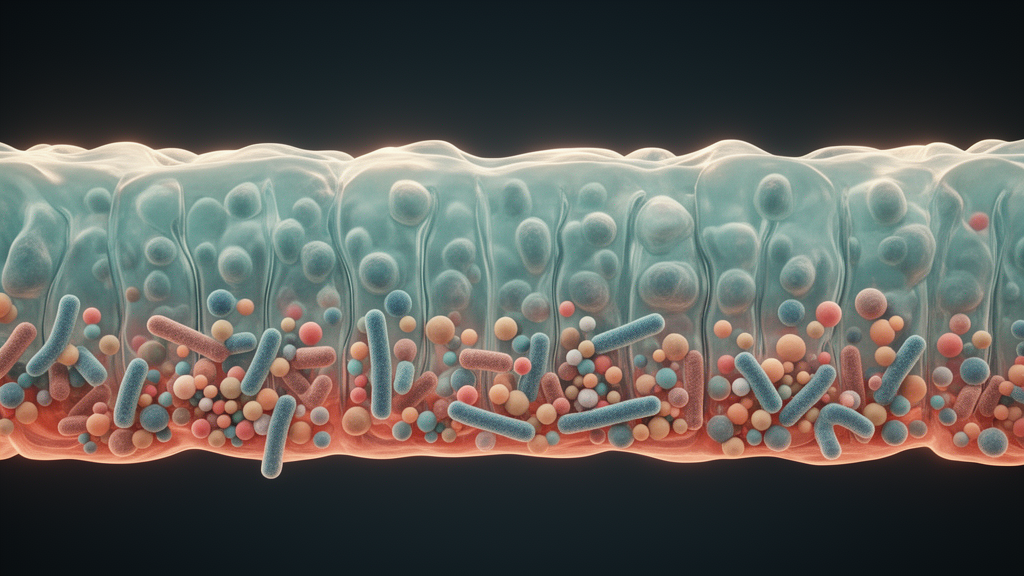
The review frames colorectal cancer-associated dysbiosis as a restructuring of microbial communities that involves not only bacteria but also archaea, fungi and viruses. Alongside changes in resident gut microbes, bacteria originating in the mouth can establish themselves in the intestine. Cooperation and competition among microbial groups may further influence colonization and community function. One example discussed in the review shows that Candida albicans, a fungus, can facilitate colonization of the colonic mucosa by Fusobacterium nucleatum, a bacterium previously implicated in colorectal cancer.
Within individual species, genetic differences add another layer of information. Strains can differ in tissue colonization, metabolic activity and interactions with host cells. The review highlights a distinct lineage within F. nucleatum subsp. animalis that is enriched in colorectal tumors and exhibits greater tumor-promoting potential. Genetic changes ranging from individual DNA positions to the acquisition or loss of entire genes may explain why species-level measurements can overlook biologically important differences between strains.
The authors connect these ecological and genetic features to three functional routes by which microbial changes may translate into host effects. Toxins and adhesins can affect DNA integrity, tissue colonization and immune defenses. Microbial metabolites can support intestinal homeostasis or favor tumor development, depending on the specific molecule and biological context. Direct interactions with epithelial, tumor and immune cells can also influence cell proliferation, inflammation and antitumor immunity.
These insights point toward two broad avenues for clinical translation. Biomarker research is expanding beyond individual species toward signatures that combine multiple microbial groups, genetic variants and functional genes. Such approaches are being investigated for detecting colorectal cancer and precancerous lesions, for prognosis, and for predicting treatment response. Microbiome-based interventions, including selected beneficial microbes, fecal microbiota transplantation, engineered bacteria and bacteriophages, are also under investigation, although the review emphasizes that most remain experimental and require further validation.
A central challenge, the authors stress, is distinguishing cause from consequence. Microbes enriched in tumors may contribute to disease, may simply adapt to the altered tumor environment, or may play different roles at different stages of disease progression. Diet, medication and other factors can confound observed associations, and relative abundance measurements cannot establish whether a microbe has actually increased in absolute number.
To address these limitations, the authors call for longitudinal studies, careful control of confounding factors, absolute microbial quantification and higher-resolution strain analysis. Integrating microbial genes, gene activity, proteins and metabolites with host responses, alongside experimental testing of candidate mechanisms, could build stronger evidence for clinical translation.
“The goal is to establish which microbial functions influence disease, when they matter, and whether they can be measured or modified reliably,” Jiao said. “That evidence is essential for developing useful biomarkers and targeted interventions.” The work was supported by the National Natural Science Foundation of China (Grant No. 32470098).
Subject of Research: Multi-kingdom gut microbial dysbiosis and strain-level variation in colorectal cancer
Article Title: Beyond species-level profiles: Connecting microbial communities, strain differences and colorectal cancer
Article References: Beyond species-level profiles: Connecting microbial communities, strain differences and colorectal cancer. Original publication (Bibliographic details unavailable.)
Image Credits: AI Generated
DOI: Not provided
Keywords: colorectal cancer, gut microbiome, dysbiosis, Fusobacterium nucleatum, strain-level variation, microbial biomarkers, Candida albicans, microbiome interventions, microbial metabolites, Fudan University, Microbiology China, Beyond
News Source: Nathaniel Bowman. (October 27, 2026). Gut Microbes in Colorectal Cancer: Why Species Lists Are Not Enough. Scienmag.