Anorexia nervosa has long puzzled researchers with a deceptively simple question: are the hormone disturbances seen in patients a cause of the illness, a consequence of starvation, or something in between? A new cross-sectional study published in the Journal of Eating Disorders offers a compelling answer for a family of gut-derived hormones that regulate appetite and blood sugar. According to the findings, the abnormal levels of these hormones observed during the acute, malnourished phase of anorexia nervosa are almost certainly state-dependent—they fade away with long-term recovery rather than persisting as permanent biological traits of the disorder.
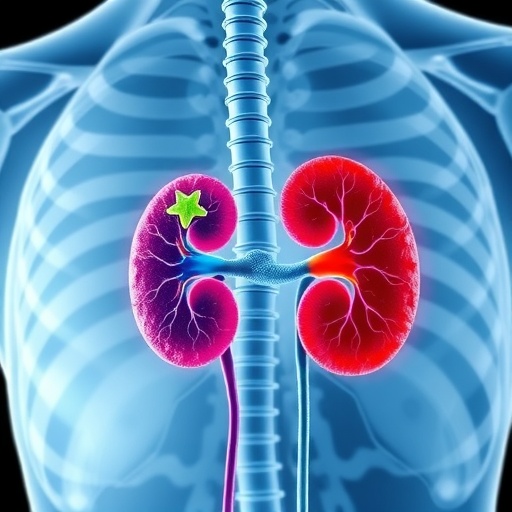
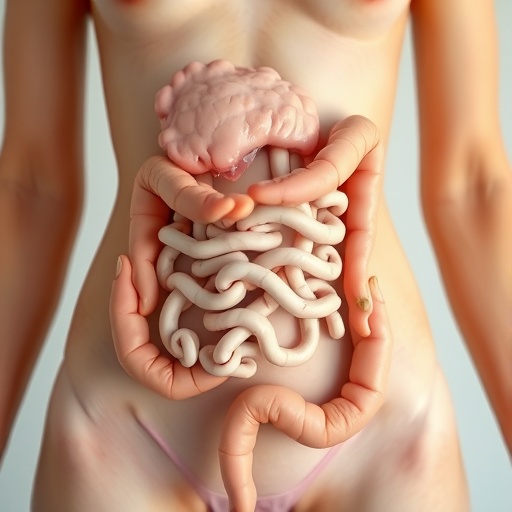
The research, led by Theresa Kolb and Stefan Ehrlich of the Technische Universität Dresden, together with collaborators in Gothenburg and London, focused on four hormones derived from a single precursor protein called proglucagon: glucagon-like peptide-1 (GLP-1), gastric inhibitory peptide (GIP), glucagon, and glicentin. These molecules are secreted by specialized enteroendocrine cells scattered throughout the intestinal lining, and together they orchestrate a remarkably sophisticated dialogue between the gut, the pancreas, and the brain. GLP-1, for instance, slows gastric emptying, enhances insulin secretion in a glucose-dependent manner, and acts on hypothalamic circuits to promote satiety. GIP, released primarily from K-cells in the duodenum, similarly potentiates insulin release after nutrient ingestion and influences fat metabolism. Glucagon, classically known as insulin’s counter-regulatory partner, raises blood glucose during fasting, while glicentin—a less famous proglucagon-derived peptide—has been implicated in gut mucosal growth and the integration of nutrient sensing with metabolic regulation.
Because these hormones sit at the very intersection of appetite control and glucose homeostasis, they have become central players in the ongoing metabolic revolution in psychiatry, particularly since GLP-1 receptor agonist drugs have transformed the treatment landscape for obesity and diabetes. Understanding whether the gut hormone system is fundamentally rewired in people who have suffered from anorexia nervosa is therefore not merely an academic question; it carries direct implications for whether these hormonal pathways could ever serve as risk markers, treatment targets, or clues to the biology of relapse.
To address this question, the Dresden team and their collaborators recruited 80 women who had long-term recovered from anorexia nervosa and compared them with 100 healthy female controls who had never experienced an eating disorder. For the primary statistical comparisons, the investigators used a subset of 70 controls who were pairwise age-matched to the recovered participants, a strategy that helps eliminate age as a confounding variable in an endocrine system that changes across the lifespan. Recovery was not left to self-report alone; the study employed structured instruments, including the Structured Interview for Anorexia and Bulimia Nervosa (SIAB-EX), alongside well-validated questionnaires such as the Eating Disorder Inventory-2, the Beck Depression Inventory-II, and the Symptom-Checklist-90-Revised, to ensure that participants genuinely met criteria for sustained recovery rather than simply being in a temporary remission.
The methodological rigor of the study extended to a variable that is often overlooked in endocrine research: oral contraceptive use. Estrogen- and progestin-containing pills are known to modulate a wide array of hormonal systems, including aspects of glucose metabolism, and their use is common among young women. The researchers therefore stratified both the recovered group and the control group by oral contraceptive status, allowing them to test separately whether pill use altered the hormone measurements and whether it masked or amplified any differences between the groups. All blood samples were collected under fasting conditions, ensuring that the measurements reflected basal—that is, unfed—hormone secretion rather than post-meal dynamics, which is critical given that all four of these peptides are powerfully stimulated by nutrient ingestion.
The results were striking in their clarity. Fasting concentrations of GLP-1, GIP, and glicentin in the long-term recovered women were indistinguishable from those of healthy controls. Importantly, this null finding was not simply a failure to detect a small effect with traditional significance testing; the team confirmed their conclusions using Bayesian statistics, an analytical framework that quantifies the evidence in favor of the absence of a difference rather than merely failing to reject one. This distinction matters in studies of this kind, because conventional null-hypothesis testing can leave readers wondering whether a “no difference” result reflects genuine equivalence or an underpowered sample. By applying Bayesian methods, the authors were able to argue affirmatively that the recovered patients and controls do not differ meaningfully on these hormone measures. The pattern held whether or not participants used oral contraceptives, and pill use itself did not significantly affect the concentration of these proglucagon-derived hormones in either group.
One hormone stood apart: glucagon. Unlike its sister peptides, glucagon showed a significant difference between the groups, a finding the authors highlight as the sole exception to an otherwise uniform pattern of normalization. The researchers interpret the broader result—the lack of differences in GLP-1, GIP, and glicentin—as strong evidence that the hormone alterations documented during acute anorexia nervosa are consequences of the starved state rather than enduring vulnerabilities. Once weight is restored and maintained over the long term, the enteroendocrine system appears to return to its baseline operating configuration.
The new findings build directly on the group’s earlier work, which had painted a more complicated picture during the acute illness. In that previous study, GIP levels were found to be elevated in acutely ill, severely underweight patients, and those levels normalized after short-term weight restoration. GLP-1 and glicentin, by contrast, were unchanged in the acute state but decreased following short-term refeeding—a counterintuitive pattern that suggested the gut hormone system responds dynamically and, in some cases, non-monotonically to the metabolic upheaval of starvation and renourishment. What remained unknown was whether any of these deviations would linger once recovery was durable, or whether they might even represent stable biological markers that predate the illness and could help explain why some individuals develop anorexia nervosa in the first place. The current study effectively closes that door for these particular hormones: after long-term recovery, the gut’s proglucagon axis looks, biochemically, like that of women who never had the disorder.
The conceptual implications are substantial. In psychiatric and eating-disorders research, distinguishing “state” markers from “trait” markers is a foundational task. State markers fluctuate with the illness itself and vanish with remission; trait markers persist and may reflect underlying vulnerability. Trait markers are especially valuable because they could, in principle, identify individuals at risk before illness onset or illuminate the mechanisms that make the disorder chronic and relapse-prone for a subset of patients. The present study, with its unusually large sample for this field—80 recovered participants and 100 controls, with age-matching—provides compelling evidence that fasting levels of these appetite- and glucose-regulating gut hormones belong firmly in the state-marker category. The disturbances seen in acute anorexia nervosa, including the previously reported elevation of GIP, are best understood as physiological adaptations to severe energy deficit and malnutrition rather than as embedded features of the person’s endocrine makeup.
That interpretation aligns with a broader biological picture. Starvation imposes profound energetic stress on the body, and the gastrointestinal system is one of its most sensitive barometers. Enteroendocrine cell function, gut motility, and hormone secretion are all exquisitely responsive to nutritional status, and proglucagon-derived peptide secretion is directly modulated by nutrient exposure in the intestinal lumen. It is entirely plausible that months or years of severe caloric restriction reshape the secretion patterns of these cells in ways that resolve only when nutrition is durably restored. The new data suggest that this resolution is, reassuringly, quite complete.
There are caveats worth noting. The study measured fasting hormone concentrations only, leaving open the possibility that the postprandial—the after-meal—dynamics of GLP-1, GIP, glicentin, and glucagon might still differ in recovered individuals even when basal levels do not. Cross-sectional designs, however carefully matched, also capture a snapshot rather than a trajectory; the gold standard would be a longitudinal cohort followed from the acute phase through years of recovery. Nevertheless, the combination of the earlier acute-state findings with the present recovery-state data effectively reconstructs that trajectory, and both Bayesian and frequentist analyses converge on the same conclusion.
For patients, families, and clinicians, the message is cautiously hopeful. The metabolic fingerprints of starvation in this hormone system do not appear to be permanent scars. Recovery—including sustained weight restoration—allows the gut’s appetite-regulating chemistry to return to normal. At the same time, the persistence of a glucagon difference hints that some facets of glucose counter-regulation may behave differently even after recovery, a thread the authors and other investigators will likely pursue. As GLP-1-based therapies continue to reshape metabolic medicine, knowing that the gut hormone system in recovered anorexia nervosa patients is fundamentally intact provides an important baseline for any future consideration of such agents in this population—and reinforces the view that the body, given lasting nutritional repair, can restore its own metabolic equilibrium.
Subject of Research: People long-term recovered from anorexia nervosa
Subject of Research: Medicine
Article Title: Fasting gut hormone levels following long-term recovery from Anorexia Nervosa: A cross-sectional study
Article References: Kolb, T., Tam, F. I., Förster Ribet, C., Ohme, M., Schlolaut, L. C., King, J. A., Roessner, V., Dickson, S. L., Pariante, C. M., Borsini, A., Perakakis, N., & Ehrlich, S. (2026). Fasting gut hormone levels following long-term recovery from Anorexia Nervosa: A cross-sectional study. Journal of Eating Disorders. https://doi.org/10.1186/s40337-026-01763-y
Image Credits: AI Generated
DOI: 10.1186/s40337-026-01763-y
Keywords: Anorexia nervosa, GLP-1, GIP, Gut hormones, Oral contraceptives, Recovery, Proglucagon, Glucagon, Glicentin, Glucose homeostasis, Endocrinology, State versus trait markers
Cite Scienmag News
APA MLA Chicago
Ophelia Keating. (September 10, 2026). Gut hormone levels stay altered long after recovery from anorexia nervosa. Scienmag. https://scienmag.com/gut-hormone-levels-stay-altered-long-after-recovery-from-anorexia-nervosa/
Ophelia Keating. “Gut hormone levels stay altered long after recovery from anorexia nervosa.” Scienmag, 10 September 2026, https://scienmag.com/gut-hormone-levels-stay-altered-long-after-recovery-from-anorexia-nervosa/. Accessed 10 September 2026.
Ophelia Keating. “Gut hormone levels stay altered long after recovery from anorexia nervosa.” Scienmag. September 10, 2026. https://scienmag.com/gut-hormone-levels-stay-altered-long-after-recovery-from-anorexia-nervosa/
Copy citation Download RIS
Tags: biological impact of anorexia on blood sugar regulationbiological markers of anorexia recoveryendocrine changes post-starvationenteroendocrine cell function in anorexiaGLP-1 and GIP in appetite regulationGLP-1 and GIP in eating disorder recoveryGut hormone alterations in anorexia recoverygut-brain axis in anorexia nervosahormonal biomarkers in eating disorder prognosishormonal changes post-anorexia treatmentimpact of starvation on enteroendocrine cell functionimplications for treatment ofimplications for treatment of anorexia nervlong-term effects of anorexia nervosa on gut hormoneslong-term effects of starvation on gut-derived hormonesrelationship between gut hormones and blood sugar regulationrole of proglucagon-derived hormones in appetite regulationrole of proglucagon-derived hormones in eating disordersstate-dependent hormonal disturbances in eating disordersstate-dependent versus trait-dependent hormonal changes