

• HOME
  • NEWS
  • EXPLORE
    • CAREER
      • Companies
      • Jobs
    • EVENTS
    • iGEM
      • News
      • Team
    • PHOTOS
    • VIDEO
    • WIKI
  • BLOG
  • COMMUNITY
    • FACEBOOK
    • INSTAGRAM
    • TWITTER
Thursday, June 18, 2026
BIOENGINEER.ORG
No Result
View All Result
  • Login
  • HOME
  • NEWS
  • EXPLORE
    • CAREER
      • Companies
      • Jobs
        • Lecturer
        • PhD Studentship
        • Postdoc
        • Research Assistant
    • EVENTS
    • iGEM
      • News
      • Team
    • PHOTOS
    • VIDEO
    • WIKI
  • BLOG
  • COMMUNITY
    • FACEBOOK
    • INSTAGRAM
    • TWITTER
  • HOME
  • NEWS
  • EXPLORE
    • CAREER
      • Companies
      • Jobs
        • Lecturer
        • PhD Studentship
        • Postdoc
        • Research Assistant
    • EVENTS
    • iGEM
      • News
      • Team
    • PHOTOS
    • VIDEO
    • WIKI
  • BLOG
  • COMMUNITY
    • FACEBOOK
    • INSTAGRAM
    • TWITTER
No Result
View All Result
Bioengineer.org
No Result
View All Result
Home NEWS Science News

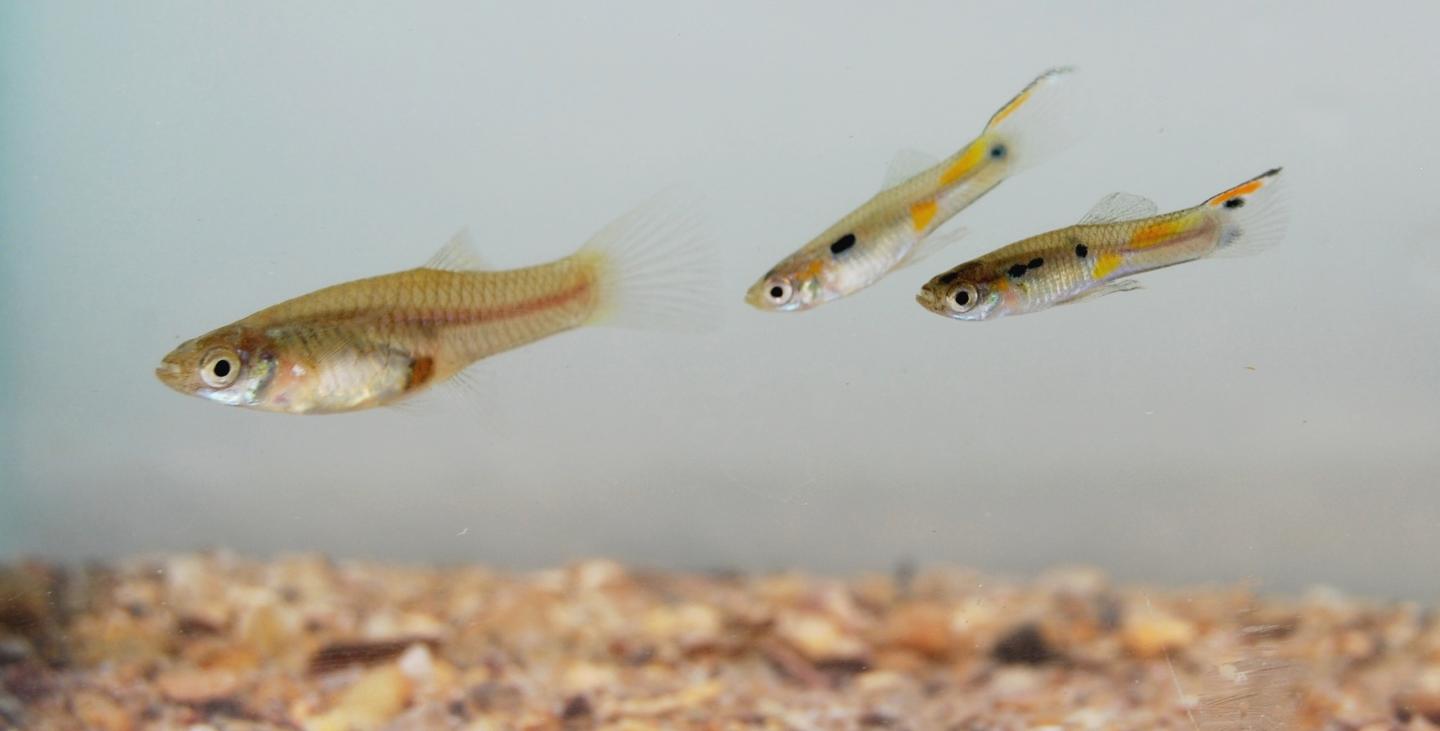
Guppies have varying levels of self-control

Bioengineer by Bioengineer
January 15, 2021
in Science News
Reading Time: 2 mins read
0
IMAGE
Share on FacebookShare on TwitterShare on LinkedinShare on RedditShare on Telegram

IMAGE

Credit: University of Exeter

Just like humans trying to stick to New Year’s resolutions, guppies have varying levels of self-control, a new study shows.

Researchers from the University of Exeter and Ghent University studying the behaviours of Trinidadian guppies tested “inhibitory control” (suppressing unhelpful impulses or urges).

The tiny fish first learned how to swim into a cylinder to get food – then a cover was removed to make the cylinder transparent.

Inhibitory control was measured by whether a guppy resisted the urge to swim directly towards the food – bumping into the cylinder – or still swam around, relying on previous learning.

The findings revealed “consistent individual variation” – some guppies had more self-control than others.

“Studies of inhibitory control have traditionally focussed on a few bird and mammal species, but we now know it exists in a wide range of animals,” said Dr Alessandro Macario, of Exeter’s Centre for Research in Animal Behaviour.

“As well as finding consistent differences between individual guppies, the population of guppies we studied were, on average, half as able to control impulses as a different strain of guppies tested in a previous study under similar conditions.

“We can’t be certain about the causes of this difference, but it’s possible that the strain we studied had evolved in different social and environmental conditions – with less need for inhibitory control.”

The study examined captive females, with each guppy tested multiple times.

In total, the fish inhibited the urge to swim directly at the food in 28.5% of trials.

No improvement was seen over time, but the researchers say this might have occurred if the guppies had been tested for longer.

Professor Darren Croft, also of the University of Exeter, said: “Our study is a first step towards understanding how inhibitory control has evolved in guppies.

“Guppies live in small rivers alongside predators so, for example, they might need the ability to hide and resist the urge to leave that hiding place to get food.

“The next step in this research is to examine the extent to which this trait affects guppies’ chances of survival or reproduction.”

###

The paper, published in the Journal of Fish Biology, is entitled: “Intraspecific variation in inhibitory motor control in guppies, Poecilia reticulata.”

Media Contact
Alex Morrison
[email protected]

Related Journal Article

http://dx.doi.org/10.1111/jfb.14608

Tags: BiodiversityBiologyEvolutionGeneticsMarine/Freshwater BiologyZoology/Veterinary Science
Share12Tweet8Share2ShareShareShare2

Related Posts

Confined Migration Causes DNA Damage in Neurons

June 18, 2026

Multimodal Multitask AI Transforms Lung Cancer Grading

June 18, 2026

New Study Seeks to Prolong Immune System Longevity

June 18, 2026

KAIST Creates Next-Generation Self-Powered Wearable Sensor withstanding 668% Stretch

June 18, 2026
Please login to join discussion

POPULAR NEWS

  • ESMO 2025: mRNA COVID Vaccines Enhance Efficacy of Cancer Immunotherapy

    326 shares
    Share 130 Tweet 82
  • Saying Goodbye to PGY-6: Pediatric Fellowship Realities

    102 shares
    Share 41 Tweet 26
  • Multi-Hospital Study Reveals Long Covid Burden Is Twice as High as Current Estimates

    92 shares
    Share 36 Tweet 23
  • Detection of EDCs in Breast Milk and Infant Urine Up to Six Months Highlights Early Exposure Risks

    76 shares
    Share 30 Tweet 19

About

We bring you the latest biotechnology news from best research centers and universities around the world. Check our website.

Follow us

Recent News

Confined Migration Causes DNA Damage in Neurons

Multimodal Multitask AI Transforms Lung Cancer Grading

New Study Seeks to Prolong Immune System Longevity

Subscribe to Blog via Email

Success! An email was just sent to confirm your subscription. Please find the email now and click 'Confirm' to start subscribing.

Join 82 other subscribers
  • Contact Us

Bioengineer.org © Copyright 2023 All Rights Reserved.

Welcome Back!

Login to your account below

Forgotten Password?

Retrieve your password

Please enter your username or email address to reset your password.

Log In
No Result
View All Result
  • Homepages
    • Home Page 1
    • Home Page 2
  • News
  • National
  • Business
  • Health
  • Lifestyle
  • Science

Bioengineer.org © Copyright 2023 All Rights Reserved.

