Researchers have discovered that zinc plays a crucial role in the nitrogen fixation process of legumes. This finding, along with the transcriptional regulator Fixation Under Nitrate (FUN), could revolutionize legume-based agriculture by optimizing crop efficiency and reducing reliance on synthetic fertilizers. By understanding how zinc and FUN regulate nitrogen fixation, researchers might be able to enhance nitrogen delivery, improve crop yields, and promote more sustainable agricultural practices.
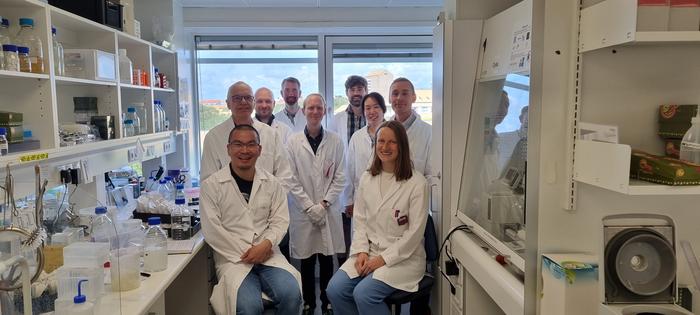
Credit: Helene Eriksen
Researchers have discovered that zinc plays a crucial role in the nitrogen fixation process of legumes. This finding, along with the transcriptional regulator Fixation Under Nitrate (FUN), could revolutionize legume-based agriculture by optimizing crop efficiency and reducing reliance on synthetic fertilizers. By understanding how zinc and FUN regulate nitrogen fixation, researchers might be able to enhance nitrogen delivery, improve crop yields, and promote more sustainable agricultural practices.
The new knowledge about zinc can change the way we cultivate crops, as plants can be made more climate-resilient. This means that the plant can acquire increased tolerance to extreme weather, which can not only ensure a more stable crop yield but also reduce the need for artificial fertilizers and enable the cultivation of legumes in new, previously unsuitable areas.
“Bacteria can cooperate with legumes to fix nitrogen from the air in root nodules. However, the nodules are sensitive to environmental influences such as temperature, drought, flooding, soil salinity, and high concentrations of nitrogen in the soil,” elaborates Assistant Professor and lead author of the study, Jieshun Lin.
Researchers from Aarhus University, Denmark, in collaboration with Polytechnic University of Madrid and European Synchrotron Radiation Facility in France, have discovered that legumes use zinc as a secondary signal to integrate environmental factors and regulate nitrogen fixation efficiency. In the study published in Nature, the researchers discovered that FUN is a novel type of zinc sensor, which decodes zinc signals in nodules and regulates nitrogen fixation.
“It’s truly remarkable to discover zinc’s role as a secondary signal in plants. It is a vital micronutrient, and it has never been considered as a signal before. After screening over 150,000 plants, we finally identified the zinc sensor FUN, shedding light on this fascinating aspect of plant biology,” Jieshun Lin explains.
In this study the researcher identifies that FUN is an important transcription factor that control nodule breakdown when soil nitrogen concentrations are high: “FUN is regulated by a peculiar mechanism that monitor the cellular zinc levels directly and we show that FUN is inactivated by zinc into large filament structures and liberated into the active form when zinc levels are low,” Professor Kasper Røjkjær Andersen explains.
From an agricultural perspective, continued nitrogen fixation could be a beneficial trait that increases nitrogen availability, both for the legume and for co-cultivated or future crops that rely on the nitrogen left in the soil after legumes are grown. This helps lay the foundations for future research that provides new ways for us to manage our farming systems and reduce the use of nitrogen fertilizer and reduce its impact on the environment.
The implications of this research are significant. By understanding how zinc and FUN regulate nitrogen fixation, researchers are developing strategies to optimize this process in legume crops. This could lead to increased nitrogen delivery, improving crop yields and reducing the need for synthetic fertilizers, which have environmental and economic costs.
Researchers are now investigating the mechanisms of how zinc signals are generated and decoded by FUN. They are looking forward to applying these new discoveries to legume crops such as faba bean, soybean and cowpea.
Journal
Nature
DOI
10.1038/s41586-024-07607-6
Method of Research
Experimental study
Subject of Research
Cells
Article Title
Zinc mediates control of nitrogen fixation via transcription factor filamentation
Article Publication Date
27-Jun-2024