• HOME
  • NEWS
  • EXPLORE
    • CAREER
      • Companies
      • Jobs
    • EVENTS
    • iGEM
      • News
      • Team
    • PHOTOS
    • VIDEO
    • WIKI
  • BLOG
  • COMMUNITY
    • FACEBOOK
    • INSTAGRAM
    • TWITTER
Sunday, May 10, 2026
BIOENGINEER.ORG
No Result
View All Result
  • Login
  • HOME
  • NEWS
  • EXPLORE
    • CAREER
      • Companies
      • Jobs
        • Lecturer
        • PhD Studentship
        • Postdoc
        • Research Assistant
    • EVENTS
    • iGEM
      • News
      • Team
    • PHOTOS
    • VIDEO
    • WIKI
  • BLOG
  • COMMUNITY
    • FACEBOOK
    • INSTAGRAM
    • TWITTER
  • HOME
  • NEWS
  • EXPLORE
    • CAREER
      • Companies
      • Jobs
        • Lecturer
        • PhD Studentship
        • Postdoc
        • Research Assistant
    • EVENTS
    • iGEM
      • News
      • Team
    • PHOTOS
    • VIDEO
    • WIKI
  • BLOG
  • COMMUNITY
    • FACEBOOK
    • INSTAGRAM
    • TWITTER
No Result
View All Result
Bioengineer.org
No Result
View All Result
Home NEWS Science News Chemistry

Ground penetrating radar reveals why ancient Cambodian capital was moved to Angkor

Bioengineer by Bioengineer
October 31, 2019
in Chemistry
Reading Time: 2 mins read
0
IMAGE
Share on FacebookShare on TwitterShare on LinkedinShare on RedditShare on Telegram

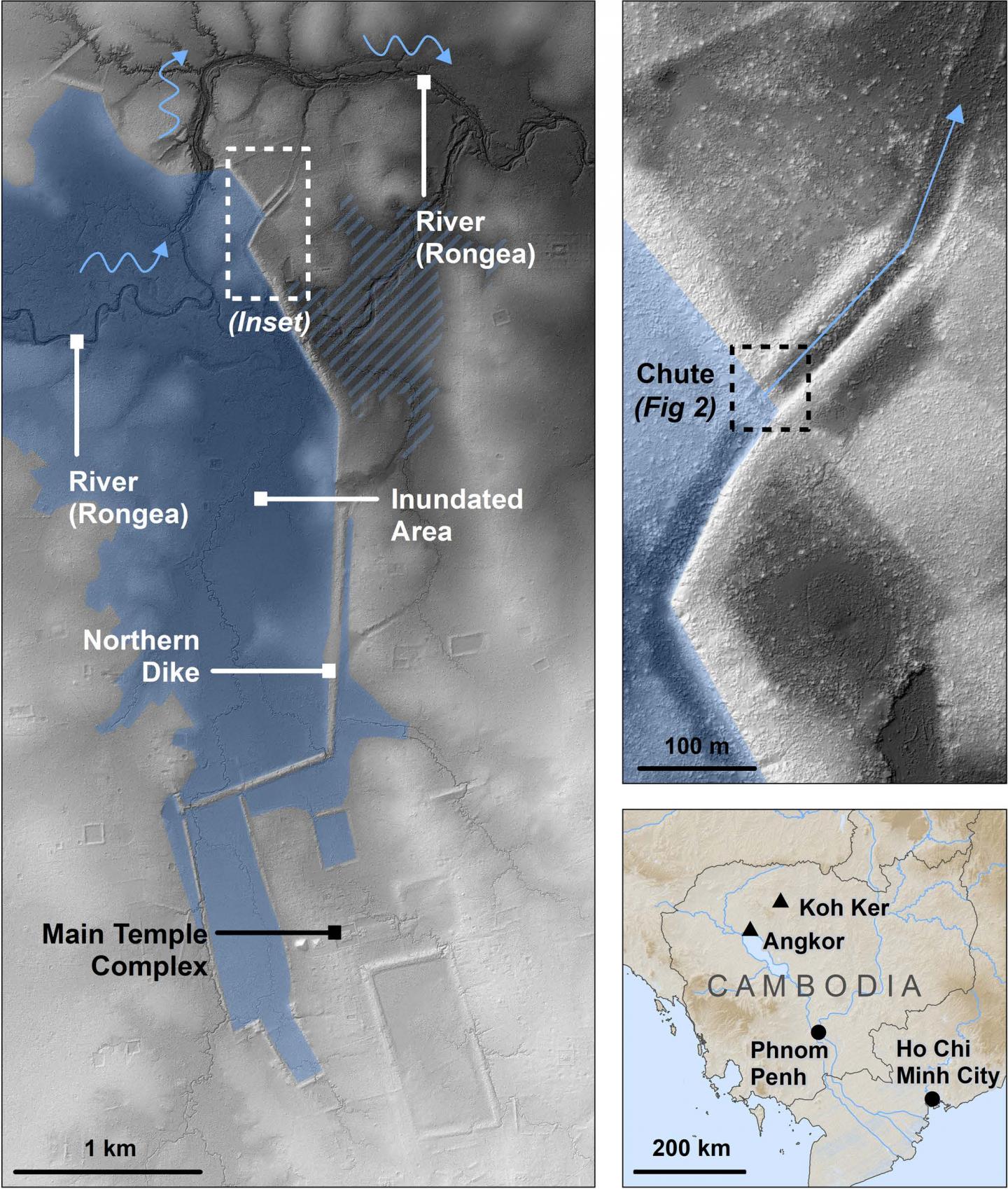
Ancient spillway Cambodia reveals structure built for water storage failed and forced Cambodian Kings to relocate capital
IMAGE

Credit: Dr Ian Moffat, Flinders University


The largest water management feature in Khmer history was built in the 10th century as part of a short-lived ancient capital in northern Cambodia to store water but the system failed in its first year of operation, possibly leading to the return of the capital to Angkor.

An international team of researchers led by Dr Ian Moffat from Flinders University in Australia used ground penetrating radar to map the surface of a buried spillway in Koh Ker to better understand why the reservoir failed during its first year of use.

In a study published in Geoarchaeology, archaeologists explain that the 7km long embankment was designed to capture water from the Stung Rongea river but modelling indicates it was inadequate to contain the average water flow in the catchment, putting into question the legitimacy of Khmer kings, and forcing them to re-establish their capital in Angkor.

“At that time, embarking on projects of civil engineering such as temple building, urban renewal, and the development of water infrastructure was central to establishing the legitimacy of Khmer kings,” says Dr Moffat

“It’s not difficult to envisage that the failure of the embankment at Koh Ker–the largest and most ambitious infrastructure project of the era–may have had a significant impact on the prestige of the sovereign capital, and contributed to the decision to re-establish Angkor as the capital of the Khmer Empire.”

“Our study shows that this ambitious engineering feat was always doomed to rapid failure.”

The monumental complex of Koh Ker, located 90 km northeast of Angkor, remains relatively poorly understood even though it was briefly the capital in the middle of the 10th century CE under King Jayavarman IV, the only capital throughout six centuries to be established outside of the Angkor region.

The site is located in an area of gently sloping hills and stone outcrops, far removed from the low-lying floodplains that define the Khmer heartland.

###

Researchers from Flinders, University of British Columbia and Ecole francaise d’Extreme-Orient in Paris contributed to the study.

Media Contact
Ian Moffat
[email protected]
61-403-050-935

Related Journal Article

http://dx.doi.org/10.1002/gea.21757

Tags: ArchaeologyGeology/SoilGeophysicsGeophysics/GravityOld WorldWeather/Storms
Share14Tweet9Share2ShareShareShare2

Related Posts

Miniature Sensor Uses Light to Detect Touch — Chemistry

Miniature Sensor Uses Light to Detect Touch

May 8, 2026
Iron Minerals Determine Whether Dissolved Organic Matter Fuels Microbes or Becomes Long-Term Carbon Storage — Chemistry

Iron Minerals Determine Whether Dissolved Organic Matter Fuels Microbes or Becomes Long-Term Carbon Storage

May 8, 2026

Kate Evans Appointed Associate Lab Director for Biological and Environmental Systems Science at ORNL

May 8, 2026

Advancing Multiscale Modeling and Overcoming Operational Challenges in Autothermal COâ‚‚-to-Methanol Reactors

May 8, 2026
Please login to join discussion

POPULAR NEWS

  • Research Indicates Potential Connection Between Prenatal Medication Exposure and Elevated Autism Risk

    840 shares
    Share 336 Tweet 210
  • New Study Reveals Plants Can Detect the Sound of Rain

    727 shares
    Share 290 Tweet 181
  • Scientists Investigate Possible Connection Between COVID-19 and Increased Lung Cancer Risk

    68 shares
    Share 27 Tweet 17
  • Salmonella Haem Blocks Macrophages, Boosts Infection

    61 shares
    Share 24 Tweet 15

About

We bring you the latest biotechnology news from best research centers and universities around the world. Check our website.

Follow us

Recent News

Evaluating Digoxin Use in Patients with Symptomatic Rheumatic Heart Disease

Evaluating the Effectiveness and Safety of Digitalis Glycosides in Treating Heart Failure

Urdu Fall Risk Questionnaire Adapted for Elderly

Subscribe to Blog via Email

Success! An email was just sent to confirm your subscription. Please find the email now and click 'Confirm' to start subscribing.

Join 82 other subscribers
  • Contact Us

Bioengineer.org © Copyright 2023 All Rights Reserved.

Welcome Back!

Login to your account below

Forgotten Password?

Retrieve your password

Please enter your username or email address to reset your password.

Log In
No Result
View All Result
  • Homepages
    • Home Page 1
    • Home Page 2
  • News
  • National
  • Business
  • Health
  • Lifestyle
  • Science

Bioengineer.org © Copyright 2023 All Rights Reserved.